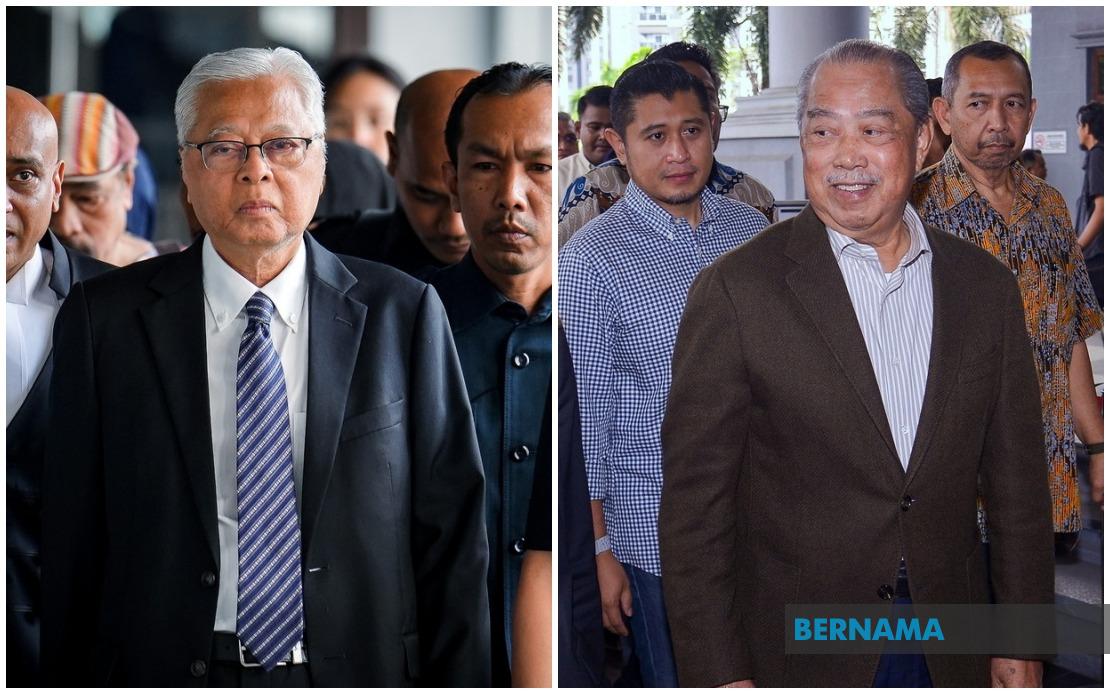
The convergence of three former prime ministers at the Kuala Lumpur Court Complex on August 27 created an extraordinary spectacle that media professionals across Malaysia struggled to recall having witnessed before. Datuk Seri Najib Tun Razak, Tan Sri Muhyiddin Yassin, and Datuk Seri Ismail Sabri Yaakob each arrived for distinct legal proceedings, yet their simultaneous presence in the same building marked a watershed moment in the nation's political narrative. For journalists stationed at the complex, the day embodied a rare intersection of politics, law, and accountability that seemed almost scripted in its historical significance.
The magnitude of the occasion was not lost on veteran court correspondents whose combined decades of reporting have rarely, if ever, captured such a scenario. V. Anbalagan of Free Malaysia Today reflected on the sheer unlikelihood of the event, describing it as a record-breaking moment that transcended routine courtroom coverage. His assessment went beyond mere journalistic excitement; he suggested that the convergence represented a singular point in Malaysian history where the judicial system found itself processing the cases of three former heads of government simultaneously. For a nation's legal infrastructure to handle multiple high-profile proceedings involving past leaders on a single day underscored both the complexity of Malaysia's recent political history and the evolving relationship between governance and accountability.
The logistical undertaking required to manage the day's proceedings demonstrated the scale of security and coordination demanded by the occasion. From dawn, journalists began assembling outside the court complex, establishing positions and coordinating with security personnel to ensure comprehensive coverage. Bernama TV news officer Siti Zanariah Nor Zin emphasized how the staggered arrival times of the three former leaders, along with their legal teams, provided crucial breathing room for media outlets to dispatch timely updates across their networks. The careful choreography of movements suggested that court authorities had anticipated the media frenzy and worked proactively to prevent the kind of chaos that might otherwise have undermined the dignity of the proceedings.
Security arrangements reflected the heightened tensions surrounding the event. Police personnel from the Sentul district headquarters, supplemented by officers from the Palace of Justice, maintained vigilant positions throughout the complex. Multiple categories of security clearances were implemented, distinguishing between general public access, journalists covering open proceedings, and those utilizing video-link facilities. Security officer Nik Zainab Jusoh noted that preparatory briefings held the previous afternoon ensured that all personnel remained alert and responsive to the potential for disorder. The upper floors, particularly corridors outside the courtrooms, received intensified monitoring, while ground-level areas maintained their regular operational rhythm.
The three former leaders faced distinct legal challenges that reflected different dimensions of Malaysia's ongoing reckoning with governance practices. Najib appeared before Judicial Commissioner Mohamad Redzuan Idrus regarding a civil suit valued at USD5.64 billion filed by 1Malaysia Development Berhad and its subsidiary, allegations that reached back into his tenure as prime minister and shaped Malaysia's international reputation. Muhyiddin confronted seven charges encompassing alleged abuse of power and money laundering connected to the Jana Wibawa programme, matters that intersected questions of executive authority and financial propriety. Ismail Sabri faced asset declaration violations, with authorities alleging concealment of RM14.7 million in cash, substantial foreign currency holdings, and precious metals, raising fundamental questions about transparency in public service.
The circumstances underscore how Malaysian politics has increasingly become intertwined with judicial proceedings over recent years. Each former leader's case represents a chapter in a broader narrative about institutional reform and political accountability that has captured regional and international attention. The simultaneous appearance at the court complex inadvertently crystallized this reality, transforming an ordinary day of legal proceedings into a symbolic moment. For observers within Southeast Asia and globally, the image of three consecutive prime ministers appearing before the courts simultaneously conveyed messages about the state of democratic institutions and the willingness to subject political leadership to judicial scrutiny.
Journalists covering the event grappled with professional challenges beyond typical court reporting. Amirul Aiman Osman of Utusan Malaysia arrived before dawn to secure favorable positioning and faced the dual pressure of covering multiple proceedings while ensuring accuracy and timeliness. The logistical complexity of coordinating camera crews, photographers, and reporters across different courtrooms required careful planning and communication. Despite the congestion, tight security protocols prevented the kind of uncontrolled incidents that might have undermined media operations or compromised the court's ability to conduct proceedings with appropriate gravity.
The administrative response to the convergence reflected broader institutional maturation within Malaysia's judicial system. Court officials coordinated extensively with security agencies to develop protocols that balanced legitimate public and media interest against the need to maintain courtroom decorum and protect participant safety. The issuance of differentiated security passes allowed for graduated access while maintaining oversight. This systematic approach suggested that Malaysian courts have evolved to manage high-profile cases with procedures that protect both the integrity of proceedings and the public's democratic right to witness their government's legal processes.
For Ismail Sabri specifically, the day concluded with his release on RM300,000 bail with one surety at 11:43 am, adding yet another layer of procedural detail to an already momentous occasion. Each former leader's departure from the complex generated its own news cycle and media analysis, further extending the day's significance. The convergence, whether occurring by coincidence or administrative coordination, ensured that Malaysian media outlets and the public confronted simultaneously the legal vulnerabilities of recent leadership, a reality that few democracies navigate with such visible intensity.
The historical rarity of such convergence raises questions about whether Malaysia's political and judicial landscape will produce similar moments in future years. V. Anbalagan suggested that the record established on August 27 represented a near-impossible threshold to replicate, a judgment reflecting both the exceptional circumstances and perhaps the recognition that rarely do three consecutive former heads of government find themselves in active judicial proceedings at identical moments. For Malaysian journalism and the nation's democratic culture, the day demonstrated that accountability mechanisms remain operational and that former leaders, regardless of their previous power and status, remain subject to legal processes. Whether this portends systemic transformation or represents an isolated chapter in a longer political narrative remains a question for historians and political analysts to ultimately resolve.

