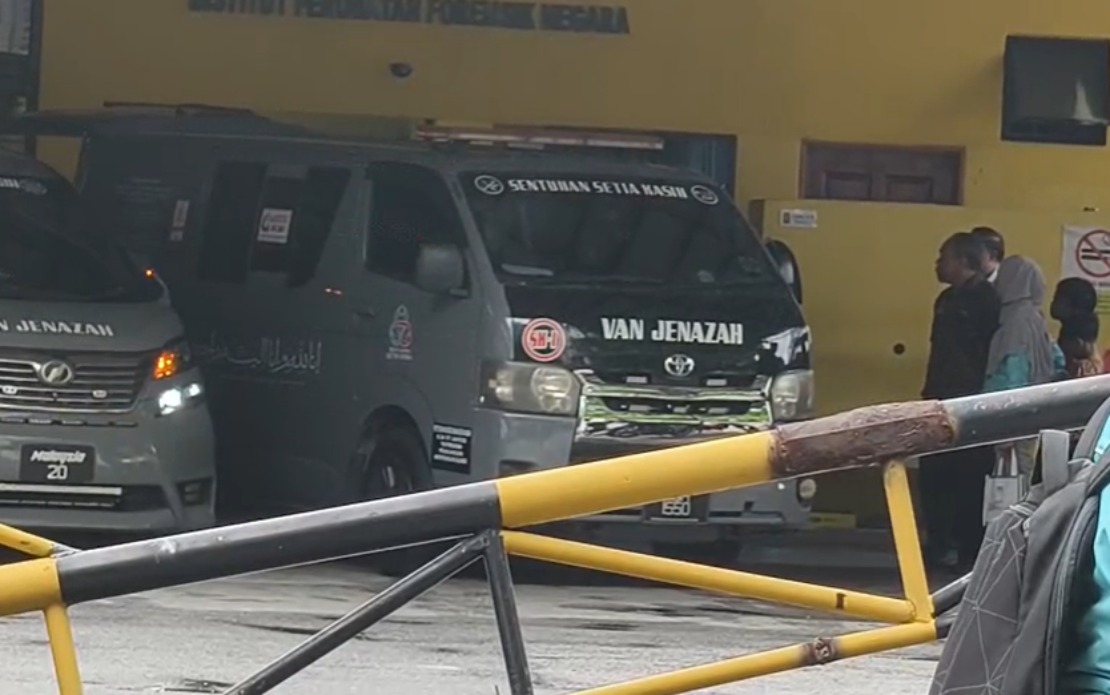
A fatal traffic collision in central Kuala Lumpur has claimed the lives of three members of a single family, prompting questions about the operational protocols of government vehicles responding to enforcement operations. Shaik Mohd Firdaus Shaikh Yahya, 53, together with his daughters Siti Nor Sazlin, 25, and Siti Darwisyah Auni, 12, were pronounced dead following the early morning incident on Jalan Sultan Ismail. The remains were formally released from Kuala Lumpur Hospital's National Institute of Forensic Medicine at approximately 5.45 pm on August 19 after post-mortem procedures were completed, marking the conclusion of the medical examination phase of the investigation.
The three bodies have been transferred through funeral arrangements to Jamiul Ehsan Mosque on Jalan Pahang, where Islamic funeral rites including bathing and shrouding will take place, followed by the recitation of funeral prayers. Subsequently, the remains will be transported to Kampung Air Hitam Labu Muslim Cemetery in Kampar, Perak, for interment. The family's decision to repatriate the deceased to Perak reflects common practice among Malaysian Muslim families, who often choose to lay loved ones to rest in their ancestral or family hometowns, particularly following sudden and traumatic deaths.
The tragedy unfolded in the early hours of the morning at approximately 1 am when a Malaysian Immigration Department (JIM) Black Maria lorry collided with multiple vehicles and pedestrians on Jalan Sultan Ismail. The lorry, which was operating without detained passengers at the time, was en route to carry out an enforcement raid in the Chow Kit area targeting undocumented migrants. Emergency protocols were activated, with both beacon lights and audible sirens activated to alert other road users to the vehicle's movement through traffic.
Investigations into the sequence of events reveal a troubling narrative regarding the lorry's navigation through the Maju Junction intersection. According to available evidence, the vehicle proceeded against a red traffic signal while a Proton Saga, which had the right of way with a green light, was travelling through the same intersection. The collision between the two vehicles proved catastrophic, with the heavier lorry losing directional control immediately following impact. The vehicle subsequently skid across the roadway before making contact with four pedestrians who were in proximity to the intersection.
The devastating impact extended beyond the initial collision point. In addition to striking the pedestrians, the out-of-control lorry also struck an Inokom Matrix multi-purpose vehicle, compounding the scope of the accident and raising the total number of casualties. While three members of the family group were fatally wounded, another individual sustained serious injuries and required medical hospitalization. The exact identity and relationship of the injured survivor to the deceased family members has not been disclosed in available reports.
The circumstances surrounding the accident have prompted authorities to initiate a formal criminal investigation under Section 41(1) of the Road Transport Act 1987, which addresses vehicular collisions resulting in death or serious bodily harm. This statutory framework allows investigators to examine whether proper traffic protocols were followed, whether the vehicle was operated according to safety regulations, and whether any breach of duty on the part of the driver or the vehicle's operator contributed to the fatality. The investigation will likely examine whether the beacon lights and sirens, while activated, provided sufficient warning to other road users and whether the vehicle's speed and approach to the intersection were reasonable given the traffic conditions and visibility.
This incident raises significant questions about operational risk management within government enforcement agencies that utilize vehicles for law enforcement and immigration purposes. The decision to conduct raids during early morning hours, combined with the use of large vehicles such as Black Marias navigating through urban intersections, creates inherent risks that must be balanced against enforcement objectives. The fact that the vehicle was operating without detained passengers suggests the operational configuration was designed for efficiency rather than the transport of individuals already in custody, yet the potential for casualties appears to have been underestimated.
For Malaysian road safety advocates and policy observers, the collision represents a cautionary case study in how even authorized law enforcement operations can result in tragic outcomes when proper adherence to traffic regulations is compromised. The apparent violation of traffic signal protocols by a government vehicle, regardless of its mission-critical status, underscores the principle that emergency operations do not exempt drivers from fundamental safety obligations. Public vehicles operating in urban environments must navigate the same intersections and adhere to the same traffic controls as civilian vehicles, with emergency protocols serving to supplement rather than override basic traffic safety.
The incident also illustrates the unpredictable nature of traffic fatalities in Malaysia's urban centers, where high-density vehicular and pedestrian movement creates inherent collision risks. The family's loss of three members in a single incident reflects the potential for catastrophic outcomes when multiple casualties occur in close proximity, a scenario that demands swift coordination between emergency medical services, law enforcement investigation units, and supporting agencies. The involvement of a federal department vehicle in the accident has likely elevated the investigative priority and resource allocation, with findings potentially informing broader policies regarding emergency vehicle operations.
Beyond the immediate tragedy, this incident will likely prompt a thorough review of the Malaysian Immigration Department's operational protocols for enforcement activities, particularly regarding vehicle safety, driver training, and risk assessment procedures for raids conducted during high-risk traffic periods. The agency may face scrutiny regarding whether alternative operational approaches could have achieved enforcement objectives with reduced risks to public safety. Such reviews are standard practice following fatal accidents involving government vehicles and often result in procedural modifications designed to prevent recurrence.

