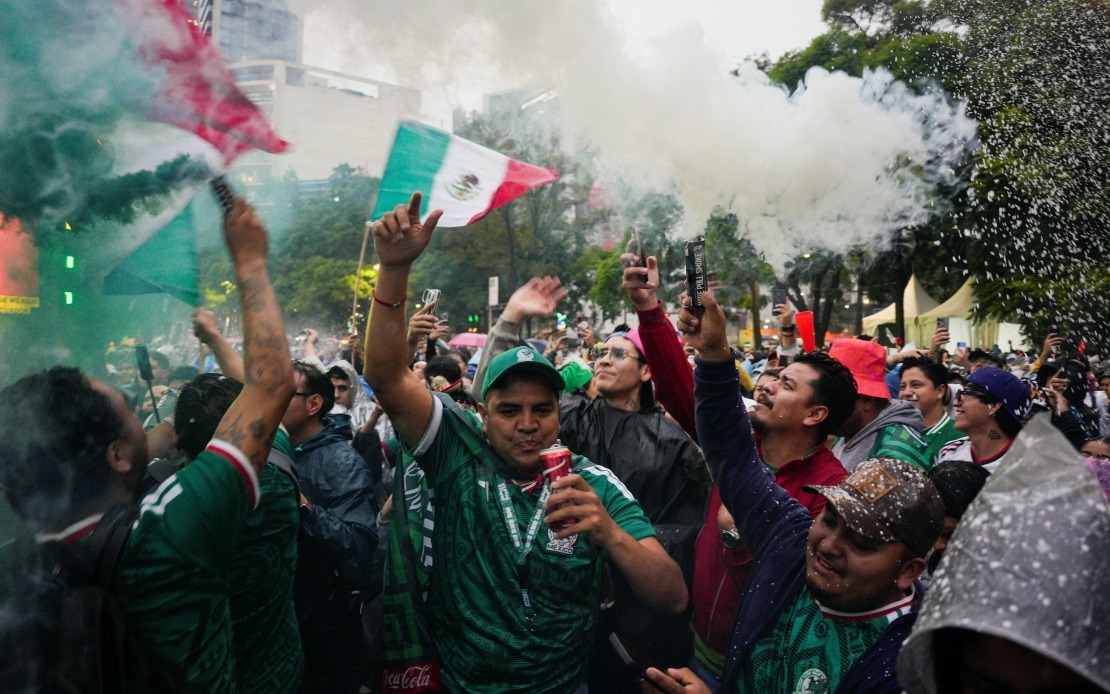
The euphoria surrounding Mexico's World Cup advancement turned tragic on Tuesday night when three people died in Mexico City during street celebrations following the national team's qualification for the tournament's knockout stage. The deaths, all attributed to asphyxiation, occurred in the vicinity of Paseo de la Reforma, the capital's prestigious central avenue, as supporters gathered to commemorate the team's convincing 2-0 victory over Ecuador at the Estadio Azteca.
The Mexico City secretary of public health's office officially confirmed the identities of the deceased: a 44-year-old man, a 19-year-old woman, and a 48-year-old woman. All three individuals collapsed at separate locations near the Paseo de la Reforma area, underscoring the scale of the crowds that had assembled to celebrate the national team's advancement. The circumstances surrounding each death remain under investigation, though medical authorities have preliminarily attributed the fatalities to asphyxiation, suggesting the crush of celebratory crowds may have played a contributing factor.
Clara Brugada, Mexico City's head of government, acknowledged the tragedy through her social media account on Wednesday, noting that emergency response teams had been dispatched to multiple points along Paseo de la Reforma following reports of unconscious individuals. She emphasized that all available medical protocols had been immediately activated in attempts to revive those who had collapsed, though the efforts ultimately proved unsuccessful. The sequence of events highlights the challenges cities face in managing spontaneous public gatherings following major sporting events, particularly when large populations descend on central areas to express their collective enthusiasm.
The timing of the incident carries broader implications for Mexico's continued World Cup campaign. Having secured passage to the round of 16, Mexico now awaits developments in other concurrent matches to determine their path forward. Should England, managed by Thomas Tuchel, overcome DR Congo in their fixture on Wednesday, the two nations could meet in a high-stakes knockout encounter at the same Estadio Azteca venue on Sunday. Such a matchup would generate enormous interest across Mexico and create additional pressure on local authorities to manage crowds safely during what would be one of the most significant matches in the tournament's Mexican host city.
Brugada's official statement extended condolences to the families of the deceased and pledged that Mexico City would provide comprehensive support to the bereaved. Her message, while expressing sympathy, also served as a pointed reminder to the broader public about the necessity for restraint and mindfulness during celebrations. The government leader's emphasis on celebrating "with responsibility, care, and empathy" suggests an acknowledgment that the festive atmosphere, while understandable, requires careful management to prevent future tragedies.
For Southeast Asian readers, the incident offers a sobering reminder of the potential dangers inherent in large-scale public gatherings, a concern particularly relevant to the region given the frequency of major sporting events and cultural celebrations that draw massive crowds. Countries across Southeast Asia have experienced similar crowd-related incidents in recent years, from concert stampedes to festival gatherings, underscoring a universal challenge in balancing the right to public celebration with the imperative to ensure public safety.
The incident also reflects the deep passion that football inspires in Mexico, where the sport commands extraordinary cultural significance and national pride. Qualification for the World Cup's knockout stages represents a moment of collective joy that naturally spills into the streets, particularly in major cities. However, this very intensity of feeling creates conditions where enthusiastic gatherings can quickly become hazardous if not properly managed or monitored.
Emergency services in Mexico City face the ongoing challenge of predicting and preparing for spontaneous assemblies that accompany major sporting outcomes. While authorities cannot reasonably prevent citizens from celebrating in public spaces, the incident suggests the need for enhanced crowd management protocols, potentially including the deployment of additional personnel in known gathering areas during matches and increased public education about safe celebration practices.
As Mexico progresses through the World Cup, the government and relevant authorities will likely intensify efforts to prevent similar tragedies. This may include pre-match announcements encouraging safe behavior, the positioning of medical personnel in central gathering areas, and coordination with crowd management specialists. The balance between fostering national pride and ensuring public safety remains delicate, and institutions across Mexico City will be under scrutiny to demonstrate they have learned from this tragedy.
The broader context of World Cup celebrations in Mexico carries particular weight given the nation's history with large-scale sporting events and the emotional investment citizens place in their national football team. Subsequent matches, especially if they involve high-stakes knockout competition, will test whether enhanced safety measures can accommodate the inevitable surges in public celebration without compromising the spontaneity and joy that make such moments meaningful for the population.

