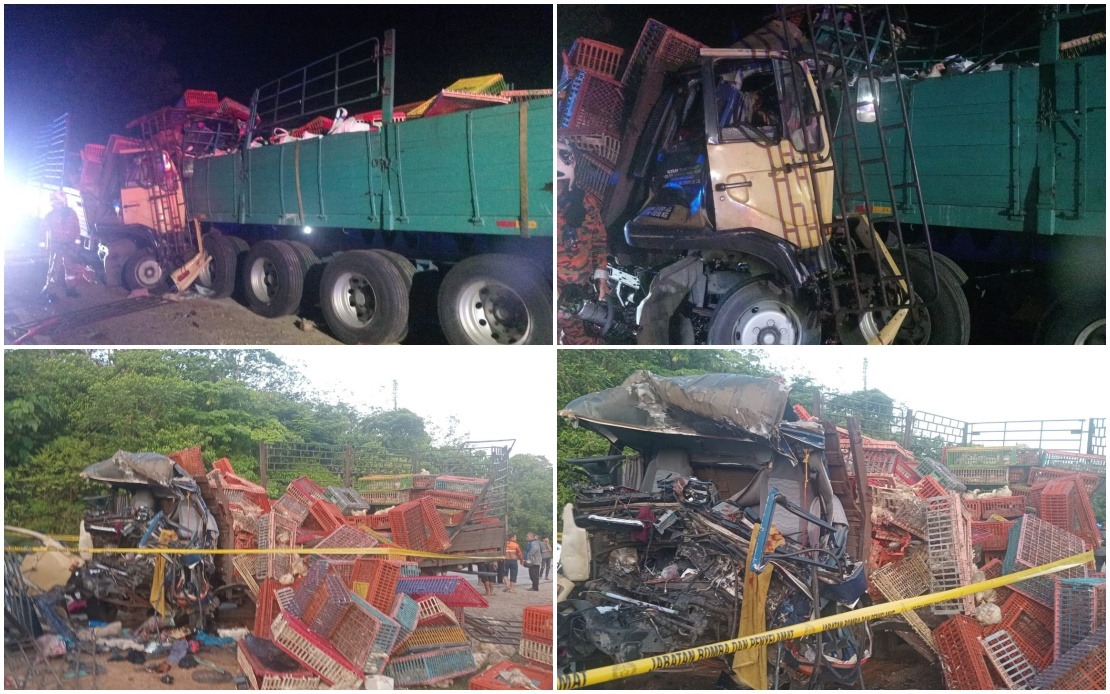
A fatal collision on the East-West Highway claimed three lives in the early hours of this morning when a five-tonne chicken lorry crashed into a parked trailer near Tanah Merah in Kelantan. The incident underscores the ongoing road safety challenges faced by drivers operating commercial vehicles along Malaysia's major highways, particularly during nighttime operations when visibility is severely compromised.
The victims have been identified as Norazeman Abdul Aziz, 42, who was driving the lorry, alongside passengers Mohammad Zakwan Mohd Nor, 16, and Mohd Haikal Hanifah, 29. All three were pronounced dead at the scene following extraction from the damaged vehicle. The Kelantan Fire and Rescue Department received the emergency distress call at 4.26 am through the NG999 service, prompting an immediate mobilisation of rescue teams from the Kemahang and Tanah Merah fire stations.
Rescue personnel arrived at the collision site approximately 15 minutes after the initial report, discovering the lorry had impacted the trailer which had been stationary along the roadside. The force of the collision resulted in all three occupants becoming trapped within the vehicle's cab, necessitating intensive extrication efforts by trained firefighters. The rescue operation involved a substantial deployment of 12 firefighters operating two fire engines from both nearby stations, reflecting the severity of the entrapment and the complexity of the extraction process required.
According to statements from the Kelantan Fire and Rescue Department spokesman, the trapped victims were successfully removed from the wreckage through coordinated firefighting techniques. However, medical assessment by Health Ministry personnel confirmed that all three had already succumbed to their injuries by the time rescue workers reached them. The bodies were subsequently handed over to police authorities for the commencement of investigations and standard procedures.
The incident represents a troubling pattern of serious accidents on the East-West Highway, a major arterial route connecting multiple states and facilitating significant commercial traffic. The highway experiences particularly high volumes of lorry traffic engaged in livestock and perishable goods transportation, a sector operating around the clock to maintain supply chain continuity. Night-time operations present compounded risks, as driver fatigue, reduced visibility, and the challenges of navigating unlit sections of roadway create hazardous conditions that demand heightened caution and adherence to safety protocols.
The presence of a parked trailer on the roadside adds another dimension to understanding how this tragedy unfolded. While parking arrangements for commercial vehicles form an essential part of highway operations, inadequate lighting, reflective markers, or warning systems around stationary vehicles can substantially increase collision risks, particularly when other vehicles are operating at excessive speeds or when drivers experience momentary lapses in concentration during extended night-time journeys.
For Malaysia's transport sector, this fatality serves as a sobering reminder of the persistent vulnerability of commercial drivers and passengers to highway dangers. The young age of one victim, at 16 years old, raises additional concerns regarding passenger safety protocols and the adequacy of protective measures for young workers travelling with commercial transport operators. Such incidents typically trigger discussions around mandatory safety standards, vehicle maintenance requirements, and driver training certification programmes within the industry.
The emergency response demonstrated effective coordination between rescue services, with both fire stations responding simultaneously to optimise extraction and recovery operations. The rapid arrival of personnel and deployment of appropriate equipment highlighted the importance of maintaining well-equipped fire and rescue stations strategically positioned along critical highway corridors. However, such responsiveness, while commendable, ultimately could not prevent the loss of life in this particular incident, underscoring how prevention through safer driving practices and enhanced road conditions remains paramount.
Highway authorities and transport regulators may now examine specific circumstances surrounding this collision to identify preventive measures. Questions regarding vehicle roadworthiness, driver rest periods, speed compliance, road surface conditions, and the adequacy of hazard warnings for parked vehicles will likely form part of investigative procedures. The police investigation will determine whether mechanical failure, human error, or environmental factors contributed to the accident, with findings potentially informing future safety interventions and regulatory adjustments.
This tragedy also resonates beyond Kelantan, serving as a regional reminder of the hazards inherent in Southeast Asia's transport networks. As commercial logistics operations expand across the region and road freight volumes increase to support growing economies, the imperative for comprehensive safety frameworks, driver welfare programmes, and infrastructure improvements becomes ever more pressing. The incident reinforces why sustained investment in road safety education, enforcement of existing regulations, and continuous modernisation of highway facilities remain critical priorities for the Malaysian government and transport industry stakeholders alike.

