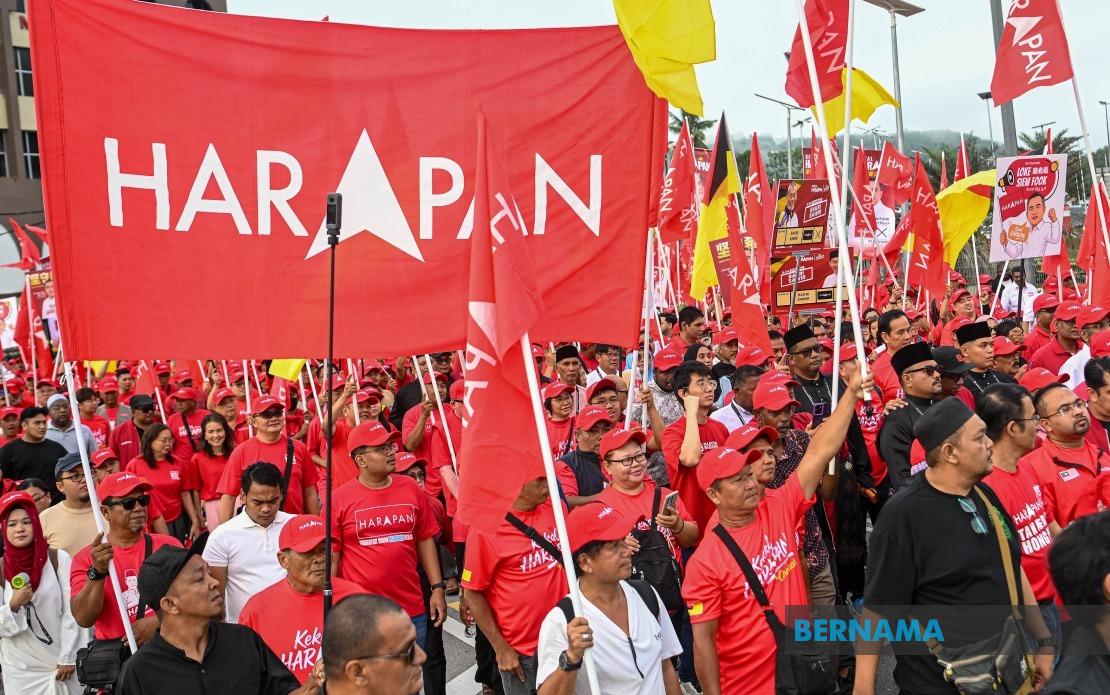
The nomination process for Negeri Sembilan's 16th state election has confirmed a trio of closely contested three-way races that are likely to capture significant political attention across the region. Following the close of nominations at Dewan Besar Kuala Klawang, the Jelebu Parliamentary returning officer Abdul Rahim A Aziz revealed that voters in Pertang, Klawang, and Sungai Lui will face multi-party contests rather than straight fights, a development that could reshape the balance of power in the state assembly.
The Pertang state seat emerges as a particularly significant battleground where sitting assemblyman Datuk Seri Jalaluddin Alias of Barisan Nasional will defend his position against two challengers. Jalaluddin's previous victory demonstrated considerable strength at the polls—his 5,634 votes in the last election secured him a commanding 2,844-vote majority over Perikatan Nasional's Amirudin Hasan. However, this time he faces a divided opposition, with Pakatan Harapan fielding Mohd Umry Abdul Khois and Bersatu backing Mohd Faizal Fadli Mohd Idrus. The incumbent's performance will be watched closely as an indicator of whether Barisan Nasional can retain ground in rural Negeri Sembilan constituencies amid ongoing coalitional shifts in Malaysian politics.
Sungai Lui presents perhaps the most intriguing narrative, as the three candidates competing for the seat are former schoolmates who will renew acquaintances in a political arena. Datuk Mohd Razi Mohd Ali represents Barisan Nasional, while Zainal Fikri Abd Kadir carries Pakatan Harapan's colours and Mazrulhisham Abd Mansor stands as Bersatu's challenger. The personal history binding these three adds a unique dimension to what is fundamentally a contest about competing political visions for the constituency. Their shared educational background may inform campaign strategies or voter perceptions in ways that distinguish this race from typical state elections.
The Klawang state seat will witness another three-way contest where the incumbent faces fresh competition. Datuk Bakri Sawir, representing Pakatan Harapan, must defend his seat against Bersatu's Muhammad Adib Musa and Perikatan Nasional's Danni Rais. This particular contest reflects the complex realignment within Malaysian opposition politics, where Pakatan Harapan and Bersatu, once united under the Sheraton Move framework, now compete directly against each other in various constituencies. The outcome in Klawang may offer insights into voter preferences between the two camps among the broader electorate.
These three-cornered fights carry implications beyond Negeri Sembilan's borders. The state has traditionally served as a bellwether for peninsular Malaysian politics, and the competitive dynamics emerging from these nominations will signal broader trends. The presence of Bersatu in these contests particularly underscores the party's bid to establish itself as a significant third force in Malaysian politics, neither fully aligned with Barisan Nasional nor comfortably integrated into Pakatan Harapan's fold. How effectively Bersatu can translate its presence on nomination day into votes come polling day will substantially influence perceptions of its viability as an independent political entity.
The three-way races also complicate campaign strategies for all parties involved. Rather than focusing resources on a single opponent, candidates must now engage multiple audiences and differentiate themselves across a broader spectrum of political positioning. Campaign narratives that might resonate against one adversary could prove less effective against another, requiring more nuanced messaging. Ground operations become more intricate when volunteers and party machinery must track support across three distinct political brands rather than two.
From a voter perspective, the three-cornered contests expand genuine choice in these constituencies, though they also introduce the strategic voting calculations familiar to observers of multi-party democracies. Voters inclined toward one political direction may need to assess which candidate stands the strongest prospect of victory, or conversely, which candidate aligns most closely with their policy preferences despite lower perceived odds. These mental calculations could produce unpredictable results if significant voter segments employ different strategic frameworks.
The Election Commission has scheduled early voting for July 28, providing voters unable to cast ballots on the main polling day with an alternative opportunity. The August 1 election date marks the culmination of campaign efforts across the state, with these three seats representing high-profile contests within the broader 16-seat assembly context. The results in Pertang, Klawang, and Sungai Lui will significantly influence the overall composition of Negeri Sembilan's legislature and potentially the identity of the state government itself.
These nominations underscore the fluid nature of Malaysian state politics in the post-2018 period, where traditional two-way contests have increasingly given way to more complex multi-party dynamics. The Negeri Sembilan election therefore offers regional observers a microcosm of broader electoral trends reshaping Malaysian politics, particularly regarding the viability of Bersatu as an independent political force and the strength of incumbents facing revitalised opposition movements.

