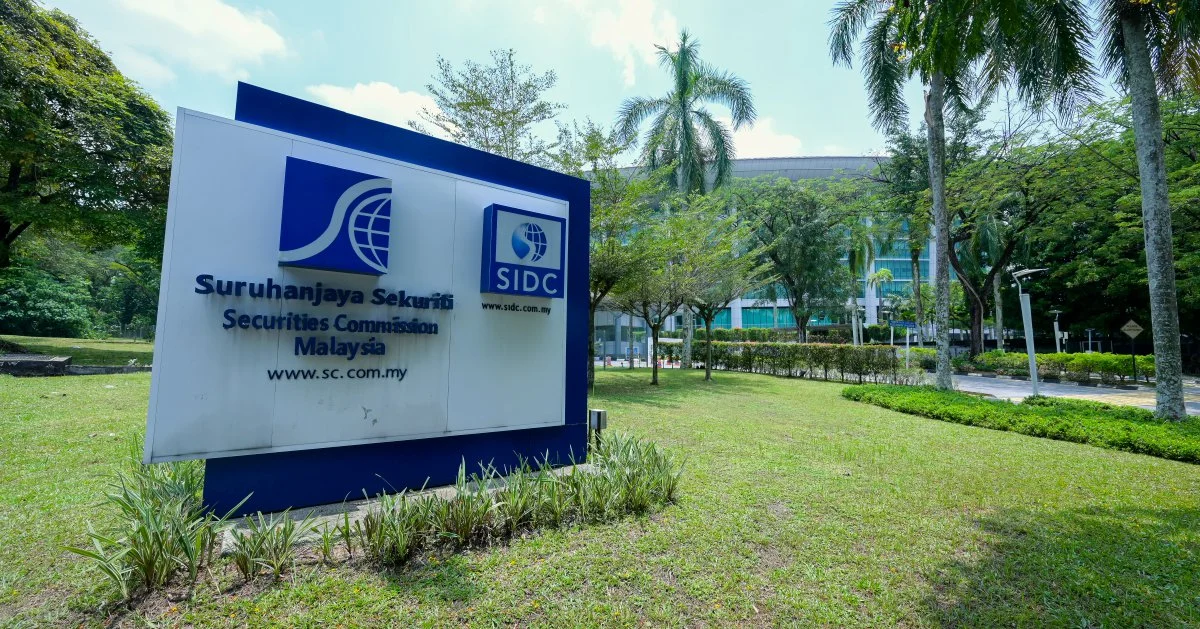
Three brothers have been brought before the Kuala Lumpur Sessions Court on separate charges relating to unlicensed capital market operations, according to an announcement from the Securities Commission (SC). The coordinated prosecutions underscore the regulator's ongoing vigilance in detecting and pursuing unauthorised financial activities within Malaysia's investment landscape.
The Securities Commission has intensified enforcement action in recent years as unregulated investment schemes proliferate across digital platforms and informal networks. Unlicensed capital market activities represent a significant threat to retail investors, who may be defrauded or exposed to unmanageable financial risks when dealing with entities operating outside the regulatory framework. The pursuit of these cases reflects the SC's commitment to protecting public interests and maintaining the integrity of Malaysia's financial markets.
Prosecution of individuals engaged in unauthorised securities trading or investment advisory services serves multiple regulatory objectives. Beyond recovering funds for victims and imposing penalties on wrongdoers, such enforcement actions send a deterrent signal to others contemplating similar conduct. The three-brother prosecution is representative of a broader pattern in which family networks or tight-knit groups exploit personal relationships to build trust with potential investors, allowing them to operate schemes with minimal scrutiny.
Unlicensed market activities take diverse forms, ranging from unauthorised stock trading and derivatives speculation to informal investment pools and money-pooling schemes marketed as wealth-creation opportunities. In Malaysia's context, where retail participation in capital markets has grown substantially, the regulatory environment has struggled to keep pace with innovation in investment products and distribution channels. Online platforms and social media have made it easier for unlicensed operators to reach wide audiences and build quasi-professional credibility.
The separate charges brought against each brother suggest that authorities have identified distinct elements of misconduct attributable to individual responsibility rather than treating the matter as a single conspiracy. This prosecutorial approach can facilitate stronger evidence presentation in court and reduces the risk of a single acquittal undermining the entire case. It also reflects practical realities in how unlicensed capital market operations often distribute roles and functions across family members.
For Malaysian investors, such cases serve as cautionary reminders about the importance of verifying credentials before committing capital to any investment scheme. The SC maintains a public registry of licensed fund managers, financial advisers, and brokers, and investors can cross-reference any potential counterparty against this database. Schemes operated by individuals without proper licensing invariably lack the institutional safeguards, audit trails, and insurance protections that regulated entities provide.
The enforcement action also highlights gaps that remain in the regulatory perimeter, particularly regarding informal investment networks and schemes operated through family connections or community networks. While the SC has expanded its powers and resources in recent years, the sheer volume of investment activity—both legitimate and unauthorised—means that detection often depends on victim complaints or intelligence from financial institutions, law enforcement, or rival market participants.
Sentences imposed in capital market offences cases have become more stringent in recent years, reflecting courts' recognition of the harm caused to retail investors and the systemic risks posed by unlicensed activity. Depending on the scale of operations and degree of deception involved, convicted individuals may face substantial fines, asset seizure, and imprisonment. The visibility of these prosecutions contributes to a cumulative deterrent effect against potential offenders.
For regulated financial institutions operating legitimately in Malaysia's capital markets, such enforcement action strengthens competitive conditions by removing parasitic operators who undercut licensed entities through unregulated pricing or false promises. Regional development of integrated capital markets within ASEAN has also increased the scope for unlicensed operators to exploit regulatory gaps by routing transactions across borders or targeting investors in multiple jurisdictions simultaneously.
The case underscores persistent challenges within Malaysia's financial crime landscape, where the intersection of growing digital connectivity, rising investor aspirations, and inadequate financial literacy creates fertile ground for fraudulent schemes. The SC's prosecutorial work must be paired with enhanced investor education and awareness campaigns to reduce the vulnerability of retail audiences to predatory operators.
Government agencies and market regulators across Southeast Asia continue developing cross-border enforcement cooperation mechanisms to address unlicensed capital market activities that increasingly transcend national boundaries. Malaysia's approach—combining investigation, prosecution, and public warnings—remains a critical component of broader financial system stability. These three cases, while individually representing family-scale operations, collectively illustrate the persistent challenge posed by unlicensed market participation in the region.

