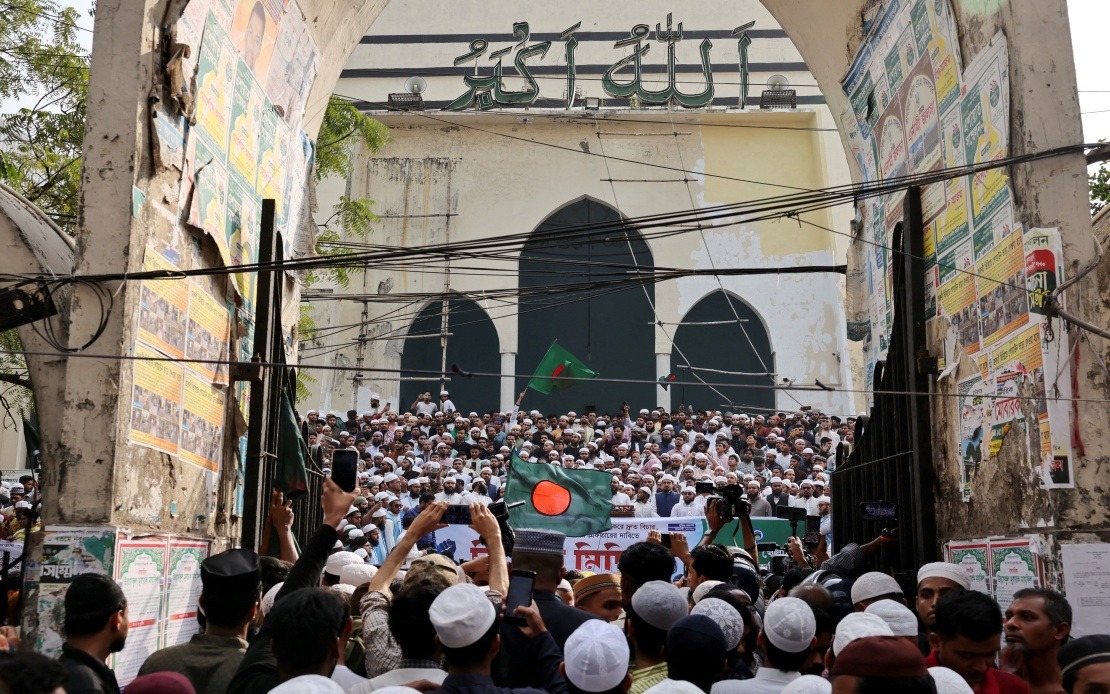
An International Crimes Tribunal in Bangladesh has delivered death sentences in absentia to three senior police officers for crimes against humanity committed during the July 2024 mass uprising that resulted in the collapse of Sheikh Hasina's government. Justice Md Golam Mortuza Mozumder chaired the three-member tribunal that pronounced the verdict, marking a significant moment in Bangladesh's reckoning with state violence that claimed an estimated 1,400 lives during those tumultuous weeks.
The convicted officers occupy prominent positions within Bangladesh's police hierarchy. Former Dhaka Metropolitan Police Commissioner Habibur Rahman, former DMP Additional Deputy Commissioner Md Rashedul Islam, and former Rampura Police Chief Md Mashiur Rahman each face execution for their documented involvement in the fatal shooting of multiple protesters. Rahman, the former commissioner, faces a second death sentence stemming from a separate case, underscoring the breadth of allegations against him. All three remain at large, with authorities treating them as fugitives subject to international manhunts.
The tribunal's decision centres on high-profile killings that became focal points of public outrage during the uprising. One particularly tragic incident involved the shooting of a young man who became trapped on a building exterior in Dhaka, an event that gained widespread circulation across social media platforms and catalysed broader anger against the government's security response. Two additional deaths in the city similarly drew intense scrutiny and helped transform localised unrest into a nationwide crisis that ultimately proved unsustainable for Hasina's administration.
Viralisation of these killings through social media transformed individual tragedies into potent symbols of state overreach. Images and videos documenting the deaths spread rapidly across digital networks, mobilising citizens beyond the initial protest sites and creating a cascading effect that authorities proved unable to control. The security apparatus's heavy-handed response, rather than suppressing dissent, amplified it exponentially, ultimately contributing to the political rupture that forced Hasina from office.
Two additional officers involved in the case received lengthy custodial sentences rather than capital punishment. Tariqul Islam Bhuiyan, a former sub-inspector at Rampura Police Station, received a life sentence plus twenty additional years, reflecting the tribunal's assessment of his comparatively subordinate role in the violence. Another individual similarly convicted in the proceedings faces an identical sentence structure. Like their superiors, both remain fugitives at present.
The tribunal's actions represent an acceleration of Bangladesh's post-uprising accountability mechanisms. In November 2024, the same judicial body had already sentenced former Prime Minister Sheikh Hasina to death in absentia for crimes against humanity during her administration. Hasina, who has maintained exile abroad since August 2024 following the uprising's success, cannot be extradited or prosecuted under current circumstances, yet formal convictions establish legal precedent and validate victims' experiences through official channels.
International assessments of the uprising's human toll provide sobering context for the tribunal's work. According to United Nations documentation, approximately 1,400 individuals perished during the 2024 unrest, with thousands sustaining injuries requiring medical attention. The overwhelming majority of fatalities resulted from firearm discharge by security personnel affiliated with Hasina's Awami League party, suggesting institutional rather than isolated violence. This casualty scale positions the 2024 uprising among the deadliest instances of state security force deployment in recent South Asian history.
For Malaysian and regional observers, Bangladesh's judicial response carries implications regarding state accountability and the limits of authoritarian governance. The tribunal proceedings demonstrate that demonstrable state violence can trigger institutional collapse and international consequences even when perpetrators initially escape capture. Bangladesh's experience suggests that suppressing legitimate grievances through security force escalation may accelerate rather than prevent political transformation, a lesson relevant to governance discussions across Southeast Asia where state security tactics periodically attract scrutiny.
The sentencing also highlights ongoing challenges in prosecuting fugitive officials. All convicted individuals remain beyond Bangladesh's reach, complicating sentence enforcement and creating potential for diplomatic complications if they seek refuge in third countries. International legal mechanisms, including Interpol coordination and cross-border cooperation frameworks, become relevant should these individuals attempt asylum or movement through global networks. Bangladesh's tribunal lacks enforcement capacity beyond its borders, raising questions about whether convictions will translate into actual detention.
The proceedings demonstrate Bangladesh's institutional commitment to documenting state violence through formal legal processes rather than pursuing collective blame or untargeted retribution. By centering individual accountability through named officers and specific incidents, the tribunal establishes differentiated responsibility rather than treating the police force or political party as monolithic entities. This approach potentially preserves institutional functionality while signalling that serious abuses trigger genuine consequences for those directly involved.
Regional security forces monitoring Bangladesh's judicial trajectory may draw various conclusions. Some observers might interpret the sentencing as validation for accountability mechanisms, while others may view the convicted officers' continued freedom as suggesting limited practical consequences for those with resources to flee. The divergence between legal conviction and actual enforcement remains Bangladesh's central challenge as it navigates post-uprising reconciliation and institutional reform. Whether the tribunal's decisions encourage cooperation with accountability processes or alternatively drive security personnel toward greater defensiveness remains an open question with significant implications for Bangladesh's governance future.

