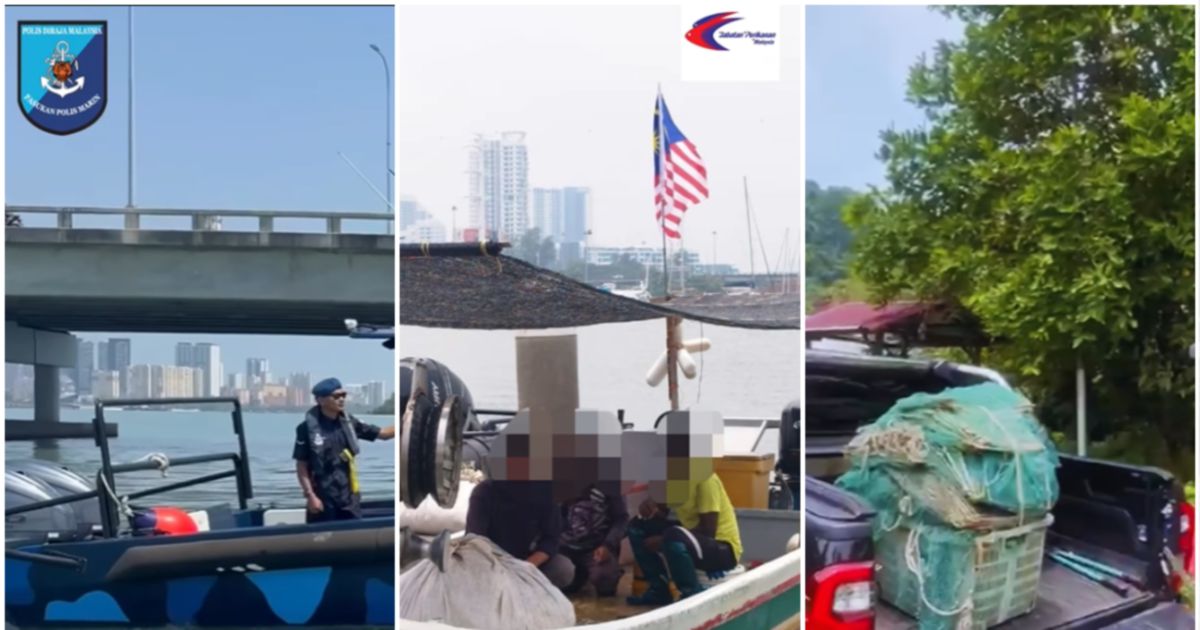
Enforcement authorities in Penang have taken decisive action against illegal fishing operations, resulting in the arrest of three men and the seizure of fishing apparatus and a boat totalling RM75,360 in value. The operation, conducted across Penang waters yesterday, represents part of wider efforts by Malaysian maritime agencies to combat unauthorised fishing activities that deplete stocks and undermine sustainable resource management in the region.
The joint enforcement initiative reflects increasing coordination between multiple government departments tasked with protecting Malaysia's marine environment and ensuring compliance with fishing regulations. Such operations are crucial to the country's fisheries management framework, which has come under growing pressure from illegal, unreported, and unregulated fishing activities both domestically and from foreign vessels operating in Malaysian waters. The seizure demonstrates the authorities' determination to apply existing laws with consistency and rigour.
Illegal fishing represents a persistent challenge across Southeast Asia, where maritime boundaries remain complex and enforcement resources are often stretched thin. Penang, with its strategic location along busy shipping lanes and rich fishing grounds, has historically been a flashpoint for such violations. The state's waters support significant commercial and artisanal fishing industries that depend on healthy fish stocks, making enforcement operations essential to long-term economic sustainability in the sector.
The confiscated equipment and vessel, if sold or disposed of according to standard procedures, would typically be auctioned or destroyed to prevent their return to circulation. Beyond immediate monetary value, the seizure represents a significant disruption to the operational capacity of those engaged in unlicensed activities. The psychological impact of enforcement actions—knowing that authorities are actively patrolling and enforcing regulations—serves as an important deterrent for those considering engaging in similar conduct.
The three arrested individuals now face potential prosecution under relevant maritime and fisheries legislation. Penalties for illegal fishing in Malaysian waters can include substantial fines, imprisonment, or both, depending on the severity of the violation and whether it constitutes a first or repeat offence. Courts have demonstrated increasing willingness to impose stringent sentences in cases involving large-scale seizures, signalling the seriousness with which the judiciary treats threats to marine resources.
For Malaysia's fishing industry, which employs hundreds of thousands and contributes significantly to export revenues, the distinction between licensed and unlicensed operators is fundamental. Licensed fishermen operating under permits and quotas must adhere to seasonal closures, gear restrictions, and catch limits designed to maintain stock viability. When unlicensed operators circumvent these controls, they create an uneven playing field that disadvantages legitimate businesses while accelerating resource depletion. This enforcement action therefore protects the livelihoods of compliant fishers across Penang and neighbouring states.
The operation's success hinges on intelligence gathering and information sharing between agencies. Authorities typically rely on tip-offs from concerned citizens, port observers, and other mariners to identify suspicious activity. The coordination mechanism that enabled yesterday's joint operation suggests that relevant bodies—potentially including the Malaysian Maritime Enforcement Agency, Department of Fisheries, and state authorities—have established effective communication channels and can mobilise resources efficiently when violations are detected.
International precedent shows that enforcement crackdowns yield measurable results when sustained and consistent. Nations with robust maritime patrol networks and severe penalties for fishing violations have experienced stabilisation or recovery of certain fish stocks. Malaysia has invested considerably in surveillance technology and inter-agency coordination, yet resource constraints mean that only a fraction of potential violations can be intercepted. Each successful operation therefore carries significance beyond the immediate seizure, serving as public demonstration of state capacity and commitment.
The broader context includes Malaysia's responsibilities under international agreements governing marine resource management and maritime safety. As a signatory to various fisheries treaties and maritime conventions, the country has undertaken to monitor its waters and prevent illegal activities. Regional cooperation initiatives, such as the Memorandum of Understanding on Port State Measures to Prevent, Deter and Eliminate Illegal, Unreported and Unregulated Fishing, require participating nations to strengthen enforcement capacity and share information about suspected IUU fishing operators.
For Malaysian consumers and export markets, enforcement operations like yesterday's activity contribute to the credibility of the domestic fishing industry. International buyers increasingly demand assurance that seafood originates from legally managed fisheries. By demonstrating active enforcement against illegal operators, Malaysia strengthens its reputation and market access for legitimate exporters. This competitive advantage translates into higher prices and greater market share for compliant producers.
The seizure also highlights ongoing challenges in detecting and preventing financial crime associated with illegal fishing. Proceeds from unlicensed operations are sometimes laundered through seemingly legitimate businesses or used to fund other illicit enterprises. Enforcement operations therefore serve a dual purpose: protecting marine resources whilst potentially disrupting broader criminal networks. Authorities have increasingly recognised the connection between fishing violations and organised crime, particularly in regions where maritime governance is weak.
Moving forward, the incident underscores the need for continued investment in enforcement infrastructure and training for maritime officers. The Penang operation's success demonstrates that when resources are coordinated effectively, authorities can achieve tangible results. However, sustainability requires ongoing commitment, adequate funding, and political will to pursue violators regardless of their connections or influence. Public awareness campaigns that emphasise the link between enforcement and long-term resource security could also encourage community cooperation and reporting of suspicious activities.

