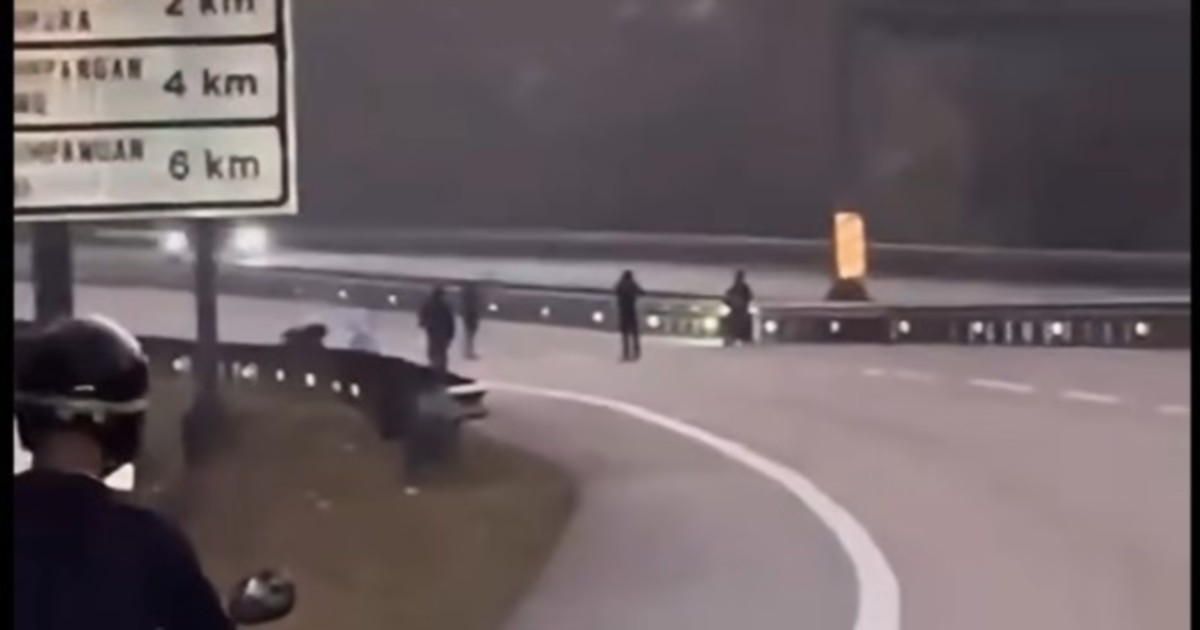
A third wave of arrests has intensified the police investigation into an illegal motorcycle racing incident that occurred on the Johor Second Link, one of Malaysia's busiest highway corridors connecting the nation to Singapore. Three additional men were remanded in Kulai following the incident, bringing the total number of suspects detained to 11 as authorities widen their dragnet across the jurisdiction.
The Johor Second Link, officially known as the Malaysia-Singapore Second Crossing, serves as a vital commercial and transport artery that witnesses hundreds of thousands of vehicle movements daily. The illegal racing activity represents a serious threat to the highway's safety and the movement of legitimate traffic, particularly given the high speeds involved and the density of regular commuters and commercial vehicles that traverse this route.
Police have adopted a methodical approach to dismantling the motorcycle racing network, with each wave of arrests suggesting a coordinated investigative strategy targeting different elements of the operation. The succession of remands indicates that authorities are distinguishing between various roles within the incident—potentially differentiating between active participants, organisers, spectators, and those who facilitated the gathering through social media or other means.
Illegal motorcycle racing has emerged as a persistent challenge for law enforcement throughout Malaysia, particularly in states adjacent to Singapore where organised underground racing scenes have developed. These activities typically attract young riders seeking thrills and peer recognition, but they pose catastrophic risks to public safety. The closed-lane racing that occasionally occurs on highways attracts participants with modified bicycles capable of high speeds, creating hazardous conditions for unsuspecting road users who may encounter debris or congestion resulting from the event.
The Second Link location represents an especially sensitive venue for such activities given its status as an international border crossing. Beyond domestic safety concerns, illegal racing on this strategic infrastructure raises security considerations and can impact cross-border traffic management during peak periods. The incident underscores vulnerabilities in highway monitoring and the challenges faced by authorities in preventing coordinated groups from exploiting road networks for unauthorised events.
Malaysian traffic enforcement agencies have progressively intensified efforts against street racing and illegal motorcycle gatherings, recognising the pattern of escalation in both frequency and severity. Successful prosecutions have included charges under various legislative provisions addressing dangerous driving, public nuisance, and organised illegal activities. The 11 arrests in this single incident suggest that authorities are treating the matter with substantial seriousness and may be invoking enhanced charges reflective of the scale and organisation involved.
The staged expansion of arrests raises questions about the original incident's scope and coordination. Whether the racing was a spontaneous gathering that grew through social media mobilisation or a pre-planned event organised through underground motorcycling networks will likely influence charging decisions and sentencing recommendations. These distinctions matter considerably for establishing patterns of organised crime versus opportunistic public nuisance offences.
For Malaysian highway users and transport operators, incidents of this nature underscore the ongoing necessity for vigilance and adaptability. Traffic can be disrupted not only by the racing participants themselves but also by the emergency response operations and traffic management interventions required to safely clear the corridor. Commercial logistics operations depend on predictable travel times across the Second Link, and such disruptions carry economic consequences through delayed shipments and increased operational costs.
The investigation's progression will establish important precedent regarding how authorities prosecute organised illegal racing incidents. With 11 arrests already secured, investigators may now focus on digital forensics to trace organisational communications, financial transactions related to betting or wagering, and the acquisition and modification of high-performance motorcycles. Enhanced intelligence gathering at this stage could reveal broader networks operating across Johor and beyond.
Stakeholders including the Land Public Transport Agency, highway concessionaires, and Singapore authorities maintain close cooperation on border crossing safety and cross-border incident response. Illegal racing on a shared international corridor necessitates coordinated approaches to enforcement and public communication, particularly if any participants or spectators involved in the incident operated vehicles registered across the Causeway.
Police spokespeople have indicated that investigations remain ongoing, suggesting additional arrests may materialise as authorities pursue remaining leads. The graduated remand process typically continues until sufficient evidence is compiled for charging decisions, which may involve coordinating with the Public Prosecutor's office regarding appropriate penal provisions. The deliberate phasing of remands also allows investigators to interview detainees sequentially, potentially yielding collaborative intelligence that surfaces new suspects or criminal networks.

