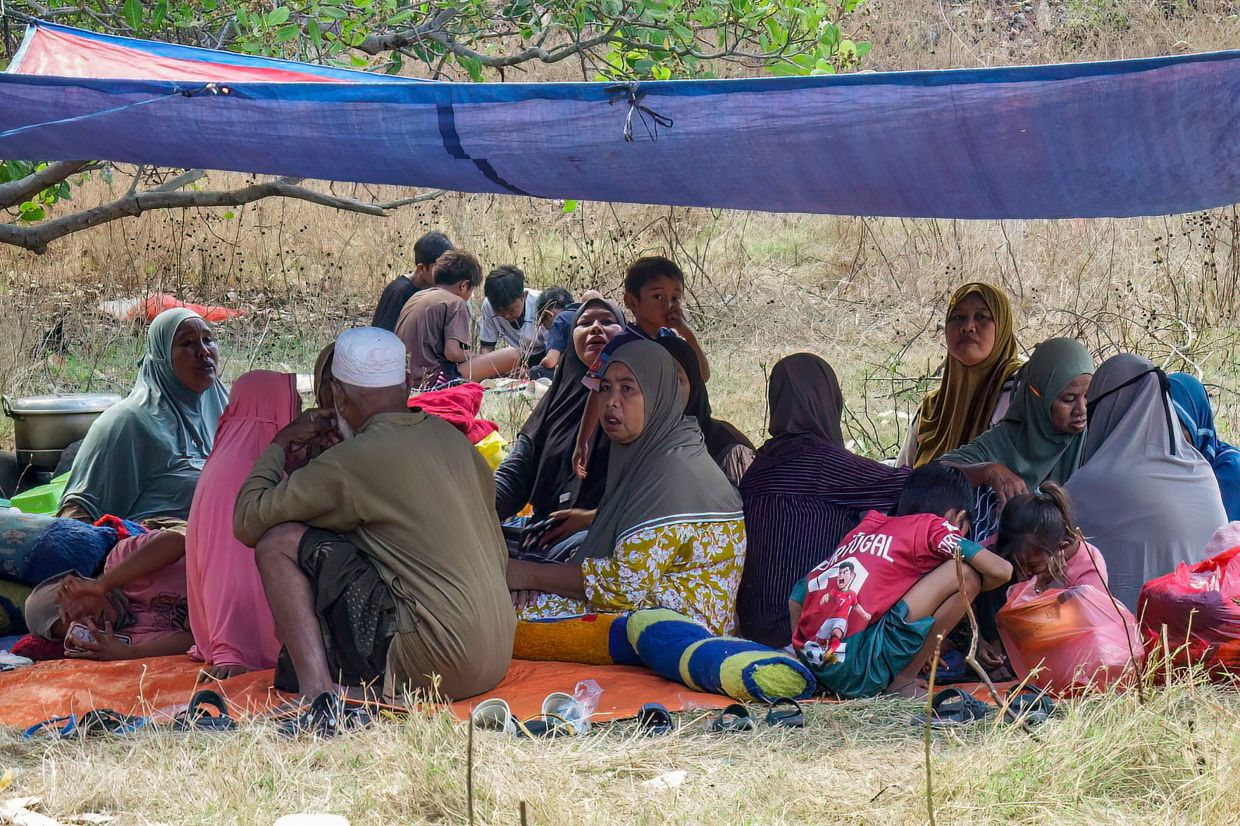
Thousands of survivors camped on hillsides across Indonesia's Flores island continued to await emergency assistance on Sunday, a day after a catastrophic 7.7-magnitude earthquake tore through the region early Saturday morning, claiming at least 48 lives and injuring over 100 others. The disaster has left the island's residents facing severe shortages of food, water, medicines and basic shelter, whilst authorities scramble to coordinate one of the nation's most challenging rescue and recovery operations in recent years.
The quake's violent shaking forced approximately 5,000 people to abandon their homes in panic, according to the National Disaster Management Agency (BNPB). What made the situation particularly harrowing for survivors was the relentless barrage of aftershocks that continued throughout Saturday and into Sunday—341 tremors in total rattled the island during the immediate aftermath, keeping residents too frightened to return to their homes even as basic necessities ran desperately short. The shallow nature of the quake, with its epicentre located just offshore from the northern coast, meant the seismic energy was transmitted with maximum intensity to populated areas.
Many evacuees, including residents from Nangahale village on Flores's north coast, spent Saturday night huddled together on exposed hilltops, driven upward by both the earthquake itself and the terrifying sight of the sea retreating rapidly—a natural warning sign that could herald a devastating tsunami. Though Indonesian geological authorities later lifted the tsunami warning after waves of up to 1.6 metres struck certain coastal areas, the psychological toll on survivors remained acute. Umri, a resident of Nangahale, articulated the desperation of thousands when he described the urgent requirements: basic food provisions, drinking water, medical supplies and even diapers for infants. Many families had fled with nothing but the clothes on their backs.
The trauma of Saturday's disaster was compounded for many survivors by vivid memories of a previous catastrophe that had scarred the island's collective consciousness. Nurhidayati, a 55-year-old woman spending Sunday morning on a hillside mat with her neighbours, revealed how the 1992 earthquake—also measuring 7.7 magnitude and followed by a devastating tsunami that killed approximately 2,500 people—had left her permanently scarred. Three decades later, the rekindling of that terror through another quake of identical magnitude proved almost unbearable for residents like her, who remained too psychologically traumatised to risk re-entering their homes despite the ongoing need for shelter and supplies.
The infrastructure damage across Flores has been staggering in scale. Official damage assessments recorded at least 914 houses suffering severe structural damage, with hundreds more experiencing varying degrees of destruction. Beyond residential properties, the earthquake has crippled the island's essential services network: 93 educational facilities have been damaged or destroyed, 36 health centres remain unusable, and 38 government offices have sustained significant harm. Critical supply lines have been severed, with at least one emergency access road remaining impassable, severely hampering the delivery of relief supplies to affected communities.
Communications infrastructure across affected zones has been almost entirely disrupted, leaving many areas without electricity or functioning telecommunications networks. This isolation has compounded the crisis, as families have been unable to contact loved ones and authorities have struggled to coordinate rescue operations and deliver timely information to survivors. The loss of electrical power has also meant the failure of water pumping systems and refrigeration for medical supplies, creating cascading humanitarian challenges beyond the immediate destruction.
Recognising the severity of the unfolding crisis, both national and international actors have mobilised to assist. The Indonesian government dispatched 50,000 aid packages totalling 275 tonnes to the affected region, whilst the European Union signalled its commitment by offering access to its Copernicus Earth observation satellite system to support search and rescue operations. EU Commission President Ursula von der Leyen issued a statement of solidarity, pledging that Europe would stand beside Indonesia during this critical period. The International Federation of Red Cross and Red Crescent Societies also began mobilising preparations to establish temporary shelters and distribute aid to displaced residents.
Official search and rescue operations continued throughout Sunday, though authorities indicated that current evidence did not point to significant numbers of people trapped beneath rubble or missing. Rather than uncovering buried survivors, the focus shifted toward locating scattered survivors, assessing continuing damage, and preparing the ground for longer-term recovery operations. The East Nusa Tenggara provincial government, which encompasses Flores, began processing formal emergency status declarations designed to streamline aid distribution and governance for the projected two-week emergency response period.
Flores's vulnerability to seismic catastrophe reflects the island's unfortunate geographic positioning. Indonesia sits atop the Pacific Ring of Fire, an arc of intense tectonic activity that stretches from Japan through Southeast Asia and across the broader Pacific basin, making the archipelago one of the world's most earthquake-prone regions. The 2004 Indian Ocean earthquake, measuring 9.1 magnitude and centred off Sumatra's coast, provided a sobering historical reference point—that disaster triggered a tsunami that claimed approximately 220,000 lives across the region, with roughly 170,000 fatalities occurring within Indonesia itself, making it one of recorded history's deadliest natural disasters. The Flores quake, whilst far less powerful than the 2004 event, nonetheless represents a stark reminder of the ongoing seismic risks confronting the region.
For Malaysia and the broader Southeast Asian community, the Flores disaster underscores critical vulnerabilities in the region's disaster preparedness infrastructure. Many nations throughout Southeast Asia face similar tectonic risks, and the challenges confronting Indonesia's relief operations—damaged communications, disrupted supply chains, and the psychological impact of recurring disasters—mirror potential scenarios that Malaysian authorities and regional neighbours might face. The international response, including the rapid mobilisation of satellite technology and cross-border aid coordination, demonstrates both the importance of regional cooperation frameworks and the necessity for individual nations to maintain robust emergency management capabilities capable of responding to catastrophic natural disasters.

