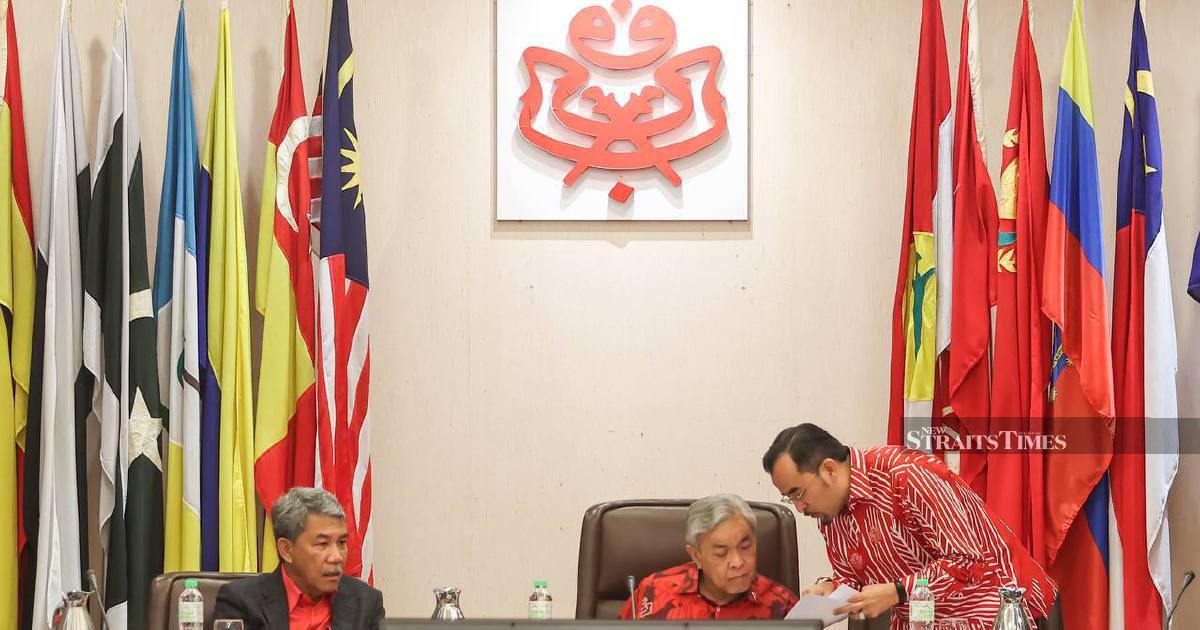
Datuk Dr Asyraf Wajdi Dusuki, the secretary-general of Umno, has issued a clear statement defending the legal presumption of innocence for individuals held by authorities during criminal investigations. The emphasis on this foundational principle of Malaysia's criminal justice system comes as detentions for investigation remain a regular feature of the country's law enforcement landscape, particularly in high-profile cases involving corruption, organised crime, or offences of national concern.
The Umno official's intervention underscores a persistent tension within Malaysia's legal framework between investigative efficiency and the constitutional safeguards afforded to every accused person. Under Article 5 of the Federal Constitution, every individual has the right to liberty and security of person, principles that are theoretically protected but sometimes challenged by the realities of police detention practices and broader public perception during high-profile cases.
In Malaysia, the Criminal Procedure Code allows detention for investigation purposes for limited periods, typically 24 hours initially with possible extension to 14 days for certain offences. However, the period of detention can be deeply distressing for those involved, particularly when investigations become public and media coverage shapes public opinion before any charges are formally laid. Asyraf's statement appears aimed at combating the tendency of sections of society to declare individuals guilty in the court of public opinion long before judicial proceedings commence.
The distinction between being detained for investigation and being convicted of a crime represents a fundamental pillar of the rule of law. During the investigation phase, individuals remain unconvicted suspects with constitutional protections, including the right to legal representation, protection against self-incrimination, and access to bail or release on recognisance. Yet in practice, prolonged detention without clear communication about the investigation's progress can damage reputations irreversibly, even when individuals are subsequently released without charge or acquitted in court.
Malaysia's experience with high-profile detentions—including cases involving corporate executives, politicians, and other public figures—demonstrates how investigative detention can become entangled with public relations campaigns and media narratives. The timing of announcements, the dramatic nature of detention procedures, and selective disclosure of alleged evidence can all contribute to creating a presumption of guilt in public consciousness, regardless of what courts eventually determine. This phenomenon poses particular risks for the credibility of the justice system itself, as public confidence erodes when cleared individuals struggle to rebuild their reputations.
Ashyraf's intervention carries particular weight coming from Umno, a party that has navigated significant legal challenges involving its members in recent years. The party's senior officials have been subjects of investigation, prosecution, and imprisonment in various corruption-related cases. This political context adds nuance to his statement: it reflects both a commitment to universal principles of justice and the practical understanding that members of any political party may at some point face investigative detention.
The Malaysian Bar Council and civil society organisations have long advocated for tightening the procedural safeguards around investigative detention, including mandating legal representation from the outset, reducing the maximum period of detention without charge, and requiring regular judicial oversight of extended detention periods. Countries like Singapore and Australia have implemented stricter timelines and judicial review mechanisms for investigative detention, requiring police to justify continued detention before a magistrate at regular intervals.
From a regional perspective, Malaysia's detention practices have occasionally attracted scrutiny from international human rights bodies and foreign governments. Ensuring robust protections during investigative detention is not merely a matter of domestic justice but also affects Malaysia's international standing and credibility on human rights matters. Southeast Asian nations increasingly compete for investment and talent, and the perception of a fair and predictable legal system is economically consequential.
The practical implications of Asyraf's statement extend to how authorities communicate during investigations. When law enforcement agencies release information about detained individuals to the media, they should do so in ways that do not presuppose guilt. Similarly, the narrative constructed around detention—whether emphasising alleged criminal sophistication or painting detainees as danger to society—can crystallise public opinion in ways that complicate subsequent fair trials. Defence lawyers often note that potential jurors or members of the public have already formed strong opinions based on media coverage before formal proceedings even begin.
Moving forward, Asyraf's emphasis on not treating detained individuals as guilty could serve as a useful reminder for all stakeholders: law enforcement agencies, the media, prosecutors, and the general public. Each group plays a role in either upholding or undermining the presumption of innocence. For journalists covering investigations, the challenge is reporting factually on police actions without editorialising or implying conclusions about guilt. For the public, the challenge is maintaining intellectual humility about cases they have not personally reviewed in full detail.
The broader significance of this statement lies in its affirmation that legal principles must transcend partisan considerations and case-by-case convenience. Protecting the rights of those detained for investigation—regardless of their wealth, political affiliation, or the apparent severity of alleged wrongdoing—strengthens the entire system for everyone. A justice system that abandons the presumption of innocence for some risks seeing it abandoned for all eventually. Asyraf's intervention, while focused on a principle that should be obvious, serves as a necessary reminder in an era when media sensationalism and social media reactions can overwhelm sober legal reasoning.

