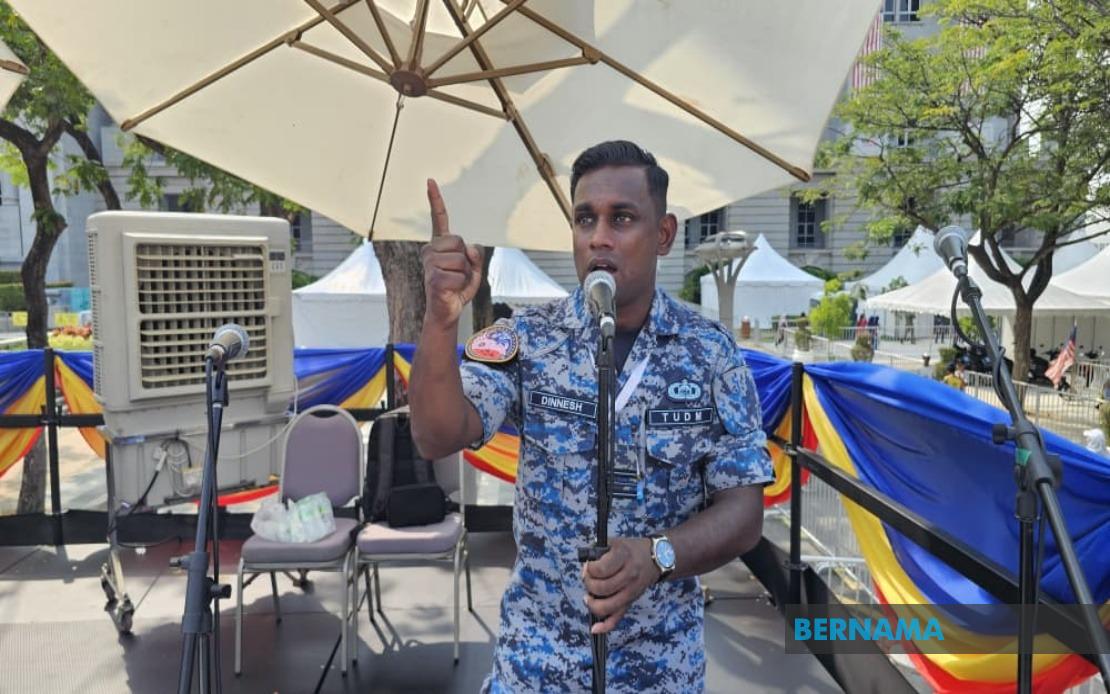
When fighter jets screamed across the skies above Dataran Putrajaya on National Day, it was not just the thunderous roar of engines that captivated the crowds below. The measured, commanding voice of Major Dinnesh Nicolas Rene wove together the technical precision and raw power of the aerial display into a coherent story that kept thousands transfixed. As the official air commentator for Malaysia's 2026 National Day celebrations, the 34-year-old Royal Malaysian Air Force (RMAF) officer transformed what could have been merely impressive flying into an emotionally resonant experience that captured the nation's pride.
The role of air show commentator represents a specialised niche within military communications that demands far more than simply reading prepared remarks into a microphone. Major Dinnesh emphasises that the position requires an almost encyclopaedic understanding of multiple dimensions simultaneously: the technical specifications and capabilities of each aircraft type, the identities and experience levels of the pilots executing each manoeuvre, the choreography of formation flying, and the precise sequence and nature of every stunt planned for the display. This multifaceted knowledge base must then be delivered with perfect timing and dramatic effect to an audience that spans from schoolchildren to senior government officials, each requiring different levels of context and engagement.
Major Dinnesh's entry into this specialised field occurred relatively recently in his military career. After joining the RMAF in 2015, he received his first major opportunity as a commentator at the Langkawi International Maritime and Aerospace Exhibition in 2019, an event that showcases Malaysia's defence capabilities to international audiences. The experience proved transformative, establishing him as a trusted voice for subsequent major RMAF events, including anniversary celebrations. Today, he serves in the RMAF Air Defence Control Division, a position that provides him with operational insights that inform his commentary work. For the 2026 National Day parade, he shared commentating duties with Major Neny Suhaida Ab Suki and Captain Muhammad Iqbal Nasrudin, ensuring comprehensive coverage of the aerial programme.
The preparation process underlying even a single air show display involves multiple layers of coordination that remain invisible to spectators. Major Dinnesh describes an intensive cycle beginning with detailed meetings between commentators, ground control teams, and the pilots themselves. These sessions establish the fundamental facts: which specific aircraft will participate, how many jets will fly in each formation, the biographical details and squadron affiliations of individual pilots, and the historical significance or symbolic meaning attached to different squadrons' mottos. This information gathering extends beyond purely technical matters to encompass security coordination with multiple government agencies, as successful air show commentary requires seamless integration with the broader ceremonial and security architecture surrounding major state events.
The challenge intensifies dramatically when the audience includes the King and Prime Minister, as occurs during National Day celebrations. Protocol considerations become paramount, and commentators must navigate a delicate boundary regarding what information can be shared publicly and when it should be disclosed. Major Dinnesh identifies this as one of the most demanding aspects of large-scale state ceremonies, requiring deep familiarity with both military protocol and the expectations of senior civilian leadership. The commentator must simultaneously maintain the excitement and momentum of the display whilst ensuring absolute adherence to security protocols and official messaging guidelines.
Beyond these logistical and political dimensions lies what Major Dinnesh identifies as the fundamental challenge facing any air show commentator: voice preservation. Unlike masters of ceremonies who work indoors with controlled acoustic environments, air show commentators must project their voices across open spaces and compete with the sound of military aircraft engines that can reach deafening volumes. The vocal demands are extraordinary, and the risk of voice strain or loss represents a genuine occupational hazard. Major Dinnesh emphasises that protecting vocal health throughout the entire preparation period, from initial rehearsals through to the actual performance, constitutes one of his most critical responsibilities. This requires disciplined vocal training and careful voice management throughout demanding rehearsal schedules.
The psychological dimension of the commentator's role extends beyond technical accuracy and vocal preservation to encompass emotional authenticity. Major Dinnesh subscribes to a straightforward but powerful principle: the commentator must genuinely embody and feel the excitement and wonder they wish to convey to the audience. This authenticity cannot be faked, and audiences instinctively recognise when a commentator is merely performing versus when they are genuinely moved by the spectacle unfolding overhead. Despite spending years around fighter jets and attending numerous air displays, Major Dinnesh maintains that his sense of awe and excitement remains undiminished, allowing him to deliver commentary that resonates with both first-time spectators and aviation enthusiasts alike.
For Malaysian audiences, the role of air commentators like Major Dinnesh carries particular significance in how the nation experiences and understands its military capabilities and national pride. Air displays have historically served as powerful symbols of state power and national identity, particularly during major civic ceremonies. The quality of commentary determines whether spectators leave with merely pleasant memories or with a deepened understanding and appreciation of the RMAF's operational capabilities and the dedication of its personnel. Major Dinnesh's approach, grounded in technical expertise combined with genuine passion, elevates these moments from spectacle into meaningful national experiences.
The evolution of Major Dinnesh's career also reflects broader trends in how modern militaries approach public engagement and narrative control. Rather than relegating air show commentary to administrative duties, the RMAF has invested in developing commentators with genuine expertise and communication ability. This approach recognises that in an era of competing narratives and media fragmentation, how information is framed and delivered matters enormously. A skilled commentator like Major Dinnesh becomes an unofficial ambassador for the RMAF, shaping public perceptions of military professionalism, capability, and relevance to national life.
Looking beyond Malaysia's borders, the sophistication required of air show commentators reflects international best practices. Nations hosting major air displays, from Singapore's DefenseTech Asia to international air shows across the Asia-Pacific region, invest similarly in cultivating professional commentators who can deliver simultaneously to live audiences and television viewers with varying levels of technical knowledge. Major Dinnesh's insistence on extensive preparation and coordination mirrors standards observed at premier international events, suggesting that the RMAF maintains high professional standards in this often-overlooked aspect of public presentation.
The broader lesson embedded in Major Dinnesh's commentary work concerns the importance of translation and interpretation in military and state communications. Raw power—whether expressed through fighter jets or military hardware—requires contextualisation to become meaningful to civilian audiences. A jet performing a barrel roll is impressive; a jet performing a barrel roll explained as a tactical manoeuvre whilst carrying the legacy of a squadron with seventy years of service becomes a moment that connects individual spectators to something larger than themselves. This interpretive function, expertly executed, transforms aerial displays from mere entertainment into occasions for public reflection on national identity, military service, and collective pride.

