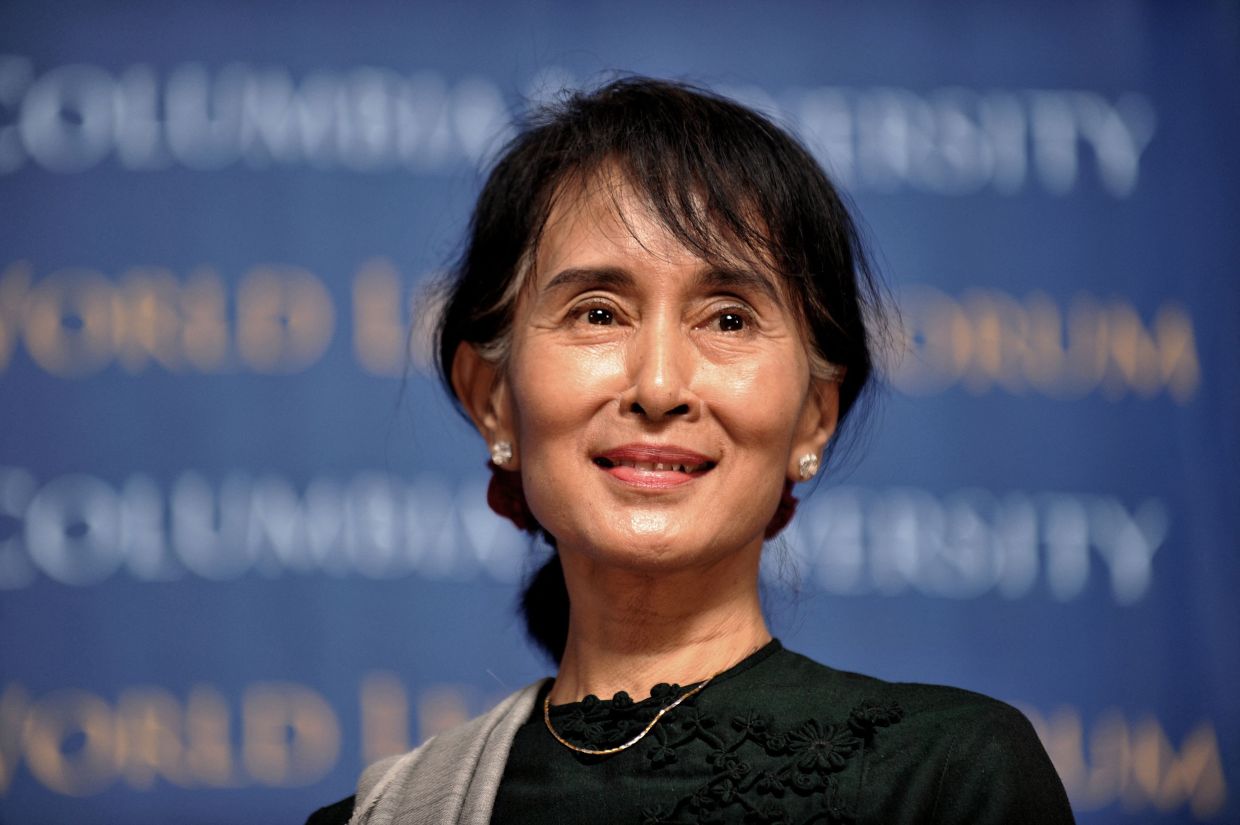
The mystery surrounding Aung San Suu Kyi's whereabouts has deepened since Myanmar's military junta announced her transfer from prison to house arrest in April, claiming the move reflected a softening stance. Yet in a city designed by previous strongmen specifically to conceal the workings of power, locating the 81-year-old democracy icon has become nearly impossible—even for those claiming to oversee her detention. Naypyidaw's very architecture appears engineered to frustrate transparency, leaving residents and officials alike unable to pinpoint where the former elected leader is being held.
The capital itself functions as an instrument of control. Constructed in the early 2000s under former military ruler Than Shwe, Naypyidaw was deliberately sited far from Myanmar's traditional urban centres of Yangon and Mandalay, reflecting the regime's deep-seated paranoia about popular movements and external interference. What emerged is a sprawling metropolis of roughly one million people scattered across an area nine times larger than New York City, connected by eerily vacant 20-lane highways that cut through dense jungle and agricultural fields. The scale seems designed less for practical governance than for psychological dominance, creating a landscape where power operates invisibly while ordinary citizens navigate endless, indistinguishable streets.
The physical environment reinforces this sense of enforced isolation. Parliament's gilded campus sprawls across 800 acres, one of the world's largest despite Myanmar's authoritarian history, yet the city often feels abandoned. Mobile internet jammers interfere with navigation applications, leaving even residents uncertain of their own movements. More gardeners than pedestrians populate the highways, meticulously manicuring vast lawns that serve no discernible public purpose. Urban theorist Galen Pardee from Columbia University has described the city as "the complete opposite of what a traditional urban planner would say makes a good city," deliberately crafted with a political agenda that prioritises control over livability.
Suu Kyi's confinement in such a deliberately opaque setting appears almost calculated to render her invisible. When junta leader Min Aung Hlaing announced her transition from formal imprisonment to house arrest following his disputed January elections, he framed it as humanitarian progress signalling his supposed transformation from military autocrat to civilian president. This rebranding exercise has drawn fierce criticism from international observers and Myanmar's civil society, who view the arrangement as little more than image laundering. The 81-year-old remains isolated at an undisclosed address with her movement and communications severely restricted, fundamentally no freer than when incarcerated in conventional prison facilities.
The secrecy surrounding her detention extends even to government officials. Police special branch sources from multiple jurisdictions admitted anonymously that they lack access to information about her location, with one officer claiming that "even generals do not have her information." This level of compartmentalisation suggests a deliberate strategy to ensure that no single official, apart from the inner security circle, possesses knowledge of where Suu Kyi is being held. Union Solidarity and Development Party spokesman Thein Tun Oo acknowledged his own ignorance regarding her whereabouts, explaining that because he is merely an ordinary member of the ruling coalition, such sensitive intelligence remains beyond his clearance. This calculated distribution of information serves multiple purposes: it prevents potential sympathisers from attempting her rescue, insulates the junta from accountability through plausible deniability, and reinforces the regime's monopoly on knowledge as a form of power.
Suu Kyi's predicament carries particular poignancy given her extraordinary life trajectory. Daughter of Myanmar's independence hero Aung San, she spent decades living abroad before returning in 1988 to champion democratic reform. Her earlier activism resulted in 15 years of house arrest confined to her family's Yangon mansion, which paradoxically became a symbol of resistance as supporters gathered outside its gates in spontaneous demonstrations of solidarity. She received the Nobel Peace Prize in 1991 for her nonviolent struggle, establishing an international reputation as democracy's conscience in Southeast Asia. The generals eventually permitted her to lead the nation through a decade-long democratic transition, only to nullify her 2020 electoral victory through the February 2021 coup that has since triggered ongoing civil conflict across Myanmar.
The junta's handling of Suu Kyi since the coup reveals the depths of its vindictiveness. She was arrested and tried on charges that international human rights organisations universally characterise as fabricated political persecution designed to neutralise her influence permanently. She has not appeared publicly since her detention, severing the symbolic connection between her person and Myanmar's pro-democracy movement. Additionally, at least one villa where she resided before assuming office has been demolished, erasing physical traces of her former authority. This methodical erasure extends beyond her imprisonment to encompass the broader institutional framework that legitimised her leadership.
Her son Kim Aris, speaking from London, rejected the military's humanitarian framing of the house arrest arrangement. He pointedly observed that a government residence where one's movements are controlled and communications monitored constitutes "a private prison rather than a residence with home comforts." From his perspective, the distinction between formal imprisonment and house arrest in Naypyidaw amounts to semantic subterfuge designed for international consumption. The substance of his mother's detention remains fundamentally unchanged: she is isolated, prevented from accessing supporters or the media, and held at the regime's pleasure without due process or prospect of release.
Min Aung Hlaing's broader political consolidation has further entrenched Suu Kyi's exclusion from public life. After ruling by decree for five years following the coup, the general orchestrated elections in January 2024 that predictably delivered overwhelming victory to the pro-military Union Solidarity and Development Party while systematically excluding Suu Kyi's National League for Democracy from participation. This electoral charade provided the veneer of civilian governance while ensuring military dominance persists indefinitely. Within parliament itself, the transformation of institutional priorities is evident: magazines lauding Suu Kyi's leadership still grace shelves, yet ruling party officials like Aye Chan proclaim bluntly that "her era is over," signalling the regime's determination to erase her legacy from Myanmar's political consciousness.
The implications of Suu Kyi's disappearance extend far beyond her personal suffering, carrying profound significance for Myanmar's regional position and Southeast Asia's broader democratic trajectory. Her imprisonment represents a definitive rejection of the democratic opening promised during the earlier transition period, reinforcing the tragic pattern of failed democratisation that characterises much of the region's modern history. The regime's ability to render a global figure so thoroughly invisible within its own territory demonstrates the formidable mechanisms of control available to determined authoritarian rulers, particularly when they command the state's full institutional apparatus. For Malaysia and other ASEAN nations grappling with their own governance challenges, Suu Kyi's fate serves as a cautionary reminder of how quickly democratic gains can evaporate when military institutions retain coercive capacity and lack genuine institutional constraints on their power.
Naypyidaw itself has become not merely a setting for Suu Kyi's confinement but a metaphor for the regime's broader approach to power. The city's deliberate opacity, its vast empty spaces, its cutting-edge surveillance infrastructure camouflaged beneath a veneer of normalcy—all reflect a leadership obsessed with control at the expense of meaningful governance. That Myanmar's most prominent political prisoner can vanish into this landscape while the world watches helplessly underscores both the sophistication of modern authoritarian techniques and the limitations of international pressure in constraining state violence. Until the junta releases Suu Kyi and genuinely commits to democratic restoration, she will remain a phantom presence in a phantom capital, her absence a daily indictment of Myanmar's tragic political regression.

