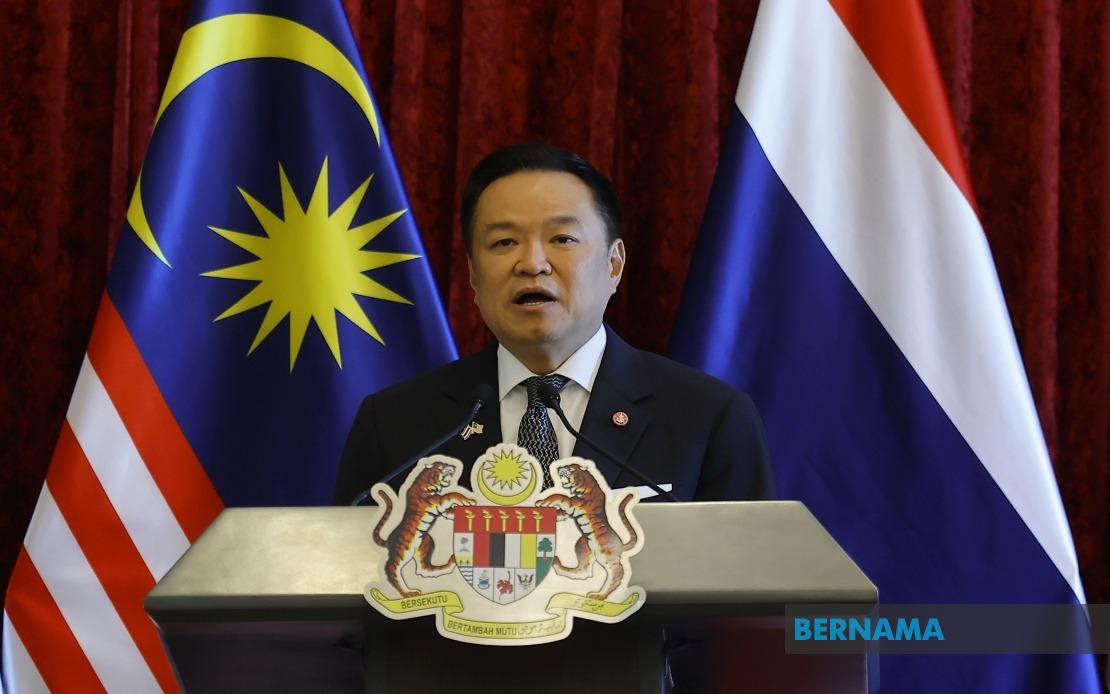
Thai Prime Minister Anutin Charnvirakul has identified the cessation of violence and the resolution of longstanding challenges affecting Thailand's southern border provinces as fundamental priorities for his administration. Speaking during a joint press engagement with Malaysian Prime Minister Datuk Seri Anwar Ibrahim in Putrajaya on Thursday, Anutin underscored the necessity of tackling security concerns in the region through continued bilateral cooperation and diplomatic engagement. His remarks reflect the gravity with which Bangkok regards the situation in its troubled southern region, where decades of insurgency have claimed thousands of lives and displaced communities.
The interconnected relationship between security improvements and economic progress featured prominently in Anutin's remarks, as he articulated a vision where sustainable peace becomes the foundation upon which development initiatives can flourish. "Peace creates the conditions for development, while development helps build lasting peace," he stated, encapsulating a philosophy increasingly embraced by policymakers tackling protracted conflicts across Southeast Asia. This framing acknowledges that military approaches alone cannot resolve the underlying grievances and socioeconomic disparities fueling violent movements in the region, a lesson learned through years of conflict in Thailand's Pattani, Yala, and Narathiwat provinces.
Malaysia's instrumental role in facilitating dialogue between the Thai government and relevant stakeholders in the peace process earned Anutin's explicit gratitude during the Putrajaya meeting. The Southern Thailand Peace Dialogue process, which Kuala Lumpur has facilitated, represents a diplomatic framework intended to bring together diverse parties for structured negotiations aimed at de-escalation and political settlement. This Malaysian initiative underscores the broader regional interest in stabilising Thailand's south, given the geographical proximity of the conflict zone to Malaysia's own northern border regions and the potential for spillover effects affecting bilateral security.
The composition of negotiating teams reflects both nations' serious commitment to achieving tangible progress. Malaysia's delegation is helmed by Datuk Mohd Rabin Basir, who brings substantial security sector experience from his previous tenure as director-general of the National Security Council before his appointment on July 1, 2024. On the Thai side, negotiations are led by Thanat Suwannanont, the director of Thailand's National Intelligence Agency, suggesting that Bangkok views these talks as integral to its national security apparatus rather than a peripheral diplomatic exercise.
Anwar's reassurance that Malaysia categorically refuses to tolerate violence and remains committed to cooperating with Thailand in pursuing accountability for perpetrators provided substantive mutual affirmation of both nations' counter-extremism principles. This joint positioning is particularly significant given the transnational dimensions of conflicts in Southeast Asia, where militant networks often exploit porous borders and cross-boundary safe havens. By publicly declaring their unified stance against violence, both leaders sent a signal to the Barisan Revolusi Nasional and other armed groups that the regional environment for their operations is tightening.
The inclusion of the Barisan Revolusi Nasional in dialogue frameworks marks a significant diplomatic development, as bringing armed movements to the negotiating table typically requires concessions regarding their political legitimacy and voice in settlement processes. The BRN represents the most cohesive organised force among southern Thai insurgent groups, and its participation in structured talks suggests that both Thai and Malaysian mediators have pursued strategies recognising that military suppression alone has failed to resolve the conflict. Engagement with the BRN does not imply acceptance of their violent methods but rather reflects pragmatic recognition that sustainable peace requires addressing the grievances motivating their armed struggle.
The broader geopolitical context of these developments involves Malaysia's pivotal position in regional stability architecture. As a neighbour directly affected by Thailand's security challenges and a nation with its own history of managing separatist movements, Malaysia brings credibility and institutional experience to facilitation efforts. The country's willingness to invest diplomatic capital in mediating between the Thai government and insurgent organisations demonstrates Kuala Lumpur's commitment to preventing destabilisation that could migrate across its borders or create humanitarian crises affecting Malaysian border communities.
Economic considerations undoubtedly inform both governments' push toward resolution. Thailand's southern provinces represent an economically underdeveloped region partly because security concerns deter investment, limit tourism potential, and force substantial military expenditure that diverts resources from productive sectors. Malaysia similarly recognises that chronic instability across the border can hamper developmental initiatives in its own northern states and complicate cross-border economic cooperation. The vision articulated by Anutin of peace enabling development reflects a rational calculation that conflict resolution generates dividends benefiting both populations and governments.
The recent high-level engagement between Bangkok and Kuala Lumpur also reflects broader patterns within Southeast Asia where nations increasingly recognise that security challenges transcend borders and demand regional solutions. The Association of Southeast Asian Nations framework, while emphasising non-interference, has gradually accommodated mechanisms for member states to cooperate on transnational security matters including insurgency and terrorism. Thailand and Malaysia's bilateral coordination demonstrates how neighbouring countries can work within ASEAN's norms while addressing concrete threats to their populations and territorial integrity.
Moving forward, the effectiveness of these peace initiatives will depend substantially on whether dialogue structures produce tangible concessions, confidence-building measures, and eventually substantive agreements addressing the political, cultural, and economic demands underlying southern Thai insurgency. The appointment of experienced security professionals to lead negotiations suggests serious intent, though sceptics note that previous peace processes in the region have often stalled or fragmented due to the difficulty of reconciling incompatible political objectives. Malaysia's sustained commitment to facilitation will likely be tested as negotiations progress and each side manoeuvres for advantage.
For Malaysian observers, these developments warrant close attention because Thailand's southern instability potentially affects Malaysia through refugee flows, cross-border militant movements, and the broader stability of the region upon which Malaysia's development depends. The government's investment in peace facilitation reflects recognition that regional stability serves national interests. The next phase will reveal whether dialogue can transition from rhetorical commitment to substantive agreements addressing the root causes of violence in Thailand's troubled provinces.

