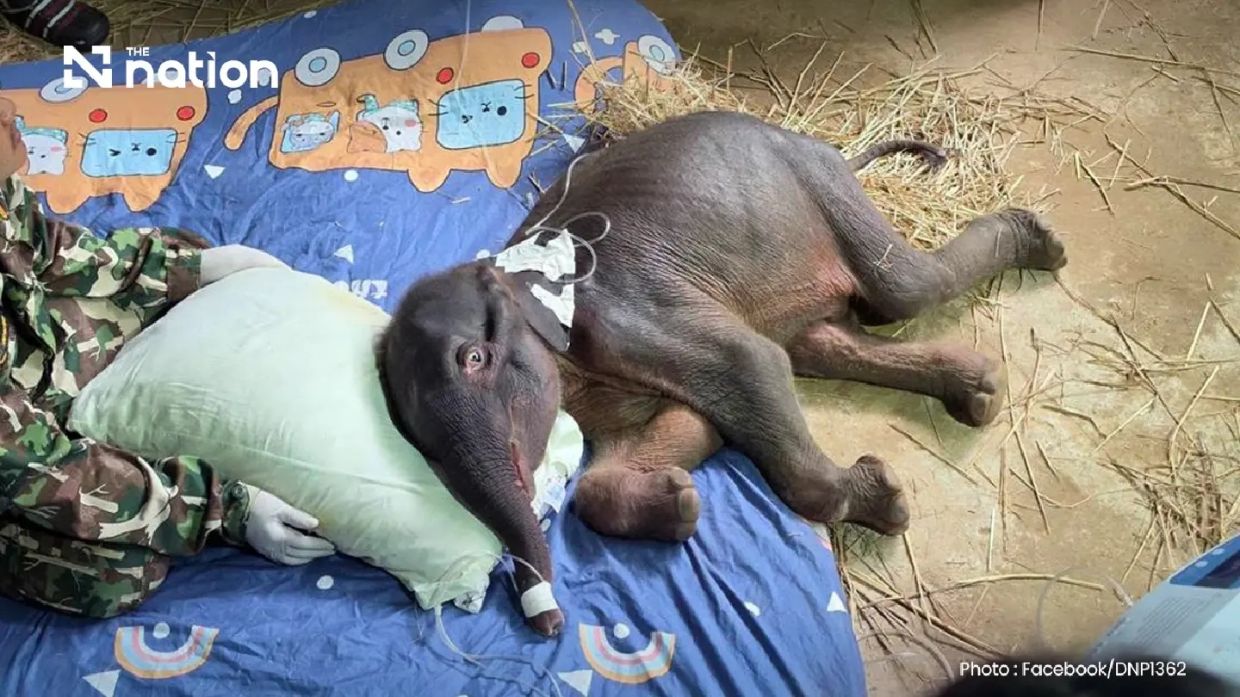
Jiew Sai Yok, a young wild elephant separated from its family and rescued near Thailand's Sai Yok National Park in Kanchanaburi province, has died after battling severe health complications. The calf passed away early on Tuesday, August 4, at approximately 2 a.m., despite round-the-clock veterinary intervention and intensive care efforts. Officials from the Department of National Parks, Wildlife and Plant Conservation (DNP) announced the death on social media, noting that veterinarians believe acute kidney failure was the likely cause, though a full necropsy is planned to confirm the exact circumstances.
The calf's ordeal began when villagers spotted the distressed animal on July 30 near the bank of Huai Mae Nam Noi in a remote, difficult-to-access area. Rescuers had to deploy boats to reach Jiew Sai Yok, reflecting the challenging terrain of the region. Initial observations suggested the young elephant had been separated from its mother and herd for approximately two days. Despite hopes that the family group would return to retrieve the calf during an overnight vigil, no response came to its repeated calls. The animal's vulnerability was evident from the start, raising immediate concerns about its survival prospects in the wild.
When a veterinary assessment team arrived on July 31, they discovered a calf in severe distress. The journey to the site required a boat journey lasting between one and two hours, complicated further by continuous rainfall that had swollen waterways and created forest runoff hazards. The examination revealed a catalogue of ailments pointing to prolonged exposure and stress. The calf bore multiple physical wounds including abrasions, blisters, and sores throughout its mouth, with one particularly pronounced lesion the size of a 10-baht coin. Navel wounds and blistered areas with necrotic tissue on the trunk suggested the animal had been struggling without maternal care and protection.
Beyond visible injuries, internal signs of systemic distress were evident. The calf showed severe dehydration, with dark yellow-red urine indicating possible infection or fluid loss. Its digestive system was compromised, producing loose, foul-smelling stool. Infections had developed around its eyes, causing conjunctivitis and attracting insects. Canker-like lesions and various sores in the oral cavity made feeding difficult despite being offered milk every two to three hours, of which it could only consume 350 to 500 millilitres at a time. The combination of these conditions painted a picture of an animal struggling against multiple physiological failures simultaneously.
Recognising the severity of the situation, park officials transported the calf to Sai Yok National Park headquarters, where it could receive intensive 24-hour care from veterinary professionals and park staff. This environment, though controlled and medicalised, represented the elephant's best chance for survival. Veterinarians administered intravenous fluids and continuous oxygen support throughout its final days, interventions aimed at stabilising its most critical systems. For periods, the determined young animal showed signs of resilience, mustering enough strength to stand and continue drinking milk at regular intervals, demonstrating will to survive despite its compromised state.
The calf's condition nonetheless continued to deteriorate. Chronic diarrhoea persisted throughout treatment, and the dark-coloured urine remained a worrying indicator of kidney dysfunction. Periods of weakness alternated with brief moments of apparent improvement, a pattern typical of acute organ failure. In the early hours of Tuesday morning, the calf fell asleep, and passed away peacefully while under veterinary supervision. The veterinary team immediately initiated full resuscitation procedures, but these efforts proved unsuccessful. The animal's death marked the end of a rescue operation that had captured attention and sympathy across Thailand and the region, highlighting the vulnerabilities of young wildlife separated from parental care.
Laboratory blood tests conducted during treatment had already suggested acute kidney failure, leading veterinarians to suspect this as the primary cause of death. However, the medical team also noted the possibility of congenital abnormalities in internal organs, potentially indicating that Jiew Sai Yok faced developmental challenges even before separation from the herd. The exact role such defects may have played remains unclear, reinforcing the need for the planned necropsy and laboratory sample analysis. These investigations will provide crucial data for understanding what killed this elephant and potentially inform future rescue protocols for similarly distressed calves.
The death of Jiew Sai Yok underscores the profound difficulties facing orphaned elephants in Southeast Asia, where habitat loss and human-wildlife conflict increasingly force young animals to navigate survival alone. Wild Asian elephants face mounting pressure from shrinking forest ranges and fragmenting populations, making separation incidents more frequent. Successful rescue and rehabilitation of orphaned calves requires extraordinary resources, specialist expertise, and often remains ultimately unsuccessful despite best efforts. The case also highlights the complex challenges veterinarians face when treating wild animals with vastly different physiology from domestic species, where limited medical information and emergency conditions complicate diagnosis and treatment.
For Thai wildlife authorities and the veterinary personnel involved, the outcome represents both a tragedy and a testament to dedication. The DNP publicly acknowledged the emotional toll on rescue teams and veterinarians who worked tirelessly to save the calf's life. Their efforts, though ultimately unsuccessful, demonstrated institutional commitment to protecting Thailand's remaining wild elephant population. As human activity continues to encroach upon elephant habitats across Southeast Asia, preventing separations through habitat preservation and conflict mitigation remains far more effective than rescue operations. Jiew Sai Yok's brief life and death serve as a sobering reminder of the stakes facing the region's wildlife in an era of rapid environmental change.

