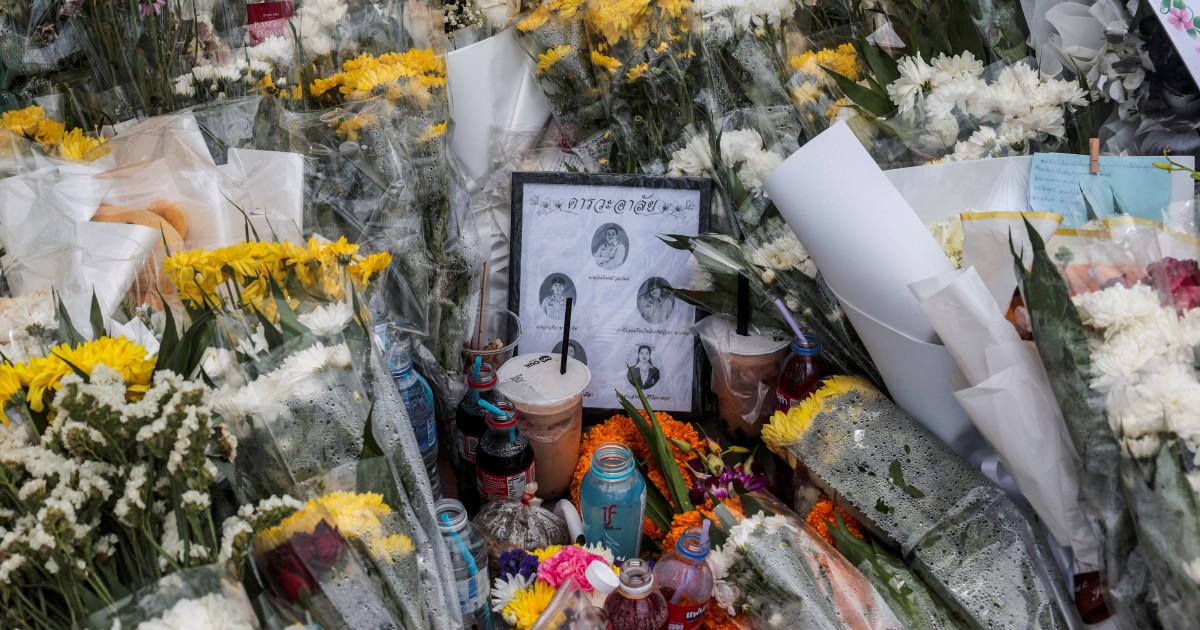
Thailand's government has moved swiftly to tighten firearm regulations in the wake of last week's catastrophic school shooting, with Prime Minister announcing a suspension of gun licences as a direct response to the tragedy. The decision marks a significant policy intervention aimed at preventing future incidents of armed violence within educational settings. The announcement came as the remains of the teenage perpetrator and two elderly victims—his grandparents—underwent cremation rites in Nonthaburi province, bringing a sobering closure to one chapter of a devastating sequence of events.
The suspension of firearms licences represents an unusual executive action for Thailand, where gun ownership remains relatively accessible compared to other Southeast Asian nations. The measure appears designed to create breathing room for a comprehensive review of the country's weapons regulation framework, which has long faced criticism for insufficient oversight and enforcement mechanisms. By pausing new licence approvals, authorities signal an intention to prevent additional weapons from entering circulation while a fuller policy response is being formulated.
The incident underscores growing concerns about firearm access among young people in Thailand, where regulations governing age-restricted purchases and safe storage practices have historically been inconsistent across provinces. Educational institutions have become focal points for security discussions following such tragedies, prompting schools nationwide to reassess their emergency protocols and physical safeguards. The reverberations of this shooting extend beyond the immediate victims and their families to encompass broader anxieties about youth violence and the availability of lethal weapons to individuals in psychological distress.
For Southeast Asian observers, the Thai government's response offers insights into how regional administrations balance security imperatives with questions of civil liberties and individual rights. Thailand's approach contrasts with varying regulatory philosophies across the region, where countries like Singapore maintain extraordinarily restrictive firearms policies while others maintain more permissive frameworks. The suspension signals that even Asian jurisdictions traditionally comfortable with gun ownership are reassessing those assumptions in light of tragic consequences.
The cremation ceremony for the victims and perpetrator reflects Thai cultural and religious practices surrounding death and the transition of the deceased. In Thai Buddhism, cremation is considered a means of releasing the spirit and facilitating its journey in the cycle of rebirth. The simultaneous cremation of the killer and his family members illustrates the complex emotional terrain families navigate when tragedy involves both perpetrators and victims bound by kinship.
This incident arrives at a moment when Thailand faces broader questions about youth mental health services and psychological screening mechanisms for firearm ownership. The fact that a teenager obtained access to weapons sufficient to carry out a fatal attack raises uncomfortable questions about family oversight, institutional reporting systems, and whether warning signs preceded the violence. Mental health professionals in Thailand have increasingly flagged concerns about limited access to counselling services, particularly in provincial areas where many families reside.
The prime minister's firearms suspension will likely face scrutiny regarding its duration, scope, and whether it represents a preliminary step toward permanent legislative reform. Questions remain about whether this action will survive political resistance from rural constituencies where gun ownership remains culturally significant for hunting and self-defence purposes. Agricultural communities particularly have long viewed firearm access as integral to their livelihoods and security against wildlife threats.
Regional security experts suggest that Thailand's response may influence approaches taken by neighbouring countries confronting similar challenges. Singapore's extraordinary firearm restrictions have effectively eliminated mass shooting incidents, while Indonesia and the Philippines continue grappling with enforcement of existing regulations amid widespread illegal weapons circulation. Thailand's position as a middle ground between these regulatory extremes makes its policy choices particularly instructive for understanding how Southeast Asian societies calibrate security against access.
The timing of this policy initiative reflects an accelerating global conversation about weapons accessibility and public safety. As mass shooting incidents increasingly dominate news cycles worldwide, pressure mounts on governments to demonstrate responsiveness through concrete policy interventions. For Thai authorities, the suspension serves dual purposes: it satisfies public demands for action while permitting time to develop more durable regulatory architecture.
Looking forward, the critical question for Thailand concerns whether this suspension translates into sustained legislative reform or recedes once immediate attention fades from news cycles. The cremation of the victims marks an endpoint in funeral proceedings but merely the beginning of institutional soul-searching regarding how to prevent recurrence. Success will ultimately depend on whether the government moves beyond emergency measures toward comprehensive reform addressing access, storage, screening, and mental health support systems.
The suspension also reflects Thailand's responsibility to parents and educators who expect schools to remain sanctuaries rather than sites of violence. Educational institutions have begun implementing additional security measures and staff training protocols, though such defensive measures alone cannot address the fundamental question of preventing motivated individuals from obtaining weapons. The governmental response through licence suspension signals recognition that prevention must operate at the source of weapons acquisition rather than solely at venues where violence might occur.

