Thailand is taking a calculated diplomatic gamble by linking its military partnership with the United States to the outcome of ongoing trade negotiations. According to officials familiar with the strategy, Bangkok intends to signal that punitive American tariffs could lead to reduced involvement in joint defence activities—a significant escalation in what has otherwise been a purely commercial dispute. The warning will be embedded in a counterproposal that Thailand plans to submit as reciprocal-trade talks resume later this month, marking a rare instance of a Southeast Asian nation leveraging security arrangements to influence economic outcomes with its superpower ally.
The Thai government's decision to invoke the military dimension reflects growing frustration with Washington's trade policies under the Trump administration. Thailand accumulated a trade surplus of US$51.4 billion with the United States last year, making it one of numerous countries affected by the newly imposed 12.5 per cent tariff on most exports under Section 301, the controversial provision of American trade law used to penalise practices deemed unfair. While the formal language of Thailand's position will remain carefully ambiguous, officials have indicated that the kingdom could fundamentally reconsider its participation in major joint exercises and military programmes should higher tariffs inflict substantial economic damage on Thai exporters and industries.
This approach represents a delicate balancing act for Bangkok. The Trump administration's expansion of investigations into what it characterises as manufacturing overcapacity has placed Thailand, a major exporter of electronics, automotive parts, and agricultural products, squarely in its crosshairs. In response, Thai negotiators have already tabled several substantive concessions, including a proposal to eliminate tariffs on certain American imports and to align Thai standards with American specifications for beef, lamb, and alcoholic beverages. These traditional trade remedies suggest that invoking security partnerships may be viewed as a final card to play if conventional negotiating positions fail to yield satisfactory results.
Thailand's strategic position in Asia gives this threat particular weight. As one of only two formal treaty allies of the United States in Southeast Asia—the Philippines being the other—Thailand has anchored American military presence in mainland Southeast Asia for decades. The bilateral defence relationship has proven resilient through multiple political crises, including the recovery after Thailand's 2014 military coup, when Washington temporarily suspended several defence activities before gradually rebuilding ties. This history demonstrates both the strength of the underlying alliance and the willingness of both countries to weather serious political turbulence without dismantling fundamental security arrangements.
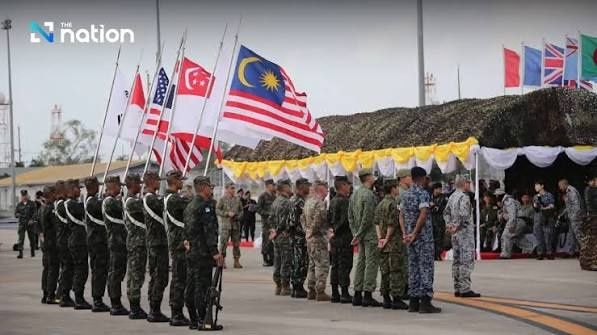
Cobra Gold stands as the most visible symbol of this partnership. Jointly hosted by Thailand and the United States, the annual multinational exercise is widely regarded as the largest of its kind in mainland Asia. The most recent iteration drew approximately 8,000 personnel from 30 countries, underscoring its significance not merely as a Thai-American endeavour but as a cornerstone of broader regional security architecture. Curtailing or withdrawing from Cobra Gold would send unmistakable signals to other allies about the consequences of aggressive American trade policies, potentially influencing the calculations of other nations facing similar tariff pressures.
Thailand's willingness to weaponise this relationship stems partly from the aggressive stance Bangkok has adopted across its entire government apparatus. Commerce Minister Suphajee Suthumpun has publicly argued that Thailand deserves preferential trade treatment based on its strategic alliance with Washington, the Treaty of Amity, and Thai investment in the American economy. She characterised the ongoing negotiations as a whole-of-government effort, with coordinated involvement from the foreign ministry, defence ministry, and business associations. This unified approach suggests that military considerations are now integral to how Bangkok frames its overall relationship with the United States.
Defence Ministry officials have so far exercised caution in public statements. Spokesman Surasant Kongsiri declined to verify or confirm the proposal, instead suggesting that negotiations would more likely focus on enhancing rather than constraining military cooperation. This rhetorical restraint reflects standard diplomatic practice, allowing negotiators flexibility while avoiding formal commitments that could undermine their bargaining position. Neither the Pentagon nor Thailand's Commerce Ministry has publicly responded to inquiries about the threatened linkage between trade and defence cooperation, indicating that both sides may prefer to handle these sensitive matters through private channels.
For the broader Southeast Asian region, Thailand's tactical manoeuvre carries significant implications. Other nations facing comparable tariff pressures—including Vietnam, Indonesia, and Malaysia—are likely monitoring how Bangkok's strategy unfolds. If Thailand succeeds in extracting concessions by threatening military cooperation reductions, it could inspire similar tactics among other regional partners. Conversely, if the United States dismisses such threats, it may demonstrate that security partnerships are insufficient leverage in the Trump administration's transactional approach to trade policy, potentially shifting regional calculations about the value of American alliances.
Thailand has also taken steps to address specific American concerns outside the trade negotiations themselves. The government has pledged to accelerate legislation banning imports of goods manufactured with forced labour, a priority issue for the Biden and Trump administrations alike. This supplementary approach suggests Bangkok recognises that trade disputes occur within a broader framework of geopolitical and humanitarian considerations, and that addressing these concerns may strengthen its negotiating position even if threats regarding military cooperation do not yield direct results.
The Thai negotiating position remains anchored to a specific numerical target. Officials have indicated that Bangkok is seeking to maintain the tariff rate at no higher than 19 per cent, a threshold discussed under an earlier framework. This suggests that while Thailand is prepared to invoke military cooperation as leverage, the actual economic demands remain within a defined and potentially negotiable range. Whether American negotiators view this linkage as a serious constraint or as diplomatic theatre will ultimately determine whether Thailand's strategy succeeds in bending the Trump administration's protectionist policies.
The fundamental tension underlying these negotiations reflects broader shifts in how alliances are negotiated in the contemporary international system. Traditionally, security partnerships and trade relationships operated in somewhat separate spheres, with military ties viewed as relatively immune to commercial disputes. Thailand's willingness to explicitly link these domains suggests recognition that in an era of transactional diplomacy, no component of a bilateral relationship can be taken for granted. Whether this approach ultimately strengthens or weakens Thailand's hand remains uncertain, but it undoubtedly signals that Bangkok intends to defend its economic interests with all available tools.

