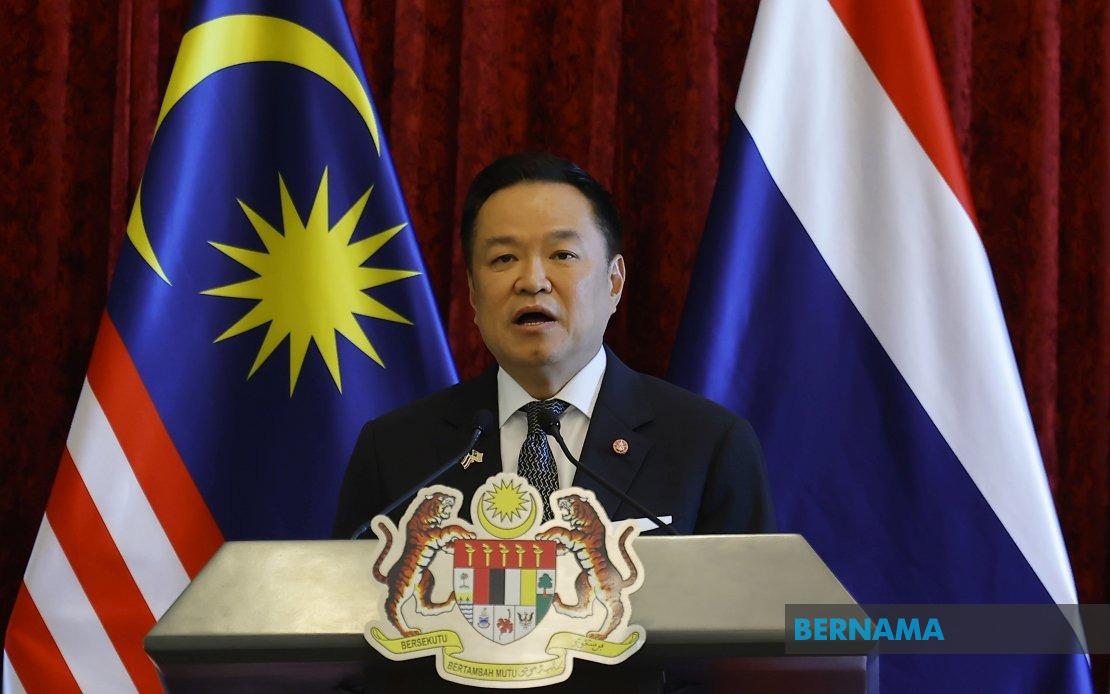
Thailand's Prime Minister Anutin Charnvirakul offered his best wishes to Malaysia's Prime Minister Datuk Seri Anwar Ibrahim on Saturday ahead of the highly anticipated Johor state election, underscoring the warm diplomatic relations between the two Southeast Asian neighbours. The gesture came during a joint press conference in Putrajaya, where Anutin concluded his remarks with an expression of goodwill towards Anwar's political prospects in the contest scheduled for polling later this week.
The 16th Johor state election represents a significant political test, with 172 candidates competing for 56 seats across the southern Malaysian state. Anwar's coalition, Pakatan Harapan, has mounted a comprehensive campaign effort by fielding contenders in every single constituency, drawing from the combined strength of its three component parties: PKR, DAP, and Amanah. The alliance's strategy blends experienced campaigners with fresh political talent, reflecting an attempt to balance institutional knowledge with renewed energy as voters prepare to cast their ballots.
Anwar characterised his engagement with the Thai premier as exceptionally cordial and substantive, employing the metaphor of old friends reconnecting to describe the tone of their discussions. In his response at the press conference, the Malaysian Prime Minister invited Anutin to return to Malaysia, emphasising how the Thai leader's presence contributed to an atmosphere of comfort, happiness, and relaxation amongst Malaysia's leadership circle. This personal warmth evident in their public statements signals more than mere diplomatic courtesy; it reflects the deepening comfort level between two key ASEAN figures navigating complex regional dynamics.
Anutin's visit marks his first official trip to Malaysia since his reappointment to Thailand's top office in March 2026, making the timing particularly symbolic. The two-day mission was undertaken at Anwar's invitation and arrives at a moment when Malaysia's political landscape is undergoing active contestation at the state level. Bangkok's decision to send its Prime Minister to witness Malaysia's electoral process indirectly signals Thailand's interest in the stability and democratic health of its immediate neighbour, particularly given Johor's geographical proximity to Thailand's eastern border.
The bilateral relationship between Malaysia and Thailand has historically encompassed both cooperation and complexity, spanning trade, security, maritime issues, and people-to-people exchange. Anutin's visit underscores efforts by both governments to prioritise collaborative engagement on matters of mutual interest. The Thai Premier's presence during Malaysia's electoral cycle provides an opportunity for both nations to reaffirm their commitment to regional stability and peaceful democratic processes, values increasingly important in a region occasionally buffeted by political uncertainty.
From Malaysia's perspective, hosting a neighbouring head of government during an active state election campaign carries subtle diplomatic implications. It projects confidence in the electoral process and suggests that Anwar's government remains focused on external relations and regional partnership despite the domestic political engagements underway in Johor. For Thai observers, the visit offers insight into Malaysia's political trajectory and the strength of its democratic institutions, matters relevant to Bangkok's own strategic calculations in Southeast Asia.
The warm personal chemistry evident between Anwar and Anutin, as displayed during their joint appearance, offers a counterpoint to the sometimes-fractious nature of Malaysia-Thailand relations. These two leaders represent relatively progressive administrations within their respective countries, both having navigated complex political transitions to reach their current positions. Their apparent rapport suggests possibilities for deeper cooperation on regional challenges, whether involving maritime security, economic integration, or responses to transnational issues affecting both nations.
As Malaysia's political calendar accelerates with state-level elections, the presence of a foreign dignitary from a major neighbouring power underscores the interconnected nature of contemporary Southeast Asian politics. Thailand's economic and strategic interests in Malaysia's stability are real and significant, making Anutin's visit more than ceremonial. The timing also allows both governments to coordinate perspectives on regional affairs, from the situation in Myanmar to the dynamics of ASEAN cohesion, even as Malaysian voters focus on local concerns in Johor.
The election itself, while primarily a state-level contest, carries implications that extend beyond Johor's boundaries. A significant Pakatan Harapan performance would bolster Anwar's political standing nationally and validate his coalition's approach to governance. Conversely, setbacks could complicate the political arithmetic at the federal level, particularly given Malaysia's complex multi-level governance structure where state outcomes often reverberate through national politics. Anutin's supportive remarks, though diplomatically modest, represent an expression of confidence in Anwar's leadership as Malaysia navigates its own democratic processes.

