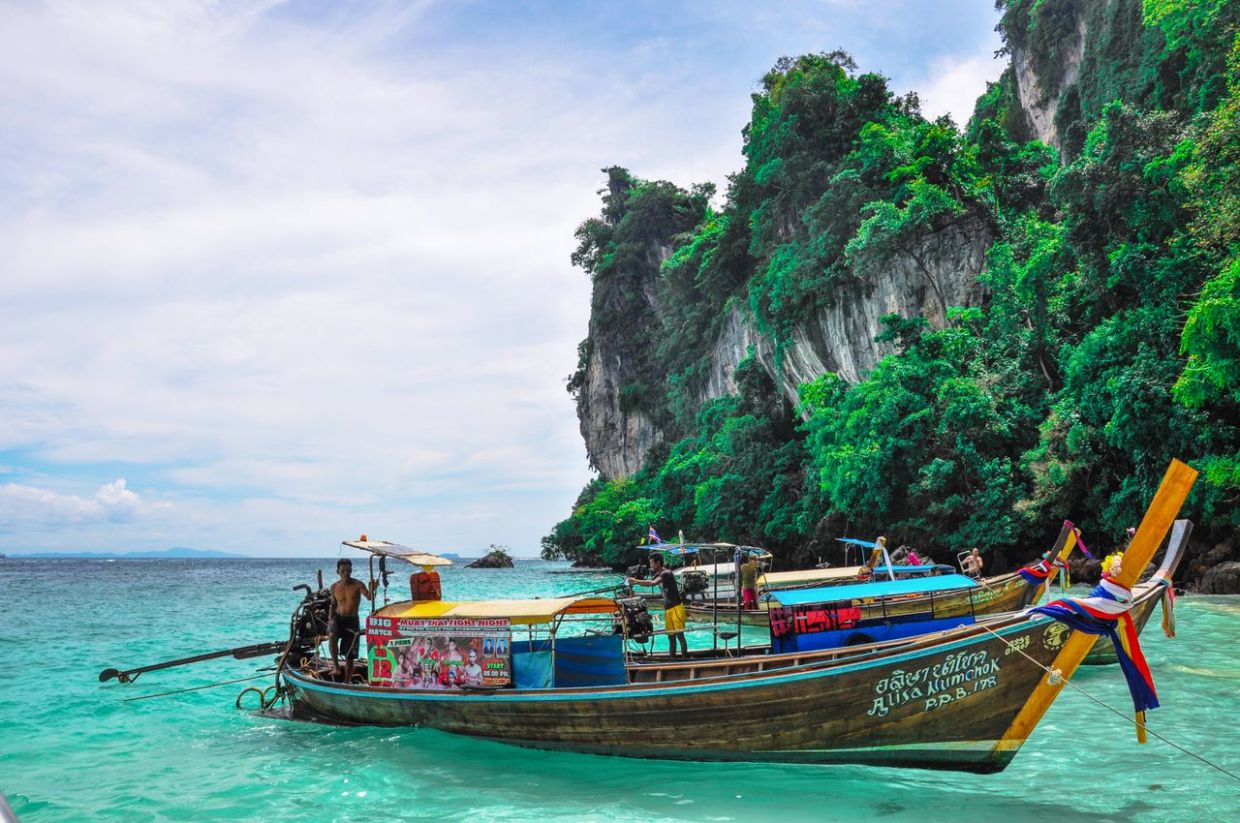
Thailand is fundamentally recalibrating its tourism strategy after forty years of chasing ever-rising visitor numbers. The kingdom's government has declared an end to the relentless pursuit of mass tourism, shifting focus toward extracting greater revenue from each traveller who arrives. This represents a remarkable pivot for a nation that built one of the world's largest tourism industries on the premise that volume equals success. The Tourism Authority of Thailand has explicitly stated it will prioritize quality markets and visitor spending power rather than attempting to surpass previous arrival records, marking a strategic inflection point that carries significant implications for the entire Southeast Asian tourism sector.
The numbers tell a revealing story. Thailand is targeting approximately 33 million foreign visitors for the current year, a deliberate reduction from the nearly 40 million who entered during the boom year of 2019. This figure falls short even of last year's 32.97 million arrivals, which would constitute Thailand's first consecutive annual decline outside the Covid-19 pandemic period since at least 1995. Such a contraction, had it occurred five years ago, would have triggered alarm among policymakers dependent on tourism revenue. Today, officials appear entirely untroubled, viewing these numbers through a fundamentally different economic lens. Deputy Governor Nithee Seeprae articulated this cognitive shift in direct terms, stating that the authority remains unconcerned about absolute visitor counts because the objective has transformed into maximizing economic extraction per person rather than achieving numerical milestones.
The rationale underlying this strategic reversal reflects both external pressures and internal capacity constraints. Geopolitical tensions throughout the region and intensifying competition from rival destinations have convinced Bangkok that the mass-tourism game has become increasingly unwinnable. Vietnam and Indonesia have emerged as formidable competitors in the budget-tourism segment, effectively neutralizing Thailand's historical pricing advantages. Meanwhile, the Thai baht has strengthened in recent years, further eroding the kingdom's traditional position as a low-cost destination. Rather than attempt to reclaim market share through price competition—a race toward the bottom that would benefit neither the nation nor its tourism ecosystem—Thailand's leadership has chosen to compete on experience quality and exclusivity instead.
Currently, foreign visitors spend approximately US$1,500 per trip on average across all segments. The Tourism Authority has established an ambitious target of raising this to US$2,400, representing a 60 percent increase in per-capita spending. This ambitious objective requires a fundamental restructuring of marketing efforts and destination positioning. The authority has initiated targeted campaigns in affluent British cities including Oxford and Manchester, deliberately targeting travellers seeking specialized experiences rather than beach lounging on a budget. Medical tourism, wellness retreats, luxury concerts, international festivals, professional golf tournaments, marathons and high-end sporting events form the cornerstone of the new marketing narrative. These categories of tourism typically generate longer stays and higher expenditure on accommodation, dining, and ancillary services compared to conventional beach holidays.
The visual and messaging architecture of Thailand's tourism promotion has shifted dramatically to reflect this repositioning. The official tourism authority website now emphasizes luxury and wellness angles prominently, with marketing materials suggesting that visitors can "heal and become a warmer, happier you"—language targeting affluent individuals seeking transformative experiences rather than budget travellers seeking inexpensive recreation. This represents a complete reversal of the messaging that dominated Thai tourism marketing for decades, which concentrated on affordable accessibility and "Land of Smiles" simplicity.
The most striking manifestation of Thailand's new priorities involves visa policy, where the reversal has been particularly dramatic. In the immediate post-pandemic period, Thai authorities relaxed visa requirements significantly to stimulate tourism recovery and boost arrival numbers. These liberalized entry rules succeeded in attracting visitors but generated unintended consequences. Officials documented a measurable surge in illegal employment among foreigners, increased overstaying incidents, and elevated crime rates involving foreign nationals. Rather than tolerate these negative externalities in pursuit of visitor volume targets, Thailand has systematically rolled back the liberalized visa measures, prioritizing immigration control and domestic security over tourism expansion. This reversal signals a genuine reorientation of national priorities, placing economic quality above quantitative growth.
Yet the strategic challenge remains formidable. Tourism represents approximately one-fifth of Thailand's total economic output, an enormous dependency. An intricate ecosystem of hotels, restaurants, food markets, transport operators, dive shops, tour companies and related services has evolved specifically around the high-volume tourism model. Popular destinations such as Phuket and Chiang Mai were deliberately developed with mass tourism infrastructure and capacity. Transitioning these resort communities from volume-dependent operations to premium-experience models represents an extraordinarily difficult structural adjustment. Hotel operators accustomed to filling beds at lower price points face pressure to maintain occupancy while simultaneously raising rates—a balancing act that not all will navigate successfully.
The financial projections underscore the complexity of achieving the spending targets despite visitor reductions. International tourism receipts are projected to increase marginally this year to THB1.55 trillion (approximately RM190.17 billion) from THB1.54 trillion (RM188.95 billion) in 2025. This represents minimal growth despite ambitious plans to increase per-capita spending by 60 percent. The modest revenue increase suggests that the transition remains incomplete or that actual per-visitor spending increases are lagging behind official targets. Successful execution would require not merely attracting different tourists but fundamentally reorganizing the tourism supply chain to service premium experiences at scale.
The strategic context behind Thailand's recalibration deserves deeper examination. The kingdom has spent decades cultivating one of the world's largest and most sophisticated mass-tourism sectors, leveraging historical advantages including a relatively weak currency, extensive global media exposure through film and television productions, and a massive influx of Chinese visitors before the pandemic disrupted travel flows. Since Covid-19, Thailand has struggled to recapture that momentum despite significant recovery in international travel. Rather than wait indefinitely for the return of pre-pandemic patterns, Thai policymakers have essentially decided to reshape the destination entirely. This represents a calculated acceptance that the old model is permanently altered and that successful tourism economies must adapt to new realities rather than attempt resurrection of past glory.
Nithee has emphasized that the strategic reorientation does not constitute outright rejection of budget travellers. Instead, officials have reframed "luxury" in explicitly experiential terms rather than price-based terms. According to this reconceptualization, luxury derives from meaningful and exclusive experiences rather than high-ticket expenditure alone. A traveller participating in an authentic wellness retreat or specialized sporting event might be considered luxury tourism regardless of absolute spending if the experience offers depth, authenticity and exclusivity. This definitional shift permits Thailand to maintain a broader tourism base while prioritizing experiences that generate longer stays and higher overall expenditure, even from visitors who might not occupy five-star hotels.
The implications for Southeast Asian regional tourism are substantial. If Thailand successfully transitions to a quality-focused model, other regional destinations may face pressure to compete differently or risk being perceived as lower-tier alternatives. Vietnam and Indonesia might accelerate their own moves toward premium positioning. Conversely, should Thailand's transition prove unsuccessful—if destinations like Phuket and Chiang Mai cannot sustain themselves with reduced visitor volumes—the kingdom could find itself worse positioned than before, having abandoned mass-tourism competitiveness without successfully establishing premium-tourism dominance. The outcome remains uncertain, but Thailand's willingness to fundamentally restructure its relationship with tourism after decades of growth-focused strategy represents a significant regional development worthy of sustained monitoring.

