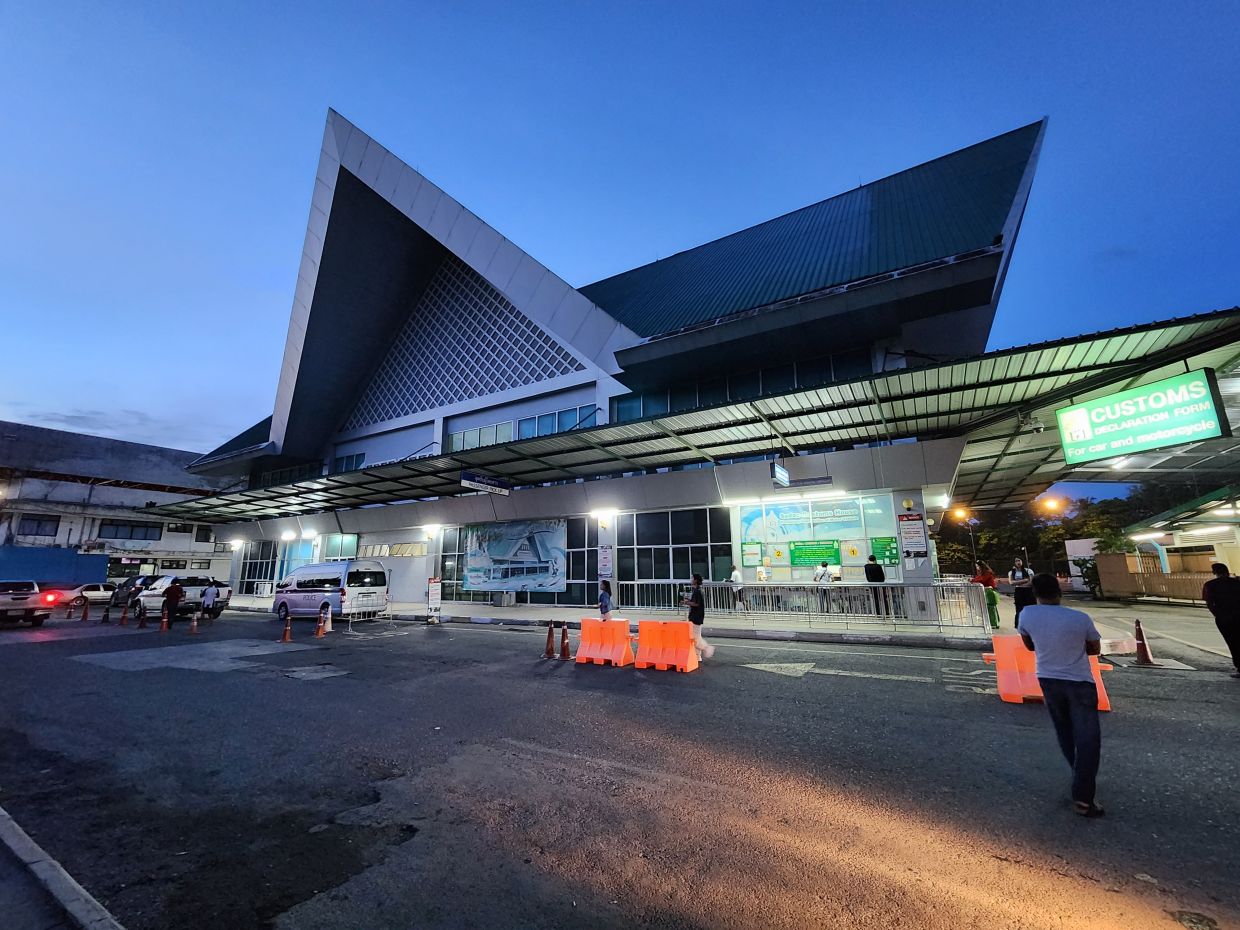
Thailand has taken a significant step toward deepening economic integration with Malaysia by approving a new permanent border checkpoint at Sadao, set to commence operations on July 11. The Thai cabinet's decision reflects both nations' commitment to removing barriers that have historically constrained cross-border commerce and people movement in the critical gateway region between Southeast Asia's second-largest economy and its fourth-largest neighbour. This development carries implications beyond bilateral relations, potentially reshaping logistics networks across the Malay Peninsula and reinforcing Thailand's role as a crucial hub for regional trade flows.
The relocated checkpoint, positioned between boundary markers 23/9 and 23/10, marks a strategic improvement over its predecessor situated at markers 22-23. Operating across an expanded 18-hour window from 05:00 to 23:00 daily, the facility is designed to accommodate substantially increased traffic volumes compared to the earlier crossing point. The extended hours reflect recognition that modern supply chains operate round-the-clock and that tourism movements frequently occur outside traditional business hours. For Malaysian businesses dependent on Thai agricultural products, automotive components, and petrochemicals, this enhanced accessibility directly reduces transit delays and associated costs.
The Thai government has tasked multiple agencies with eliminating infrastructure constraints that currently plague the crossing. Ratchada Thanadirek, speaking as government spokesperson, emphasized that construction of connecting roads and resolution of congestion points represent priority undertakings, with Songkhla province in the south charged with overseeing implementation. Simultaneously, authorities are establishing shuttle services designed to smooth vehicle flow and passenger transfers. These preparatory measures underscore recognition that merely opening a checkpoint delivers minimal benefit if surrounding infrastructure remains inadequate. For Malaysian exporters and importers, particularly those in Johor, improved road conditions and reduced waiting times translate directly into competitive advantages within regional supply chains.
Recognizing that infrastructure improvements mean little without clear communication, Thai authorities are launching a comprehensive information campaign targeting private sector stakeholders, commercial operators, and local communities. The initiative addresses fundamental practical matters—traffic routing, customs documentation requirements, immigration procedures—that frequently create confusion and unnecessary delays. By proactively disseminating this knowledge before the July 11 opening, Thai officials demonstrate intent to minimize teething problems that often characterise new border facilities. Business operators contemplating increased cross-border activity will encounter fewer surprises regarding procedural requirements and documentation standards.
The Sadao checkpoint upgrade arrives as Thai Prime Minister Anutin Charnvirakul prepares an official visit to Malaysia on July 9-10, occurring merely days before the checkpoint's inauguration. This timing is scarcely coincidental. Anwar Ibrahim, Malaysia's Prime Minister, has invited Charnvirakul, and the visit will encompass discussion of a joint statement outlining bilateral cooperation across multiple dimensions. The proximity of these events—border opening and high-level political dialogue—signals that both governments view this initiative as flagship demonstration of their commitment to substantive partnership. For Malaysian policymakers watching regional developments, this convergence indicates Thailand's seriousness about deepening ties with Southeast Asian neighbours rather than pursuing relationships primarily through multilateral forums.
The joint statement emerging from Anutin's visit will establish frameworks for cooperation spanning border development initiatives, transportation connectivity, security coordination against transnational organised crime, and economic partnerships with particular emphasis on food and energy security. For Malaysia, the security cooperation dimension addresses genuine concerns regarding human trafficking, drug smuggling, and arms movement that plague the border region. Enhanced coordination mechanisms, facilitated by high-level political alignment, create opportunity for more effective joint enforcement operations. Simultaneously, food security cooperation responds to both nations' vulnerability to global supply disruptions, with bilateral arrangements providing mutual reassurance regarding staple availability during crises.
The energy security component reflects evolving geopolitical realities. Thailand produces natural gas and petroleum products while Malaysia possesses substantial hydrocarbon reserves and liquefied natural gas export capacity. Formalizing energy cooperation reduces both nations' reliance on distant suppliers and creates pricing advantages through direct bilateral arrangements. Malaysian energy companies gain access to Thai distribution networks and industrial consumers, while Thai businesses benefit from reliable Malaysian supply partnerships. This economic interdependence, built through concrete commercial relationships rather than abstract diplomatic statements, generates mutual incentives for political stability and dispute resolution through negotiation rather than confrontation.
For the broader Southeast Asian region, the Sadao development signifies momentum toward deeper integration despite periodic political tensions. The Association of Southeast Asian Nations has repeatedly advocated for improved cross-border infrastructure and streamlined logistics, recognizing that regional competitiveness depends partly on internal movement efficiency. A functional, well-managed Thailand-Malaysia border becomes template for other crossings throughout the region. Successful implementation at Sadao potentially influences planning for upgraded facilities between Thailand and Myanmar, between Malaysia and Brunei, and throughout the peninsula. Enhanced intra-regional movement capacity supports ASEAN's aspirations toward economic community comparable to the European Union, though tailored to Southeast Asian contexts and capabilities.
The practical implications extend to multinational corporations operating across the region. Manufacturing enterprises producing automotive components, electronics, and processed foods currently navigate complex customs procedures, border delays, and documentation challenges that fragment supply chains. The improved Sadao checkpoint reduces these friction points, making Thailand-Malaysia cross-border production networks more competitive against alternatives located in China, India, or Vietnam. Investment decisions regarding facility location increasingly incorporate border efficiency as selection criterion. Malaysian and Thai businesses jointly producing goods for regional or global markets benefit directly from reduced logistics costs and faster inventory turnover.
Tourism constitutes another dimension receiving attention through this initiative. Southern Thailand's beaches and cultural attractions draw significant Malaysian visitors, while Thai tourists increasingly explore Malaysian destinations. Expanded checkpoint capacity and reduced crossing times enhance tourist convenience and potentially extend average trip duration. Tourism expenditure multiplies through local economies as visitors remain longer and venture further from border areas. For provincial Thai communities in Songkhla and Satun, increased Malaysian tourist traffic generates employment and business opportunities in hospitality, retail, and services sectors.
The checkpoint's operational model, running 18 hours daily rather than the traditional 8-hour business day pattern, acknowledges that border crossings function increasingly as 24-hour economic conduits rather than administrative gates. Manufacturing enterprises shipping time-sensitive components cannot afford to queue until morning; tourists and business travellers increasingly expect flexibility matching global travel patterns. The extended hours requirement initially adds operational costs for Thai customs and immigration authorities, but productivity gains and reduced congestion may ultimately prove economical. For Malaysian stakeholders, predictable operational patterns facilitate logistical planning and reduce uncertainty.
Successfully implementing this ambitious agenda requires sustained commitment beyond the initial opening ceremony. Maintaining construction schedules, sustaining shuttle services, ensuring adequate staffing, and continuously refining procedures demand ongoing attention from both Thai and Malaysian officials. The joint statement framework emerging from Anutin's visit provides mechanism for regular high-level review and problem-solving when inevitable challenges emerge. Political support at prime ministerial level increases likelihood that implementation receives priority resource allocation despite competing demands on government budgets.
The July 11 Sadao checkpoint opening represents investment in regional integration fundamentals. Rather than addressing dramatic geopolitical confrontations or transformative policy shifts, this initiative tackles prosaic but essential logistics challenges that collectively constrain regional competitiveness. Thousands of daily border crossers—truck drivers, business people, tourists, workers—will experience reduced delays and simpler procedures. These incremental improvements compound across months and years, generating substantial economic benefits. For Malaysian readers monitoring regional developments, the Sadao upgrade signals Thailand's commitment to practical cooperation that generates tangible benefits for neighbouring economies, providing template for future bilateral and multilateral infrastructure initiatives.

