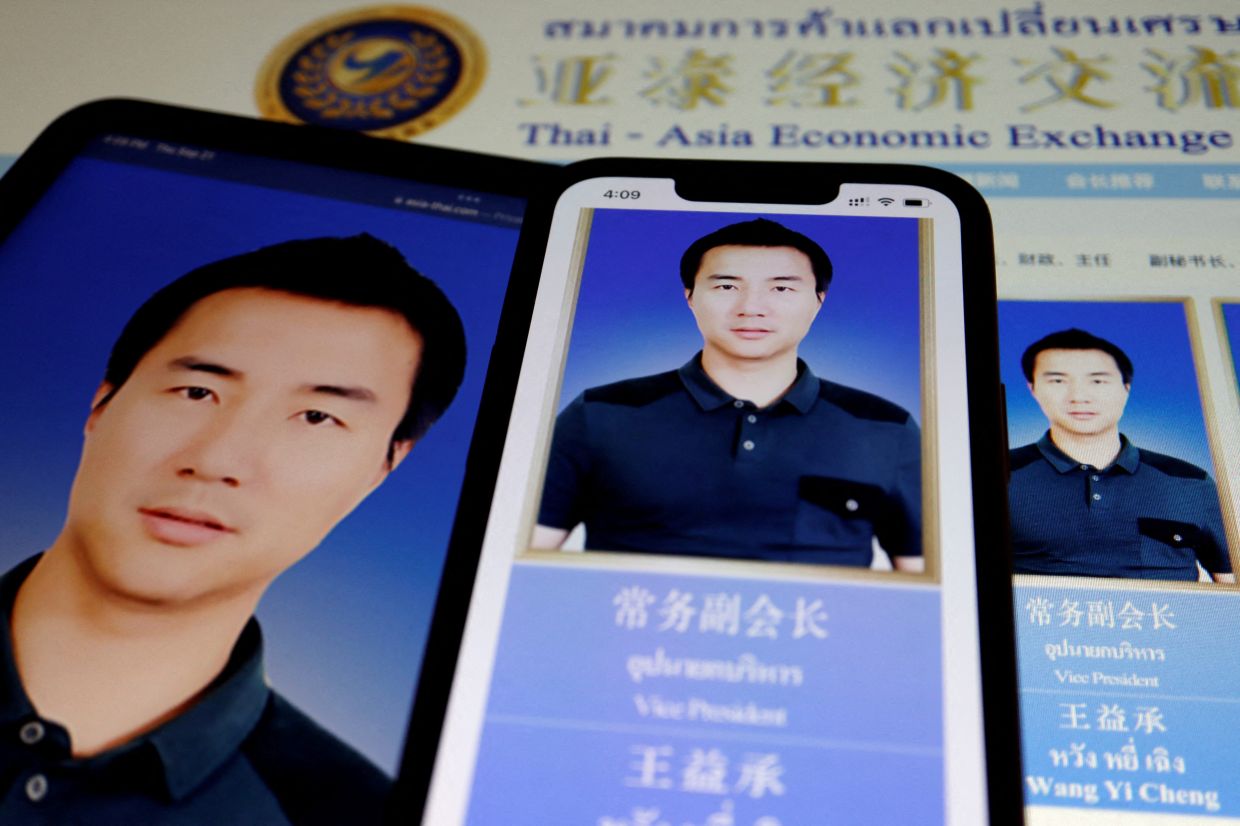
Thailand's Department of Special Investigation has escalated its pursuit of Wang Yicheng, a Chinese businessman at the centre of a sprawling transnational fraud operation that authorities say funnelled millions of dollars through illegal cryptocurrency mining networks. The arrest warrant, issued in November but announced publicly this week, marks a significant development in the kingdom's fight against sophisticated organised crime schemes increasingly targeting residents across Southeast Asia and beyond. Wang, who cultivated high-level connections with Thai political and law enforcement figures whilst leading a Thai-Chinese business association, is believed to have left the country and remains a fugitive as international authorities coordinate efforts to locate him.
The investigation into Wang's activities traces back to a 2023 Reuters report that exposed his connections to a complex web of cryptocurrency fraud. Thai investigators identified him as a crucial player in a criminal network leveraging illegal crypto mining operations to both generate illicit income and obscure the origins of proceeds stolen from victims worldwide. Police spokesman Major Woranan Srilam confirmed that Wang faces charges including theft and violations under the Computer Crimes Act, which addresses unauthorised interference with information systems. The scale of his alleged operation was staggering—authorities uncovered illegal cryptocurrency mining consuming approximately US$28 million worth of electricity, representing one of the largest such cases documented in recent years.
Wang's position within the Thai-Asia Economic Exchange Trade Association, which he served as vice president, provided him with unusual access to high-ranking officials and business elites. This association, dedicated to fostering Thai-Chinese commercial ties, became a platform through which Wang cultivated relationships with senior figures across government and law enforcement in both nations. Following the public revelation of his activities, the trade group announced that Wang had stepped down from its board and claimed that background checks had revealed no prior criminal history. However, the organisation's disclosure that some Thai officials served as advisers to the group raised questions about whether inadequate due diligence had enabled his operations to flourish undetected for years.
The specific mechanisms of the fraud centred on what investigators call pig-butchering scams, a particularly insidious confidence scheme in which victims are lured into fraudulent cryptocurrency investments through romantic or business deceptions. According to blockchain analysis firms including TRM Labs, a cryptocurrency wallet associated with Wang received at least US$9.1 million between 2021 and 2022 from accounts directly linked to such scams. Whether Wang himself controlled the account or someone had exploited his identity remains unclear, though investigators treat him as a principal suspect. One documented victim, a 71-year-old Californian, surrendered his entire life savings of US$2.7 million after developing what he believed was a romantic relationship with a young woman who ultimately steered him toward fraudulent cryptocurrency investments.
The connection between Wang's operations and broader regional crime networks extends to KK Park, an industrial complex straddling the Myanmar-Thailand border that has emerged as a hub for transnational scam syndicates. Intelligence gathered by blockchain firms linked some cryptocurrency fraud traced to Wang's accounts back to operations originating from this location. KK Park has become synonymous with large-scale organised fraud, human trafficking, and other serious crimes predominantly orchestrated by Chinese criminal networks that exploit vulnerable workers, many of whom are trafficking victims coerced into roles within the scam infrastructure. These operations generate billions of dollars annually according to United Nations assessments, making them among the most lucrative forms of transnational organised crime in the region.
U.S. law enforcement agencies had independently identified Wang as a suspect in digital-asset fraud matters. In June 2023, American authorities seized approximately US$500,000 in cryptocurrency from accounts bearing his name, tracing stolen funds back to a victim in Massachusetts. This action demonstrated that Wang's criminal footprint extended well beyond Thai borders, implicating him in schemes that victimised Americans and potentially residents of other nations. The U.S. Department of Justice has declined to comment publicly on the arrest warrant or ongoing investigations, though the coordination between American and Thai authorities underscores the transnational nature of the criminal enterprise.
A significant question mark surrounds Wang's relationship with Bitmain, a major global bitcoin mining company. In 2023, Bitmain representatives confirmed to Reuters that Wang was a close partner and customer, asserting that all equipment supplied to him was provided through lawful channels. The company's claim that its relationship with Wang involved only legitimate business transactions requires scrutiny, particularly given that investigators believe he utilised mining operations as a money laundering mechanism. Whether Bitmain's executives were aware of how Wang deployed their equipment, or whether they exercised insufficient oversight despite suspicious transaction patterns, remains an unresolved element of the broader investigation.
Thailand's intensified enforcement action against Wang reflects a broader regional awakening to the threat posed by Chinese-controlled scam syndicates. Across Southeast Asia, governments have launched coordinated crackdowns targeting these networks, which operate with seeming impunity from industrial compounds and utilise sophisticated technology to reach victims globally. The involvement of local political and law enforcement officials in relationships with suspected criminals like Wang demonstrates how these networks exploit governance vulnerabilities and personal connections to insulate themselves from prosecution. Thailand's willingness to publicly issue arrest warrants and coordinate with international partners signals a strengthened commitment to dismantling these operations, though the departure of key suspects like Wang suggests that these networks retain capacity to evade justice through rapid relocation.
The investigation uncovered evidence that transnational organised crime groups deliberately employ illegal cryptocurrency mining to simultaneously achieve multiple criminal objectives. Beyond generating direct income through electricity theft, mining operations provide sophisticated money laundering infrastructure that obscures the criminal origins of scam proceeds. This dual functionality makes crypto mining particularly attractive to organised crime networks seeking to legitimise stolen funds whilst maintaining operational security. The convergence of technology-enabled fraud with physical infrastructure in locations like KK Park and across Thailand creates enforcement challenges that require unprecedented cooperation between nations with varying legal frameworks and enforcement capacities.
Looking forward, Wang's case illuminates vulnerabilities in how business associations and professional networks can inadvertently facilitate crime through inadequate vetting of members and leadership. The Thai-Asia Economic Exchange Trade Association's post-hoc assertions that it had conducted background checks ring hollow given Wang's proven involvement in massive fraud schemes. Southeast Asian economies increasingly attractive to Chinese investment and business engagement must establish more rigorous mechanisms for verifying the legitimacy of commercial actors and the lawful origins of their capital. Without such safeguards, trade associations and business councils risk becoming vehicles through which sophisticated organised crime networks embed themselves within legitimate economic and political structures, complicating enforcement efforts and undermining the integrity of regional commerce.

