Thailand is preparing to implement two major tourism initiatives designed to stimulate domestic spending and enhance the sustainability of its tourism sector. The government will roll out the Thai Travel Thai Plus domestic subsidy in September, a four-month co-payment initiative budgeted at 1.75 billion baht, while simultaneously proposing a new fee structure for international arrivals. These measures, presented by Tourism and Sports Minister Surasak Phancharoenworakul at a government subcommittee meeting, represent a dual strategy to strengthen Thailand's tourism economy while managing the environmental and infrastructure pressures created by visitor flows.
The Thai Travel Thai Plus programme addresses a specific government objective: broadening the distribution of tourism benefits across different sectors and business sizes. The subsidy will operate through the Krungthai Bank Pao Tang mobile application, offering 500,000 entitlements to eligible Thai residents. Rather than limiting benefits to accommodation and dining, the revised scheme now encompasses admission fees, guided tours, car rentals, community-based tourism products and wider tourism activities. This expansion recognises that smaller operators and community enterprises have historically received limited benefits from previous stimulus programmes focused primarily on food and lodging. Each participant can access up to five entitlements, with the government covering 50 per cent of eligible expenses up to 3,000 baht per entitlement.
The funding mechanism for Thai Travel Thai Plus relies on government borrowing, a decision that remains subject to final agreement between the Tourism and Sports Ministry and the Finance Ministry. Officials project the programme could generate over 26 billion baht in broader economic circulation, suggesting a multiplier effect as participants spend their subsidised entitlements across multiple tourism and hospitality sectors. The government also plans to increase the voucher value attached to each entitlement from 500 baht to 1,000 baht, allowing greater flexibility in how recipients allocate their spending. This approach deliberately targets smaller businesses and communities, reflecting government concerns that concentrated tourism spending in major urban centres like Bangkok leaves peripheral regions underserved.
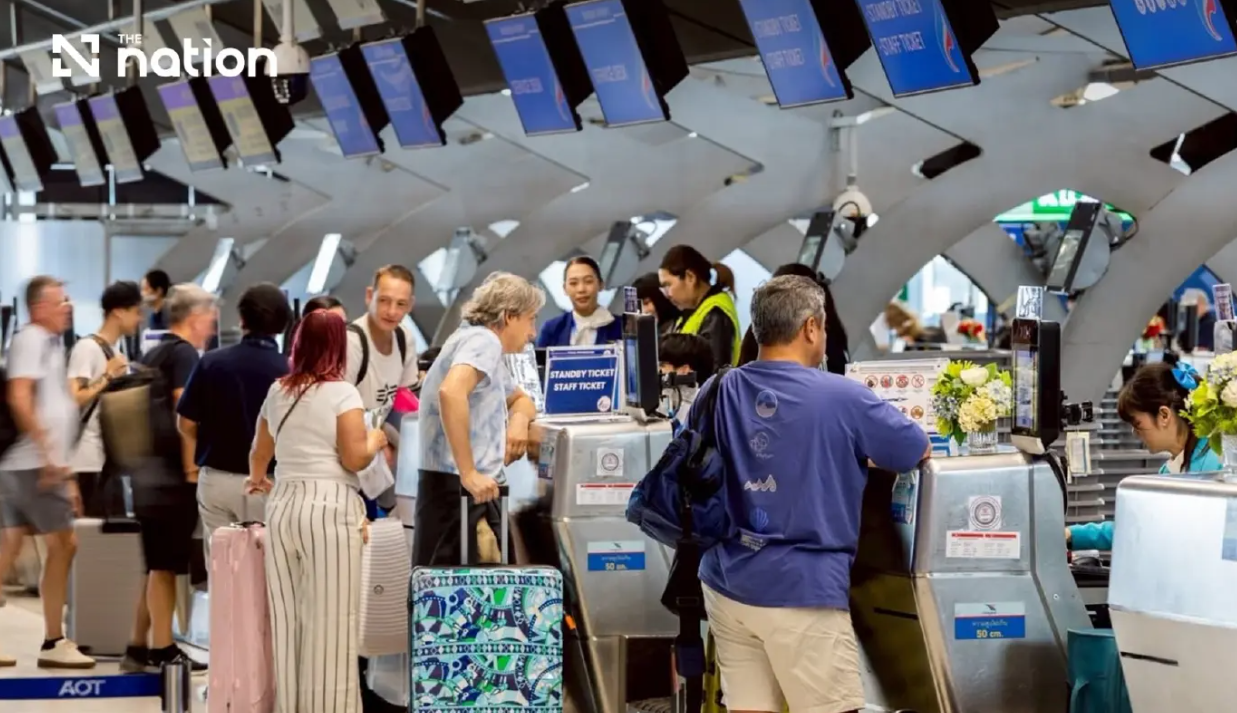
The proposed foreign visitor fee represents a more novel revenue mechanism for Thailand, though the government has not yet disclosed the intended rate or implementation timeline. The fee would be deposited into the Thailand Tourism Promotion Fund, a dedicated account for tourism-related infrastructure and services. Officials indicate the revenue would support three primary objectives: developing and upgrading existing tourist attractions and building new purpose-designed facilities, particularly in secondary tourism cities; financing visitor insurance and safety arrangements; and funding environmental restoration programmes addressing the ecological damage caused by intensive tourism activity. The vagueness surrounding implementation details suggests the government is still negotiating the politically sensitive issue of imposing charges on foreign arrivals, a measure that could affect Thailand's competitiveness against neighbouring tourist destinations.
Thailand's dual-approach strategy reflects broader anxieties about tourism sustainability and equitable economic distribution. For Malaysian observers, the Thai initiative offers relevant lessons about managing visitor-dependent economies facing pressure from environmental degradation and uneven development. Thailand's secondary cities, many of which parallel Malaysian regional tourism initiatives, have lagged significantly behind Bangkok in attracting international spending despite possessing substantial cultural and natural assets. The Thai government's explicit focus on rebalancing tourism geography through infrastructure investment and promotional campaigns addresses a perennial challenge across Southeast Asia: ensuring tourism revenue benefits communities beyond national capitals.
The domestic subsidy component arrives at a strategically significant moment. Thailand's tourism sector has recovered substantially since COVID-19 disruptions, with international arrivals rebounding sharply. However, domestic tourism remains volatile and sensitive to macroeconomic conditions and consumer confidence. By offering subsidised travel experiences, the government aims to maintain momentum in visitor spending while simultaneously testing whether expanded eligibility criteria—moving beyond traditional hospitality sectors—can effectively support micro-enterprises and community-based tourism operators. The September launch during Thailand's Green Season, a period of lower international tourism demand, positions the programme to capitalise on domestic leisure patterns and potentially smooth seasonal demand fluctuations.
The implementation structure demonstrates coordination across multiple government agencies and consultation with private-sector stakeholders. Deputy Prime Minister and Commerce Minister Suphajee Suthumpun chaired the subcommittee meeting, indicating cabinet-level attention to these tourism initiatives. The involvement of Culture Minister Sabeeda Thaised alongside tourism officials suggests the government conceptualises tourism policy as interconnected with cultural preservation and development. Government agencies and industry representatives were instructed to resolve outstanding details through further discussions, with the Tourism and Sports Ministry targeting clearer conclusions and a September programme launch. This timeline implies the government views these measures as reasonably urgent responses to current economic conditions.
The programme's first phase operates as a deliberate pilot, with government officials indicating willingness to extend implementation through subsequent phases if the initial four-month experiment generates positive outcomes. This incremental approach allows policymakers to observe real-world spending patterns, identify operational bottlenecks and assess distributional effectiveness before committing to larger-scale expansion. Preliminary budget allocation of 1.75 billion baht, while substantial, remains modest relative to Thailand's overall tourism economy, suggesting the government intends to evaluate programme mechanics before scaling investments significantly upward.
For the foreign visitor fee proposal, the government has established a working group chaired by Weerasak Kowsurat under the broader economic policy framework led by Deputy Prime Minister Suphajee. This working group, designated the Creative Economy and Visitor Economy group, operates with instructions to deliver "quick win" outcomes within six to twelve months through measures not requiring legislative amendments. The compressed timeline and emphasis on regulatory flexibility indicate the government seeks rapid implementation of tourism revenue measures while avoiding potentially contentious parliamentary discussions about new taxation mechanisms. The working group's mandate to improve Thailand's tourism competitiveness through non-legislative approaches suggests government preference for administrative implementation of the visitor fee.
The environmental restoration component embedded within the proposed fee structure reflects international best-practice frameworks increasingly adopted across Asian tourism destinations. Malaysia's own tourism sustainability initiatives, particularly in sensitive ecosystems like Sabah and Sarawak, demonstrate growing recognition that intensive visitor activity requires dedicated restoration funding. Thailand's acknowledgment that tourism causes environmental degradation and that beneficiaries should finance remediation aligns with evolving global standards around sustainable tourism economics. For Malaysian policymakers evaluating similar mechanisms, Thailand's experience will offer valuable data about collection efficiency, administrative costs and actual revenue generation from visitor fees.
The domestic subsidy programme's emphasis on distributing benefits across community-based and small-scale tourism operators directly addresses persistent inequality within tourism economies. Traditional tourism stimulus measures concentrating support on accommodation and food sectors inherently favour larger, better-capitalised enterprises capable of rapid expansion. By explicitly expanding eligibility to encompass guided tours, community goods and car rental services, Thailand's revised programme attempts to capture spending that would otherwise accumulate in corporate hospitality chains. This redistributive objective, though administratively complex, reflects political awareness that tourism must deliver tangible benefits to broader constituencies beyond major hotel and restaurant operators to maintain public support for sector development.
Thailand's two-pronged tourism strategy—stimulating domestic demand through subsidised travel while establishing new international revenue mechanisms through visitor fees—represents a relatively sophisticated approach to tourism economy management. The simultaneous emphasis on secondary destination development, visitor safety, environmental restoration and equitable benefit distribution suggests policymakers recognise tourism sustainability encompasses multiple dimensions beyond mere visitor volume increases. As Thailand prepares detailed implementation frameworks through the coming weeks, Malaysia and other Southeast Asian neighbours will likely monitor these initiatives closely, particularly regarding the feasibility and revenue implications of tourist fee mechanisms and the effectiveness of subsidy programmes in supporting dispersed, community-based tourism enterprises.

