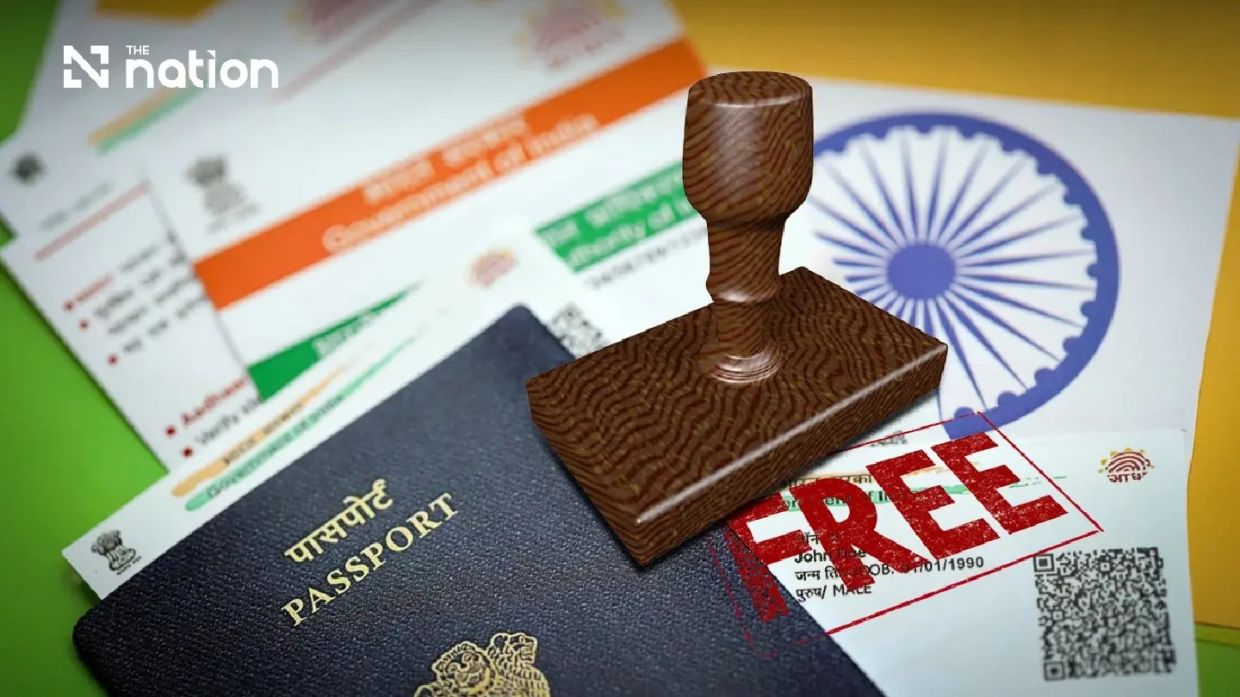
Thailand's government has moved to strengthen its competitive position in attracting Indian travellers by granting a 30-day visa-free entry privilege, a decision that reflects the country's recognition of India as a crucial growth market in Southeast Asian tourism. Tourism and Sports Minister Surasak Phancharoenworakul championed the extended visa entitlement after successfully opposing an earlier proposal that would have limited Indian visitors to just 15 days, arguing that the shorter duration would have undermined Thailand's appeal to one of its most valuable traveller segments. The decision carries significant strategic weight, as Thailand targets 2.7 million Indian arrivals in 2027, positioning India as a cornerstone of the nation's post-pandemic tourism recovery and modernisation agenda.
The ministry's advocacy for the longer visa period stems directly from the composition of India's outbound tourism to Thailand, which increasingly centres on high-value, time-intensive experiences that shorter visits cannot accommodate. Destination weddings and associated celebrations represent a particularly lucrative segment, with multi-week events requiring elaborate preparation, guest coordination, and complementary leisure activities. By aligning India's 30-day entitlement with the standard category offered to other major source markets, Thailand signals equality of treatment while removing friction from the travel planning process. This parity approach also sends a confidence signal to Indian travel agents, wedding planners, and affluent families who might otherwise consider competing destinations, strengthening Thailand's brand positioning as a welcoming and accessible choice for India's growing middle class and upper-income travellers.
India's trajectory as a tourism source has accelerated dramatically over recent years, with Thailand welcoming 2.48 million Indian arrivals in 2025—a surge of 16.82 percent compared with the previous year. That influx generated 90.425 billion baht in tourism revenue, demonstrating that Indian visitors do not merely increase visitor numbers but meaningfully contribute to the national economy. Through the first half of 2026, growth continued at a steady 3.06 percent, providing confidence that momentum will persist. The Tourism Authority of Thailand projects this upward curve will extend through 2027, with arrivals climbing from an anticipated 2.55 million in 2026 to the targeted 2.7 million in 2027, representing a 5.8 percent annual increase. By mid-July 2026, India had already established itself as Thailand's third-largest source market, with approximately 1.3 million visitors recorded since the calendar year began.
The visa policy revision emerged amid broader Cabinet restructuring of Thailand's entry framework designed to balance tourism ambitions with enhanced immigration security. In earlier arrangements, Thailand had operated a temporary 60-day visa exemption programme encompassing 93 countries and territories, but this arrangement faced phase-out amid concerns about screening rigour and potential misuse of entry privileges. Tourism operators initially worried that the withdrawal would relegate Indian passport holders to the Visa on Arrival category, thereby reintroducing friction and administrative steps that might discourage travel. Instead, the Cabinet's July 14 decision incorporated India into a revised 30-day visa-exemption category covering 59 countries and territories—a compromise that preserves ease of access while strengthening immigration oversight. This recalibration reflects a deliberate government principle of assigning each source country to a single, transparent entry classification, eliminating redundant categories and reducing opportunities for privilege misuse.
The 30-day allowance aligns closely with actual visitor behaviour, providing practical policy grounding for the tourism vision. Indian visitors currently remain in Thailand for approximately 7.17 days on average per trip, yet this figure masks significant variation by purpose and composition. Approximately 59.68 percent of Indian arrivals are first-time visitors, suggesting novelty-seeking behaviour that encourages longer stays as travellers attempt to experience multiple attractions and regions. The remaining 40.32 percent represent repeat visitors, many of whom travel for extended celebration events or wellness retreats spanning one to two weeks. By permitting 30-day stays, Thailand accommodates these longer itineraries while maintaining reasonable immigration oversight through its mandatory Thailand Digital Arrival Card, which visitors can complete within three days of departure. This digital tool modernises screening without imposing pre-arrival visa processing burdens.
The economic profile of Indian tourists makes them particularly valuable to Thailand's strategic pivot toward higher-yield, lower-volume tourism models. Average daily expenditure reaches 6,203 baht per visitor, translating to approximately 36,354 baht across a typical visit—spending levels that exceed many other Asian source markets. Indian travellers demonstrate strong demand for premium experiences, particularly Thai cuisine, beach destinations, and spa and wellness services, categories that command higher margins and support local entrepreneurship beyond mass-market accommodation. The visitor composition reflects a sophisticated market structure: approximately 68.63 percent travel independently, suggesting decision-making power and discretionary spending capacity, whilst 31.37 percent travel via organised tour groups, indicating that complementary group tourism infrastructure remains commercially viable. Notably, Indian families and larger travelling groups show particularly robust demand, with many opting for seven to 15-day stays that support extended service consumption.
Air connectivity forms the physical backbone of India strategy, and current capacity trajectories suggest that the visa policy can be complemented by expanding flight availability into Thailand. The Tourism Authority's New Delhi office oversees routes connecting nine Indian cities with Bangkok, Krabi, and Phuket through 144 weekly flights providing over 32,000 seats. The Mumbai office region accounts for approximately 160 weekly flights offering roughly 33,000 seats, generating total weekly capacity approaching 66,000 seats across the India-Thailand corridor. While some airlines temporarily reduced services due to Middle East instability and elevated fuel costs, industry indicators suggest capacity recovery during peak season. Indian carriers continue expanding regional reach by introducing flights from smaller cities, whilst temporarily suspended operators prepare service restoration. This trajectory indicates that air supply should not constrain demand growth over the 2026-2027 period, provided ground-level tourism infrastructure and marketing efforts sustain momentum.
Thailand's promotional strategy recognises that India's tourism market extends beyond the traditional metropolitan centres that have historically dominated outbound travel statistics. The TAT will maintain focus on major economic hubs including New Delhi, Kolkata, and Mumbai whilst deliberately expanding campaigns into rapidly developing Tier 2 and Tier 3 cities including Lucknow, Chandigarh, Guwahati, Ahmedabad, Surat, and Pune. These secondary cities present distinct economic profiles and income distributions: Surat's globally significant diamond industry generates considerable household wealth, whilst Pune's automotive and industrial sectors support affluent professional classes. Broadening geographic reach within India mirrors successful strategies deployed by competing destinations and reflects recognition that India's per-capita income growth accelerates faster in non-metropolitan regions, particularly among younger, digitally-native cohorts. Thailand's campaign matrix also encompasses neighbouring markets including Bhutan, Nepal, and Bangladesh, recognising that India serves as a de facto hub for regional tourism patterns.
The substance of Thailand's competitive offering is shifting from conventional sightseeing toward immersive, experience-oriented travel centred on authentic cultural engagement, local food systems, community interaction, and lifestyle discovery. This positioning reflects generational change within India's outbound traveller base, particularly as younger cohorts prioritise authenticity and social connection over monumental attractions or photographer-driven itineraries. Thailand's comparative advantages in this domain include its regional reputation for culinary sophistication, accessible wellness and spiritual traditions, vibrant yet non-threatening urban environments, and established infrastructure for small-group and family experiences. However, competition intensifies across multiple dimensions: Vietnam aggressively targets Indian visitors through competitive pricing and promotional incentives, Malaysia emphasises visa-free access complemented by cultural proximity, and Singapore has entrenched itself within India's family market segment through quality-focused positioning. Thailand's response combines visa facilitation with deeper messaging around food, culture, local lifestyles, wellness, and community tourism, attempting to differentiate through breadth of experience rather than price competition alone.
The strategic importance of India within Thailand's broader tourism ecosystem extends beyond raw arrival numbers or revenue projections. India represents one of the few major source markets demonstrating sustained growth momentum independent of price-sensitive mass tourism cycles, suggesting relative resilience during global economic fluctuations. The visa policy decision signals Thailand's willingness to adjust administrative structures in service of market development, potentially setting precedent for future adjustments aimed at other high-value source markets. Success in capturing the targeted 2.7 million Indian arrivals by 2027 would substantially enhance Thailand's tourism revenue diversity, reduce over-reliance on traditional East Asian sources, and reinforce the country's position as Southeast Asia's premier leisure destination. Conversely, failure to convert visa facilitation into proportional visitor growth might prompt competitors to escalate their own incentive offerings, potentially triggering a regional competitive spiral focused on entry privileges rather than service quality differentiation.

