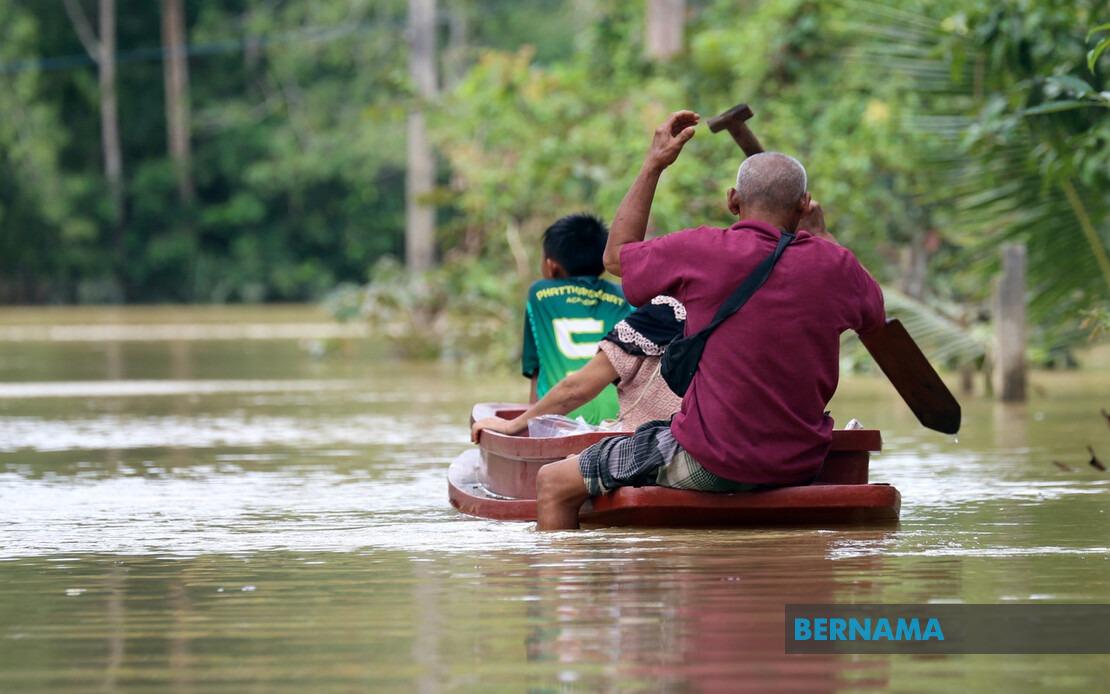
Thailand's government has substantially overhauled its approach to managing natural disasters, implementing a coordinated response framework spanning four regional committees designed to accelerate decision-making and improve inter-agency collaboration across the country. The restructuring comes as meteorological agencies report mounting pressure from both acute flooding risks and long-term water shortage concerns that threaten agricultural output, infrastructure, and civilian safety across multiple provinces.
The initiative reflects growing recognition that Thailand's disaster management landscape demands more sophisticated coordination mechanisms. Deputy government spokeswoman Capt Patdarasm Thongsaluaykorn explained that the framework prioritizes rapid deployment of assistance to affected populations while maintaining centralized strategic oversight. Rather than relying on fragmented responses from individual agencies, the new structure establishes unified command chains within each region, enabling faster mobilization of resources and personnel when natural disasters strike.
The newly established committees will shoulder comprehensive responsibilities spanning the complete disaster lifecycle. Their mandate encompasses continuous environmental monitoring, real-time coordination of emergency operations during active incidents, management of relief distribution and compensation processes, and supervision of infrastructure recovery and community rehabilitation following major events. This integrated approach contrasts with traditional siloed responses where flood management and drought preparedness operated independently, often creating coordination gaps and delayed assistance.
Each regional committee holds statutory authority to direct government agencies operating within its geographical jurisdiction, assess situational developments, and communicate verified information to residents and media. This decentralized authority structure allows committees to respond to localized conditions without awaiting central approval, potentially accelerating initial response phases. Deputy Prime Minister Yodchayan Wongsawat chairs the northern regional committee, which convened its inaugural meeting at the Department of Disaster Prevention and Mitigation on Tuesday, establishing operational procedures and establishing communication protocols.
Immediate flood concerns dominate current threat assessments. Thailand's meteorological services have identified 1,363 specific locations vulnerable to flooding and 444 zones susceptible to extended drought conditions. The Thai Meteorological Department has issued active warnings for northern, northeastern, and eastern provinces expecting heavy precipitation, flash flood events, and riverine overflow between early August and mid-month. Maritime authorities extended small craft advisories across the upper Andaman Sea through August 9 and the upper Gulf through the same period, reflecting the breadth of atmospheric instability affecting the region.
Beyond the immediate monsoon season, Thailand confronts a more intractable climatic challenge. The Bangkok Post reported that forecasters anticipate a Super El Niño event commencing in October, potentially persisting through early 2027. This phenomenon carries serious implications for Thailand's agricultural sector and water infrastructure, with projections indicating rainfall reductions of at least 10 percent during vulnerable growing seasons. Such deficits directly threaten rice production—a cornerstone of Thailand's export economy and rural livelihoods—while simultaneously straining municipal and agricultural water supplies throughout the kingdom.
The timing of this structural overhaul carries particular significance for Southeast Asia's broader climate adaptation landscape. Thailand's intensifying exposure to both extreme precipitation events and prolonged dry periods mirrors challenges confronting neighboring economies including Malaysia, Vietnam, and Cambodia. The Thai government's investment in institutional coordination mechanisms may offer valuable lessons for regional peers wrestling with similar compounding climate stressors. As El Niño patterns become more severe and unpredictable, the capacity of governance structures to integrate flood and drought responses within unified frameworks increasingly determines economic resilience.
Rural communities face acute vulnerability as these environmental pressures converge. Thai farmers depend heavily on accurate seasonal forecasting and timely government intervention to manage both excess water endangering crops through inundation and insufficient moisture during dry spells. The new committee structure's emphasis on rapid information dissemination and coordinated relief distribution directly addresses this population's needs, though implementation effectiveness will ultimately determine whether institutional reforms translate into tangible livelihood protection.
The government's stated commitment to safeguarding lives, property, and economic productivity reflects awareness that disaster response capacity constitutes critical infrastructure in Thailand's development strategy. Each month of agricultural disruption ripples through provincial economies and national export competitiveness. Water supply interruptions threaten urban populations and industrial operations. By establishing clearer institutional pathways for resource mobilization and decision-making, Thailand attempts to minimize these economic dislocations while protecting vulnerable populations.
As these committees begin operational activities, their effectiveness will depend on genuine inter-agency cooperation and sustained resource allocation. Government statements emphasizing "faster decision-making" and "unified command" must translate into actual field operations where provincial water authorities, emergency services, agricultural extension officers, and relief agencies function as cohesive units rather than separate hierarchies. The four-committee structure, if properly resourced and managed, potentially represents meaningful institutional evolution in managing Thailand's complex relationship with environmental hazards.

