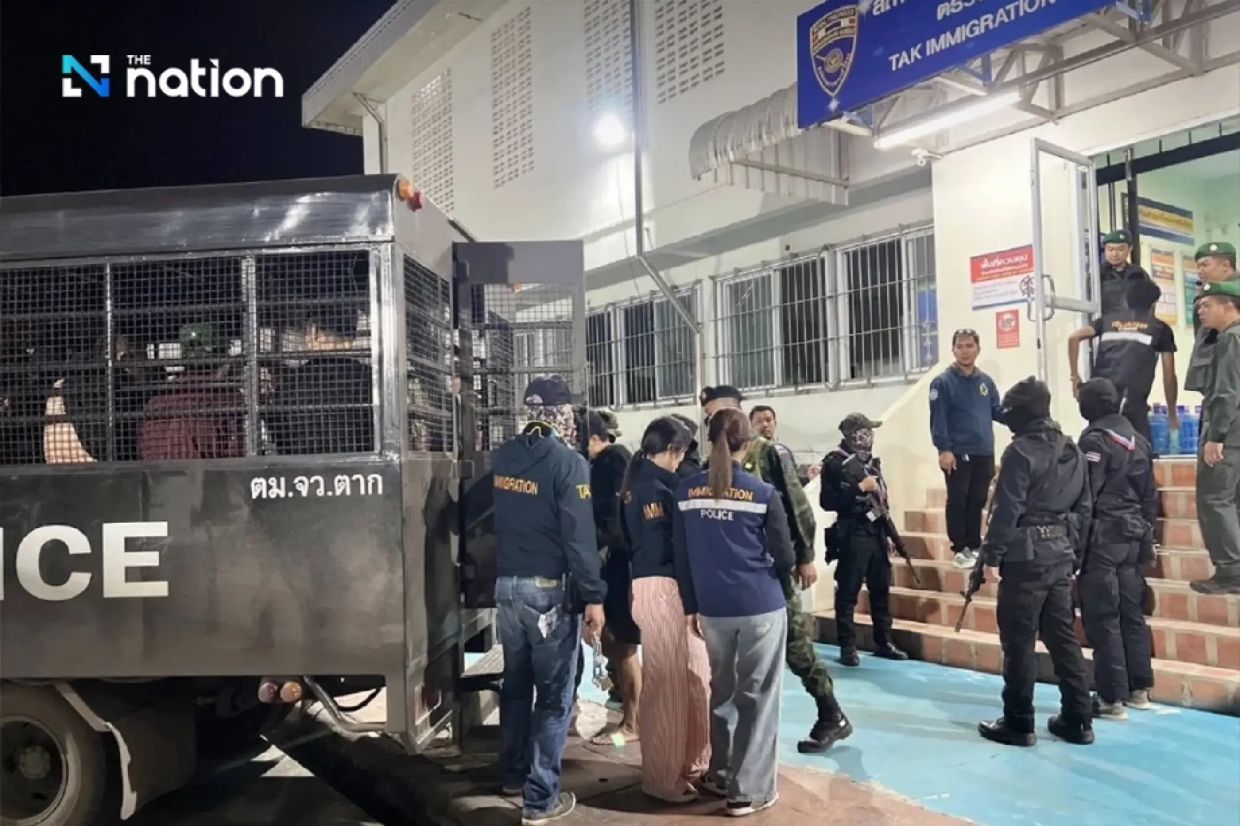
Thailand is undertaking a significant overhaul of its immigration legislation to streamline and accelerate the deportation process for foreign nationals convicted of crimes, addressing a growing challenge posed by transnational criminal organisations that have exploited the kingdom as a base for illegal operations. The government's initiative reflects mounting concerns about systemic inefficiencies that have allowed suspected offenders to remain in detention for protracted periods while navigating complex legal appeals and diplomatic procedures.
The constitutional foundation for this reform traces back to a controversial policy introduced in July 2024 under the Srettha Thavisin administration. That 60-day visa exemption programme extended entry privileges to nationals from 93 countries and territories without requiring advance visa applications. While intended to boost tourism, the scheme eliminated a crucial security checkpoint: Thai embassies could no longer conduct preliminary background checks or assess financial credentials before travellers arrived at the border. This absence of pre-screening represented a fundamental vulnerability in Thailand's immigration security architecture.
The practical consequences of this loophole have proven substantial and well-documented across Thailand's most visited locations. Foreign nationals have reportedly exploited the system through repetitive border runs—strategically departing and re-entering Thailand to reset their permitted stay duration without adhering to normal residency requirements. Some individuals have subsequently established themselves within Thai communities while working in contravention of work permit regulations, directly competing with Thai workers in hospitality, entertainment, and tourism sectors. More troublingly, authorities have linked foreign populations to sophisticated criminal enterprises including transnational call-centre fraud operations, money laundering networks, and illicit capital flows. These activities have been identified in several prominent tourist destinations including Pai in Mae Hong Son, Pattaya in Chonburi, Koh Phangan in Surat Thani, and Bangkok.
Recognising these security threats, the government under Prime Minister Anutin Charnvirakul designated the suppression of transnational crime as a core national security objective. The Immigration Bureau, Royal Thai Police, and allied agencies received explicit directives to strengthen screening mechanisms and enforcement capabilities. The administration implemented four complementary measures: intensified monitoring of travellers exhibiting unusual entry and exit patterns without apparent justification; enhanced scrutiny of individuals originating from jurisdictions classified as high-risk; closer coordination between domestic and international criminal intelligence systems, particularly through Interpol databases; and procedural adjustments designed to prevent overlapping or contradictory visa entitlements.
A decisive policy reversal came when the Cabinet approved termination of the 60-day visa exemption effective May 19, 2026. Thailand is reverting to its previous bilateral arrangement structure, whereby most foreign visitors will be restricted to maximum stays of approximately 30 days. Officials have defended this retrenchment by arguing that the exemption scheme failed to generate proportionate increases in tourist arrivals or spending patterns, whilst simultaneously introducing material security vulnerabilities that far outweighed any economic benefits. This recalibration prioritises what government representatives describe as quality tourism and security over quantitative visitor metrics.
Despite these preventive measures, the underlying problem persists: foreign nationals already detained on criminal charges remain ensnared within Thailand's immigration system for extended periods. The root cause lies in structural limitations embedded within the Immigration Act of 1979. Detainees facing deportation orders possess the legal right to file appeals within 48 hours, submitting evidence and supporting documentation. While such appeals remain pending—a process that can span months or longer—deportation procedures are typically suspended except in cases involving grave offences. Additionally, detainees can petition the Immigration Commission to postpone removal or grant temporary stay extensions on humanitarian or legal grounds. These provisions, whilst essential safeguards, create de facto delays that can stretch cases across years rather than weeks.
Practical obstacles compound these legal complexities. Some foreign detainees cannot finance their own repatriation and must await coordination between Thai authorities and their respective embassies regarding cost-sharing or financial assistance arrangements. Others exhaust limited domestic resources whilst awaiting diplomatic and consular procedures involving their home governments. The coordination of extradition treaties, where applicable, introduces additional procedural layers. If bilateral extradition arrangements exist between Thailand and a detainee's home country, the attorney-general must evaluate the case before referring it to court for formal extradition orders. Where no such treaty exists, the Foreign Ministry must submit requests through diplomatic channels, further extending timelines. These cascading procedural requirements mean individual cases can languish in the system whilst offenders await final resolution.
Deputy Prime Minister Pakorn Nilprapunt, who supervises legal affairs, has been assigned responsibility for coordinating legislative reform efforts across multiple agencies including the Royal Thai Police, Immigration Bureau, and Interior Ministry. The government is specifically targeting Sections 54 and 55 of the 1979 Immigration Act, which establish the legal framework governing removal of foreign nationals. Prime Minister Anutin has emphasised that whilst enforcement arrests and prosecutions have generated visible results, these enforcement actions prove insufficient if the deportation apparatus cannot complete cases expeditiously. He has highlighted the perverse situation wherein convicted offenders potentially resume quasi-normal existence whilst legal proceedings remain pending, creating heightened risks of recidivism and continued criminal participation.
Yet meaningful reform faces inherent tensions between operational efficiency and fundamental human rights protections. Royal Thai Police spokesman Pol Lt Gen Trairong Phiwpan has clarified that Thailand's international human rights obligations substantially constrain deportation procedures. As a member of the United Nations Human Rights Council and signatory to eight major international human rights treaties—covering civil and political rights, economic and social rights, protection against torture, children's and women's rights, disability protections, and safeguards against enforced disappearance—Thailand is legally bound to honour these commitments. Detainees retain constitutional rights to petition courts, contest removal orders, and request temporary release on humanitarian grounds. These procedural safeguards, whilst internationally mandatory, necessarily extend case resolution timelines.
Police spokesman Trairong has noted that repatriation processes move considerably more rapidly when detainees decline to invoke available human rights procedures and appeal mechanisms. However, when individuals file challenges and submit counterclaims, judicial consideration becomes obligatory, inevitably prolonging timelines. He has indicated that any legislative reform should concentrate on compressing unnecessary procedural steps, eliminating redundant administrative stages, and establishing reasonable maximum timeframes whilst preserving judicial capacity to assess case severity appropriately. Different categories of violations—ranging from unauthorised entry and visa overstays to participation in organised transnational crime networks and fraud schemes—warrant differentiated procedural attention and timeline flexibility.
The proposed amendments represent a delicate balancing exercise. Government officials seek to construct legal mechanisms capable of accelerating deportations whilst simultaneously maintaining compliance with international human rights standards and respecting Thailand's treaty obligations. Deputy Prime Minister Pakorn is expected to conduct comprehensive consultations with the Interior Ministry, police leadership, and relevant agencies to evaluate potential impacts across multiple governance dimensions and institutional capacities. The reform process must address technical questions about expedited procedures, jurisdictional coordination, and evidentiary standards, whilst remaining attentive to Thailand's international reputation and commitment to rule-of-law principles. For Malaysia and other Southeast Asian nations grappling with similar transnational crime challenges and immigration management complexities, Thailand's policy evolution offers instructive lessons about balancing security imperatives against human rights frameworks.
The implications extend beyond Thailand's borders. Southeast Asian nations increasingly confront cross-border criminal networks utilising visa accessibility and immigration vulnerabilities as operational advantages. Thailand's proactive recalibration of its visa regime and immigration enforcement mechanisms signals broader regional recognition that tourism growth and national security require calibrated rather than unconditional openness. Malaysian policymakers monitoring Thailand's legislative reform efforts may identify relevant institutional practices and procedural innovations applicable to domestic immigration administration, particularly regarding coordination between law enforcement, diplomatic services, and judicial authorities in managing foreign offenders and deportation cases.