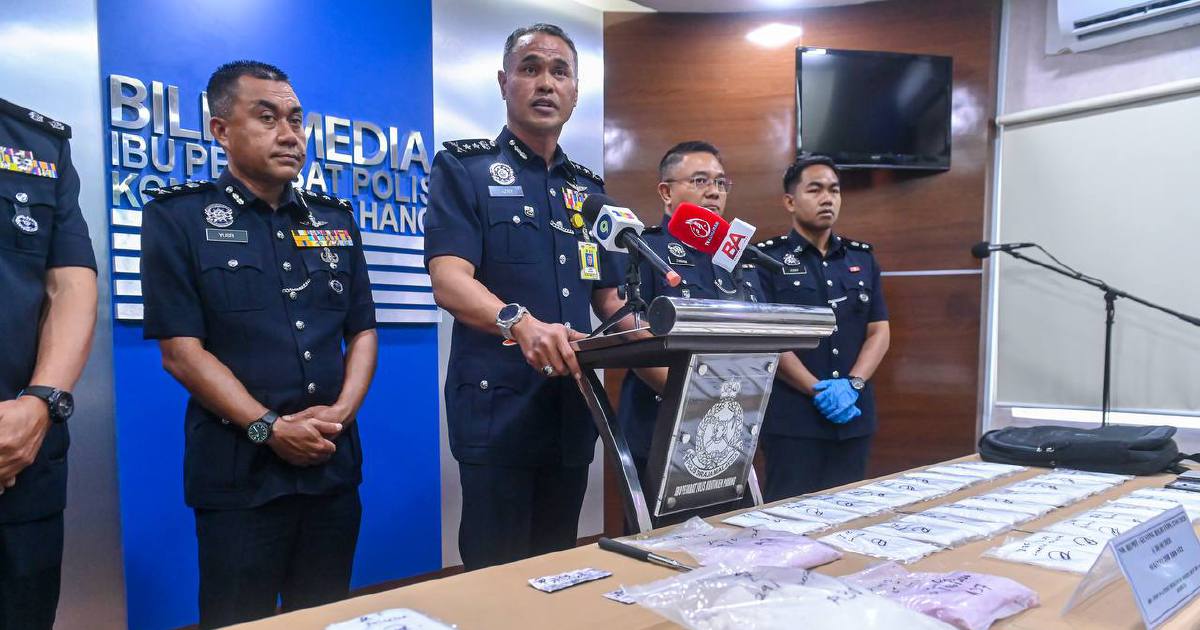
A Thai national and her Malaysian partner have been taken into custody following a significant drug enforcement operation in the Genting Permai area of Bentong, Pahang. The arrests mark another blow to trafficking networks operating across Malaysia's northern corridor, with police seizing narcotics valued at around RM728,000 during the raid. The pair are suspected of functioning as couriers within a larger criminal syndicate, facilitating the distribution of illicit drugs across the region over a three-month period prior to their apprehension.
The operation underscores the persistent challenges authorities face in combating cross-border drug trafficking, particularly involving transnational criminal groups. Thailand remains a significant source of precursor chemicals and finished drug products destined for Malaysian markets, with porous border regions and established trafficking routes creating ongoing vulnerability. The involvement of a foreign national working in tandem with a local accomplice reflects common patterns observed in regional drug enforcement, where international syndicates leverage local knowledge and networks to operate within Malaysia.
Bentong's location along Pahang's northeastern border makes it strategically important for both smuggling and distribution operations. The area's geography, characterised by rural terrain interspersed with residential settlements like Genting Permai, provides traffickers with multiple access points and concealment opportunities. The Kuantan police district has intensified focus on such vulnerable corridors as intelligence indicates heightened trafficking activity during peak seasons and in response to enforcement pressures elsewhere in the state.
The RM728,000 valuation of seized drugs reflects the substantial scale of this operation, suggesting either a significant quantity of street-level narcotics or smaller quantities of higher-potency controlled substances. This valuation methodology, commonly used by Malaysian police, helps communicate the public health and economic impact of trafficking to communities, though actual street prices and consumption patterns vary considerably across Malaysian states. The exact composition of seized materials typically remains undisclosed pending laboratory confirmation and legal proceedings.
The three-month operational window attributed to the suspects indicates a level of sustained activity that escaped detection until recently. This timeline raises questions about intelligence-gathering capabilities and whether surveillance, informant reporting, or routine roadblocks led to the breakthrough. Enhanced coordination between federal narcotics agencies and state police forces has gradually improved detection rates, though the expansion of online drug markets and encrypted communications presents escalating investigative challenges.
Thailand's ongoing role in the regional drug trade reflects both domestic production capacity—particularly in methamphetamine and heroin manufacturing—and transit vulnerabilities along its borders with Malaysia, Cambodia, and Laos. Thai authorities have implemented various crackdown initiatives, yet demand pressures, corruption vulnerabilities, and transnational criminal network sophistication continue enabling trafficking. Malaysian enforcement agencies have responded with dedicated border task forces, intelligence sharing agreements with Thai counterparts, and increased scrutiny of supply chain vulnerabilities.
The arrests come amid broader regional concerns about synthetic drug proliferation, particularly methamphetamine in crystal and tablet forms. These substances generate enormous profit margins for trafficking organisations while creating severe public health consequences across Southeast Asia. Malaysia's young population remains a primary target demographic, with educational institutions and entertainment districts in major urban areas representing key distribution points.
The prosecution of this case will likely proceed under Malaysia's Dangerous Drugs Act 1952, which carries severe penalties including mandatory minimum sentences and, in trafficking cases, potential capital punishment. The involvement of a foreign national may also introduce immigration complications and diplomatic considerations, depending on the severity of charges ultimately filed. Thai embassy representation and consular access will likely feature in the legal process.
This bust reflects intensified enforcement operations that have characterised recent years, though experts note that successful arrests, while important, address supply-side challenges rather than underlying demand drivers. Prevention initiatives targeting youth, harm reduction programmes, and addiction treatment capacity remain underdeveloped across Malaysia relative to the scale of the problem. Community awareness campaigns and workplace drug screening programmes have expanded but face resource limitations.
The incident also highlights the vulnerability of Malaysia's internal distribution networks to infiltration and disruption. As syndicates adapt their methods—employing smaller courier networks, rotating personnel, and utilising remote pickup systems—law enforcement must similarly evolve detection and prevention strategies. The Bentong operation suggests that traditional investigative approaches remain viable when properly resourced and coordinated.
Looking ahead, this case underscores the necessity for sustained cross-border cooperation and intelligence exchange with Thailand and other source countries. Regional bodies such as the ASEAN Secretariat and bilateral law enforcement forums provide frameworks for enhanced coordination, though implementation remains inconsistent. Malaysian authorities are increasingly leveraging financial intelligence units and asset seizure provisions to disrupt the economic underpinnings of trafficking organisations, complementing traditional criminal prosecutions.
For Malaysian communities, particularly those in border districts, the ongoing drug enforcement challenge remains a persistent threat to public safety and social stability. While headline-making busts generate public confidence in law enforcement capacity, sustained reductions in drug availability and use require integrated approaches encompassing prevention, treatment, and community engagement alongside interdiction efforts.

