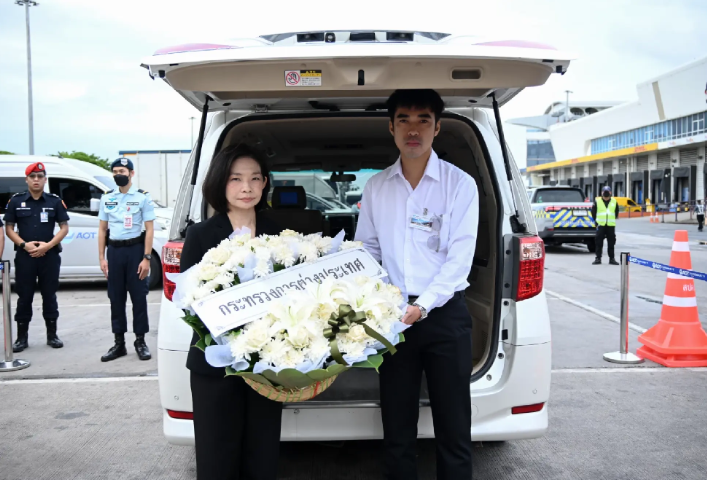
Thailand's Ministry of Foreign Affairs has completed the repatriation of travel content creator Bavorntat Pengsuk, better known to his substantial online following as "Hlun Solo", after he died in the Georgian capital of Tbilisi on 14 July 2026. The 27-year-old had become a recognizable figure in Thailand's digital content landscape through his travel-focused YouTube channel, which documented his journeys across various destinations. The successful return of his remains marks the culmination of coordinated diplomatic efforts between Thai authorities and Georgian officials, underscoring the government's commitment to assisting its citizens abroad during family emergencies.
Deputy Prime Minister and Foreign Minister Sihasak Phuangketkeow directed the Department of Consular Affairs to assume responsibility for managing the reception procedures upon Bavorntat's arrival in Thailand, with Prathuangtip Sirivithes, acting director-general of that department, appointed to oversee the arrangements. This high-level coordination reflects the prominence of the case within Thai diplomatic circles and the government's recognition of the content creator's public profile. The involvement of senior officials in the repatriation process demonstrates Thailand's institutional approach to facilitating the return of deceased nationals, particularly those with media prominence who attract public and press attention.
According to statements released by Jaithai Upakarnitikaset, director-general of the Department of Information and official spokesperson for the Ministry of Foreign Affairs, the Royal Thai Embassy in Ankara had maintained active engagement with Bavorntat's family members, Georgian state authorities, and relevant international officials from the moment news of the incident was communicated. This continuous communication stream proved essential in navigating the complexities of cross-border repatriation procedures, which typically involve multiple administrative stages and coordination between different national legal systems. The embassy's proactive stance helped prevent the kind of bureaucratic delays that sometimes characterize such cases, particularly when deaths occur in less familiar jurisdictions.
Recognizing the urgency of the situation, the Ministry dispatched specialized consular personnel directly to Tbilisi to accelerate the investigative procedures into the circumstances surrounding Bavorntat's death. These representatives worked in parallel to navigate Georgian administrative protocols, coordinate with local health authorities responsible for examining the remains, and manage the practical logistics of securing necessary documentation and clearances for international transport. The embassy team's on-the-ground presence proved instrumental in resolving procedural hurdles and ensuring that Georgian officials maintained momentum on the case, preventing the administrative inertia that can sometimes delay repatriation efforts.
The family has elected to pursue a comprehensive forensic examination within Thailand's medical framework once the remains arrive domestically, a decision that provides additional investigative clarity while respecting Thai medical and legal standards. This choice reflects practical considerations about expertise and the family's desire to conduct thorough examination procedures within their home country's institutional environment. Comprehensive forensic analysis will help establish definitively the medical circumstances of Bavorntat's death, information that will provide his family with closure and clarity during an already difficult period.
Following the completion of all necessary medical and administrative procedures, the remains will be transported to Somdet district in Kalasin province, Bavorntat's hometown in Thailand's northeastern region. There, his family will conduct traditional religious funeral ceremonies according to Buddhist customs, allowing members of his community, extended family, and potentially his online audience to participate in honoring his memory. The return to his provincial hometown represents a significant cultural and spiritual milestone for the grieving family, allowing them to conduct final rites within their familiar social and religious context.
Bavorntat's death represents a sobering reminder of the vulnerabilities that travel content creators face while pursuing content across international destinations. The travel vlogging industry has expanded dramatically across Southeast Asia in recent years, with numerous young creators documenting adventures across multiple countries to build engaged audiences. While such work has created new economic opportunities and cultural exchange, it also exposes participants to unfamiliar environments, healthcare systems, and potential safety risks that can occasionally result in tragedy. The case has likely prompted conversations within Thailand's creator community about safety protocols, emergency preparedness, and the importance of maintaining communication with support networks while working abroad.
The Ministry's handling of the repatriation demonstrates Thailand's institutional capacity to manage consular crises efficiently when properly resourced and directed at senior levels. The coordination between the Foreign Ministry, the Consular Affairs Department, the embassy in Ankara, and liaison officials in Georgia showcases the mechanisms available to assist Thai nationals in distress situations. For families navigating such tragedies, particularly when they involve international dimensions, the government's capacity to facilitate repatriation and manage diplomatic procedures provides essential support during overwhelming circumstances. The case illustrates both the challenges and the solutions inherent in managing the affairs of Thai citizens across geographically dispersed locations.

