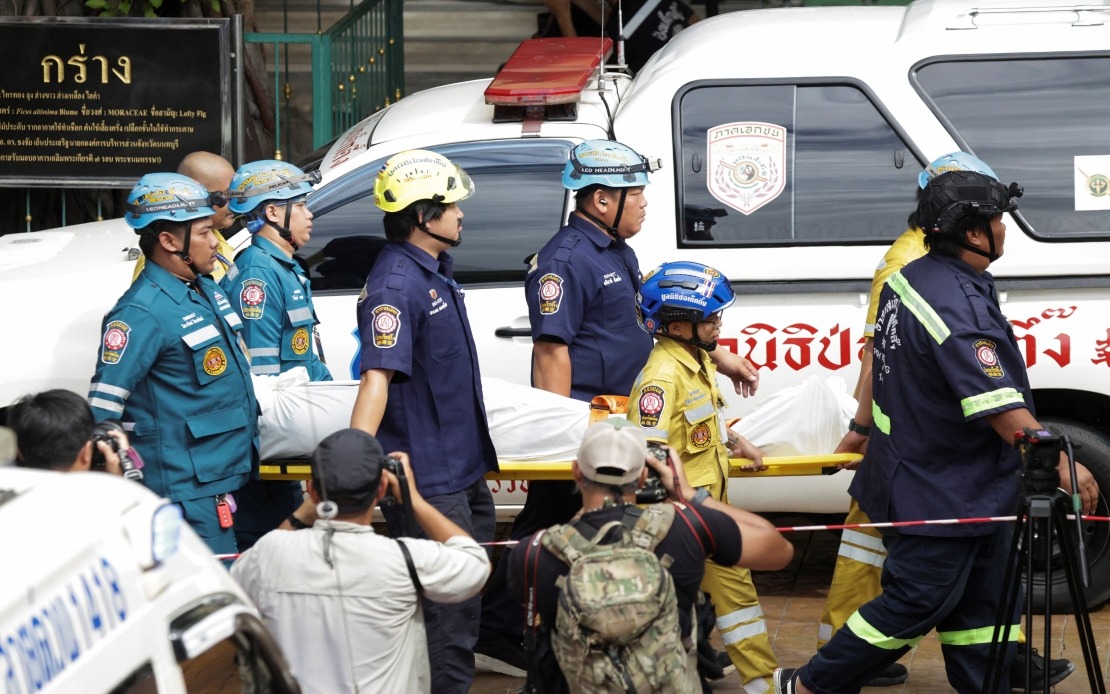
A student at Debsirin Nonthaburi School in Thailand's Nonthaburi province opened fire at the institution on Friday morning, leaving six people dead and 15 others wounded in what represents one of the country's most lethal school shooting incidents in recent memory. Law enforcement officials have since revealed that the suspected gunman—who was also found dead at the scene—appears to have committed an earlier act of violence at his family home before proceeding to carry out the school attack, adding another tragic layer to the incident.
According to Lieutenant General Trairong Piwpan, Royal Thai Police Deputy Inspector-General and spokesperson, preliminary findings indicate the suspect discharged a firearm at his residential address before travelling to the school. Investigators discovered that the young gunman had expended 26 rounds at his home in Bang Bua Thong district, establishing a pattern of violence that extended beyond the school campus itself. This timeline suggests a premeditated sequence of events rather than an isolated incident triggered by circumstances at the educational facility.
Upon searching the suspect's residence, police located the bodies of his grandfather and grandmother inside the dwelling. Both had sustained fatal gunshot wounds to the head, with investigators maintaining the working hypothesis that the youth killed his elderly relatives before commencing his assault on the school. The exact chronological sequence and precise timing of these events remain subjects of ongoing investigation, as authorities piece together the movements and actions of the suspect during the critical hours before the school shooting.
At the school itself, the attack unfolded around 10 a.m. local time, resulting in the deaths of three teachers and three students. An additional 15 individuals—a combination of staff members and students—sustained injuries during the rampage. The casualty toll positions this incident among Thailand's deadliest school-related shootings in the contemporary period, drawing comparisons to previous instances of mass violence within educational settings across Southeast Asia. The rapid deployment of emergency services and law enforcement prevented what could have been an even more catastrophic outcome.
The police investigation has revealed additional details about the weaponry involved. Officers recovered a 9mm handgun and located 34 additional rounds of ammunition outside the magazine during their search of the suspect's home. This cache of ammunition, combined with the 26 rounds already discharged at the residential address, paints a picture of an individual who had secured sufficient firearm capacity and ammunition to sustain an extended attack, raising questions about how access to such weapons was obtained and why warning signs may have gone undetected.
Thailand has maintained strict gun control regulations compared to many regional counterparts, making incidents of this magnitude particularly shocking to a public accustomed to relatively lower rates of armed violence. The procurement of firearms and ammunition in the country typically requires licensing and government oversight, yet this incident demonstrates that determined individuals can still circumvent legal frameworks to acquire weapons. The circumstances surrounding how the student obtained the 9mm handgun have not yet been disclosed by authorities, but this element of the investigation will likely receive considerable scrutiny from both law enforcement and the general public.
Investigators are actively working to establish the motive driving the suspect to commit such violence. This psychological and behavioural dimension of the case represents one of the most pressing investigative priorities for Thai authorities. Understanding whether the attacks stemmed from domestic conflict, mental health crises, bullying, personal grievances, or other catalysts will be crucial for informing prevention strategies and identifying warning indicators that might prevent similar incidents in future.
The broader context of school security and student welfare across Thailand and the wider Southeast Asian region has come into sharp focus following this tragedy. Educational institutions across the region will likely reassess their security protocols, emergency response procedures, and mental health support systems in response to the Nonthaburi incident. Malaysia, which has experienced its own instances of campus violence and security challenges, may draw lessons from how Thai authorities handle the investigation and subsequent policy responses.
For Malaysian policymakers and education officials, the incident serves as a sobering reminder of the complexities surrounding youth violence prevention and the importance of comprehensive mental health services within schools. While mass shootings remain comparatively rare in Malaysia due to stringent firearm regulations, other forms of violence within educational settings have periodically made headlines. The Thai case underscores how critical it is for schools to maintain vigilant monitoring systems, foster open communication channels with families, and ensure students have access to psychological support services that might identify individuals in crisis before violence occurs.
The death toll and circumstances of this incident have garnered significant media and public attention within Thailand and internationally, placing pressure on government agencies to demonstrate their capacity to investigate thoroughly and implement preventive measures. How Thai authorities conduct their investigation and what policy recommendations emerge from their findings will likely influence discussions about school safety, gun control enforcement, and mental health services throughout the region. For neighbouring countries like Malaysia, the developments in this case provide important data points for ongoing debates about institutional security and the societal factors that contribute to youth violence.

