A secondary school student in Nonthaburi province has been identified as the suspect in a deadly school shooting on Friday morning that claimed the lives of seven people, including the gunman himself, and wounded 15 others. Authorities now reveal that the attack followed an earlier tragedy at the suspect's family home, where police discovered the bodies of his grandparents, with whom he had been living.
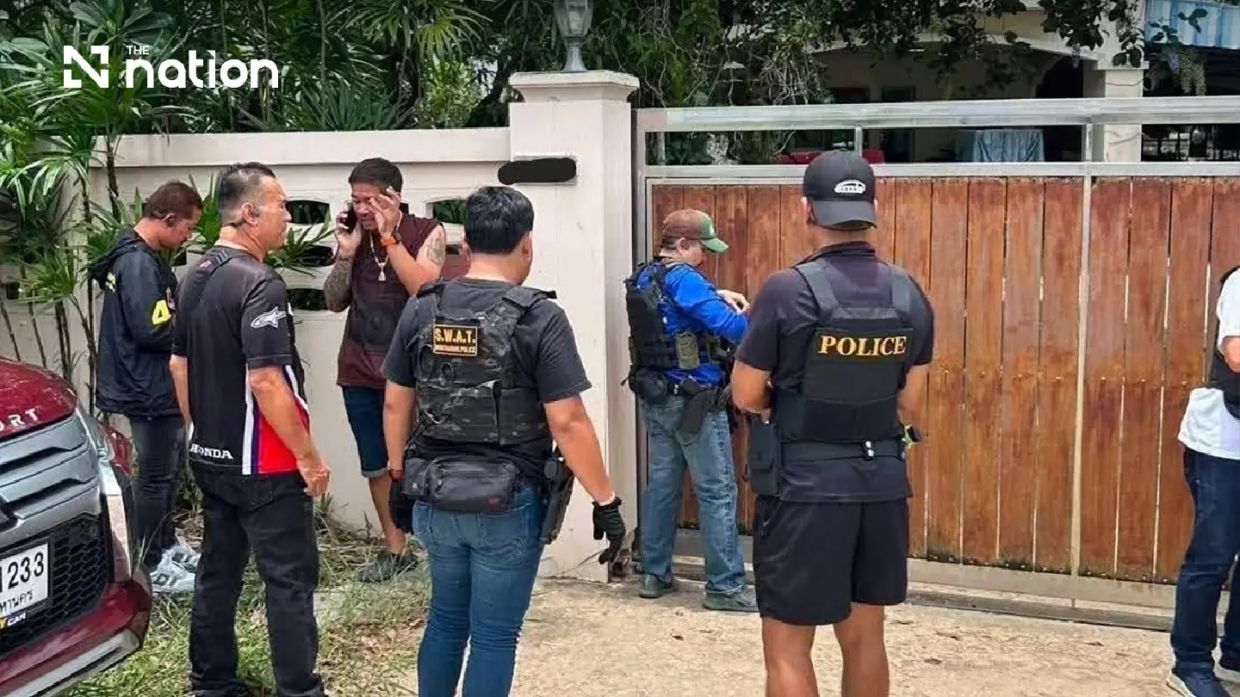
The suspect, a Mathayom 2 student, resided with his paternal grandparents in a residential community located in Soi Wat Lat Pla Duk within Bang Khu Rat subdistrict of Bang Bua Thong district. When officers searched the residence following the school incident, they uncovered evidence suggesting both elderly relatives had been killed earlier that morning, apparently with the same weapon subsequently used during the assault at Debsirin Nonthaburi School. The discovery has transformed what initially appeared to be an isolated school attack into a far more complex family tragedy involving multiple crime scenes.
Investigators have determined that the firearm in question was a CZ 9mm handgun legally registered to the grandfather. This detail has become central to the ongoing investigation, as authorities grapple with critical questions about how the juvenile accessed a registered weapon that should have been secured within the household. The chain of events suggests a premeditated escalation, beginning with the domestic killings before the violence extended into the school environment, though police have cautioned that establishing motive requires considerably more investigative work.
Police Lieutenant General Trairong Phiwphan, speaking as spokesman for the Royal Thai Police, confirmed that officers successfully contained the situation at the school and halted the violence. Emergency responders worked to evacuate and treat the wounded, while all casualties—both deceased and injured—were removed from the school grounds. The police chief's office mobilised additional resources to secure the crime scene, preserve evidence, and conduct a comprehensive examination of the area to reconstruct the sequence of events.
A critical investigative focus centres on the apparent access to the firearm and ammunition. While police have confirmed that the handgun belonged to the suspect's grandfather and was properly registered, they have not yet established how the juvenile obtained the weapon from the family home, what security measures, if any, were in place for storage, or the source of the ammunition. These questions form part of a broader examination into the suspect's movements, the accessibility of the gun within the residence, and whether there were any warning signs preceding the violence.
Authorities have attempted to contact the suspect's guardians and have preliminarily established that he had been living with older relatives rather than parents. However, deeper investigation into his family circumstances, behavioural history, social environment, and any potential psychological factors remains ongoing. Police officials acknowledge that determining motive requires substantially more investigative groundwork, including interviews, background checks, and analysis of the suspect's conduct in the weeks and months preceding the incident. The challenge facing investigators lies in understanding what combination of personal, familial, and psychological factors may have culminated in this sequence of violence.
Senior police authorities have issued directives to ensure comprehensive scene management and victim support. National Police Chief Kitrat Phanphet ordered officers to thoroughly clear and document the school grounds, secure all evidence, and prepare detailed crime scene reconstructions. Recognising the profound psychological impact on survivors and witnesses, the national police chief further instructed the Police General Hospital's chief medical officer to dispatch teams of psychologists and mental-health specialists to the affected area.
These mental-health professionals will provide counselling and trauma support to teachers, students, and other individuals affected by the shooting. Such intervention represents an acknowledgment that mass violence incidents carry substantial psychological consequences beyond immediate physical injuries, and that early professional support can significantly mitigate long-term emotional and mental-health effects among survivors and the broader school community. The scale of this initiative reflects the gravity with which Thai authorities are treating the incident's impact on the Nonthaburi community.
For Malaysian readers, this incident underscores ongoing regional concerns about firearm access and school safety in Southeast Asia. While Thailand maintains different legal frameworks around weapon ownership compared to Malaysia, the case illustrates how registered firearms can become instruments of tragedy when stored inadequately or accessed by vulnerable individuals. The incident also highlights the importance of comprehensive mental-health services and early intervention protocols in schools, areas where many regional nations continue developing their capabilities. Furthermore, it demonstrates how domestic violence and family crises can escalate into broader public tragedies, emphasizing the need for integrated community support systems that identify at-risk individuals before situations reach critical points.

