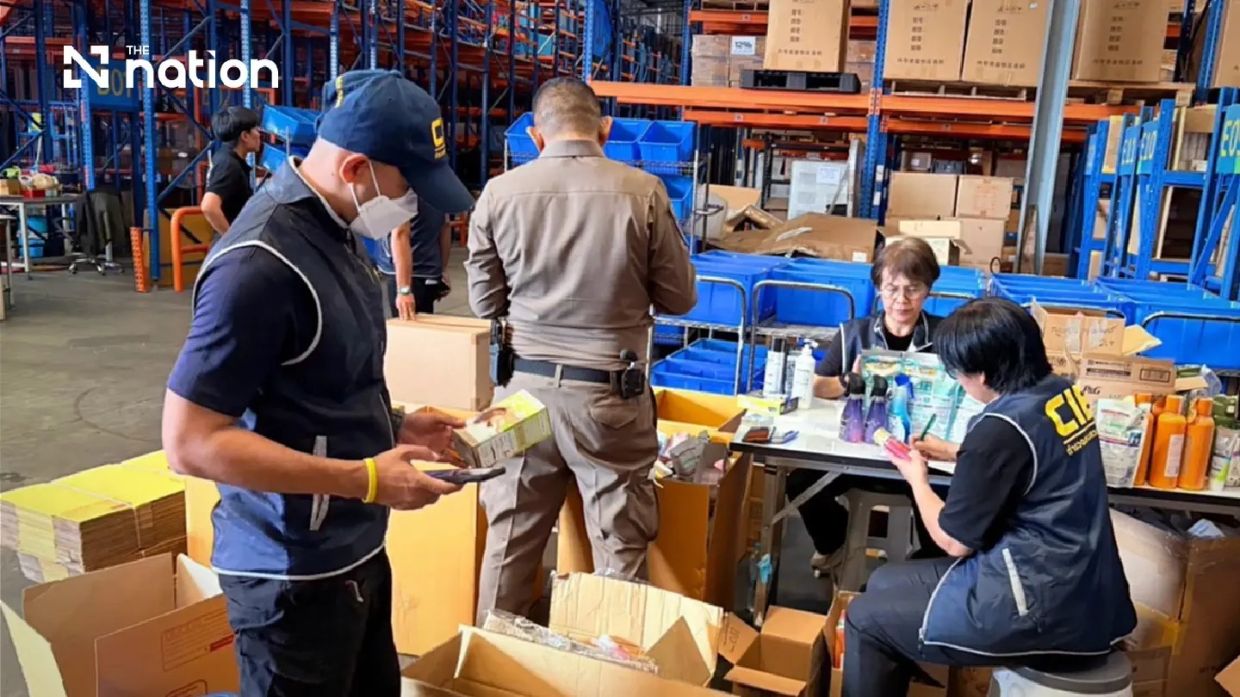
A major crackdown on illegal product distribution in Thailand has exposed how uncertified Japanese cosmetics, supplements and medicines have been systematically reaching consumers through online channels. The Consumer Protection Police Division raided a warehouse in Bang Phli district, Samut Prakan on Thursday and seized 83,483 items across 116 different product types, collectively valued at over 8.34 million baht. The operation, ordered by Pol Maj Gen Kongkrit Lertsittikul, commander of the CPPD, reveals the extent to which products lacking proper Thai regulatory approval have infiltrated e-commerce platforms in Southeast Asia's second-largest economy.
The seizure highlights a growing vulnerability in Thailand's online retail ecosystem, where enforcement agencies struggle to track products distributed through decentralised seller networks. Investigators traced the warehouse operation to multiple complaints from consumer protection advocates who noticed numerous online vendors marketing foreign cosmetics, nutritional supplements, and medicinal products without Thai-language labelling or certification marks. Such labelling requirements exist precisely to ensure consumers understand product composition, usage instructions, and potential health warnings—information typically unavailable when products are imported and resold without regulatory oversight.
What distinguishes this case is the systematic nature of the operation uncovered during the investigation. The Bang Phli warehouse functioned as a central distribution hub that had evolved over more than four years into a sophisticated logistics operation serving scores of online businesses. The facility originally handled basic storage of imported goods but gradually expanded to offer comprehensive packing and distribution services, processing between 200 and 300 items daily for shipment to sellers across various platforms. For this service, the operators charged a modest packing fee of 10 to 12 baht per box, suggesting substantial revenue from throughput volume alone.
The products in question originated primarily from Japan and entered Thailand without undergoing mandatory safety assessments or obtaining certification from relevant Thai authorities. This circumvention of regulatory checks represents a direct threat to consumer health, as cosmetics, supplements and medicines can contain harmful substances, incorrect dosages, or contaminated ingredients that official inspections are designed to catch. The warehouse operators appear to have exploited the complexity of Thailand's e-commerce ecosystem, where monitoring thousands of independent sellers across multiple platforms stretches enforcement resources extremely thin.
For Malaysian readers, this case carries significant implications regarding the safety of cross-border purchases. Thai e-commerce platforms are commonly accessed by Malaysians seeking cosmetics and supplements, often at lower prices than domestic alternatives. The warehouse raid demonstrates that what appears to be a bargain purchase may actually involve products that failed to meet Thai standards—and by extension, likely fall short of Malaysian regulatory requirements as well. The absence of proper documentation and Thai-language labelling suggests these products similarly lack Malaysian import permits or Health Ministry approval.
The legal framework mobilised against those responsible for the warehouse operation encompasses multiple statutes reflecting the severity with which Thai authorities treat such violations. Prosecutors will pursue charges under the Cosmetics Act, Hazardous Substances Act, Food Act, and Drug Act—a comprehensive legal arsenal indicating that officials view this as systematic regulatory evasion rather than isolated wrongdoing. This multi-statute approach reflects how such operations simultaneously breach consumer protection, food safety, and pharmaceutical regulations, each carrying substantial penalties.
From a regional perspective, the case underscores persistent challenges that Southeast Asian nations face in regulating digital commerce. The warehouse raid took months to organise, requiring investigators to analyse complaints, trace supply chains, identify the facility's location, secure court approval for inspection, and execute the seizure itself. During this investigation period, thousands of additional shipments likely reached consumers. The decentralised nature of online retail, combined with porous regional borders and the relative ease of cross-border shipments, creates an inherent structural advantage for operators willing to circumvent regulations.
The operation's four-year tenure before detection also raises questions about how authorities identify such facilities. The warehouse was detected only after sufficient consumer complaints accumulated and investigators successfully traced them to a single source. Proactive inspections of logistics facilities, particularly those with histories of handling imported goods, might have identified the operation earlier. Enhanced information-sharing between Thai e-commerce platforms and regulators could also flag suspicious seller patterns that might indicate common distribution sources.
Looking forward, the case demonstrates both the necessity and limitations of supply-side enforcement. While seizing 83,483 items represents meaningful action, it addresses only a single distribution point within what is likely a much larger ecosystem of informal cross-border product flows. Demand-side education—teaching consumers how to verify product authenticity and recognise warning signs of illegitimate products—offers a complementary strategy. Malaysian consumers particularly should be cautious when purchasing cosmetics and supplements from Thai sources, ensuring products carry proper Malaysian import documentation and Health Ministry approvals.
The warehouse raid also reflects broader regulatory trends across Southeast Asia. Thailand, alongside Malaysia, Indonesia, and Singapore, has intensified enforcement against counterfeit and unapproved products in recent years, recognising both consumer safety imperatives and the revenue implications of lost customs duties and excise taxes. Regional cooperation mechanisms increasingly facilitate information-sharing on suspect importers and distribution networks, though inconsistent regulatory standards across nations sometimes allow products rejected in one country to circulate in another.
For legitimate online retailers in Thailand and across Southeast Asia, this operation carries a cautionary message about supply chain due diligence. Sellers purchasing inventory from unknown wholesale sources risk inadvertently distributing illegal products and facing prosecution. The distinction between knowingly violating regulations and negligently failing to verify supplier legitimacy carries legal significance, though Thai prosecutors typically pursue both negligent and intentional violations vigorously.
The 8.34 million baht value assigned to seized products represents the estimated retail value had they successfully reached consumers, though authorities typically value confiscated goods at wholesale prices. This valuation methodology highlights how profitable such operations become through volume and low compliance costs. Legitimate distributors face substantially higher expenses from licensing, testing, labelling, and certification—costs that underground operators entirely avoid, creating a persistent price advantage that incentivises continued violations.
Ultimately, the Bang Phli warehouse seizure exemplifies the cat-and-mouse dynamic characterising modern product regulation in digital markets. Authorities achieve periodic enforcement successes that deter some operators and disrupt specific supply chains, yet the underlying economic incentives—price-sensitive consumers willing to purchase unverified products, platform architectures facilitating anonymous transactions, and relatively modest penalties compared to potential profits—continue driving new illegal operations. For Malaysian and broader Southeast Asian consumers and policymakers, the case reinforces that vigilance, supply-chain transparency, and cross-border regulatory coordination remain essential to protecting public health amid rapid e-commerce expansion.

