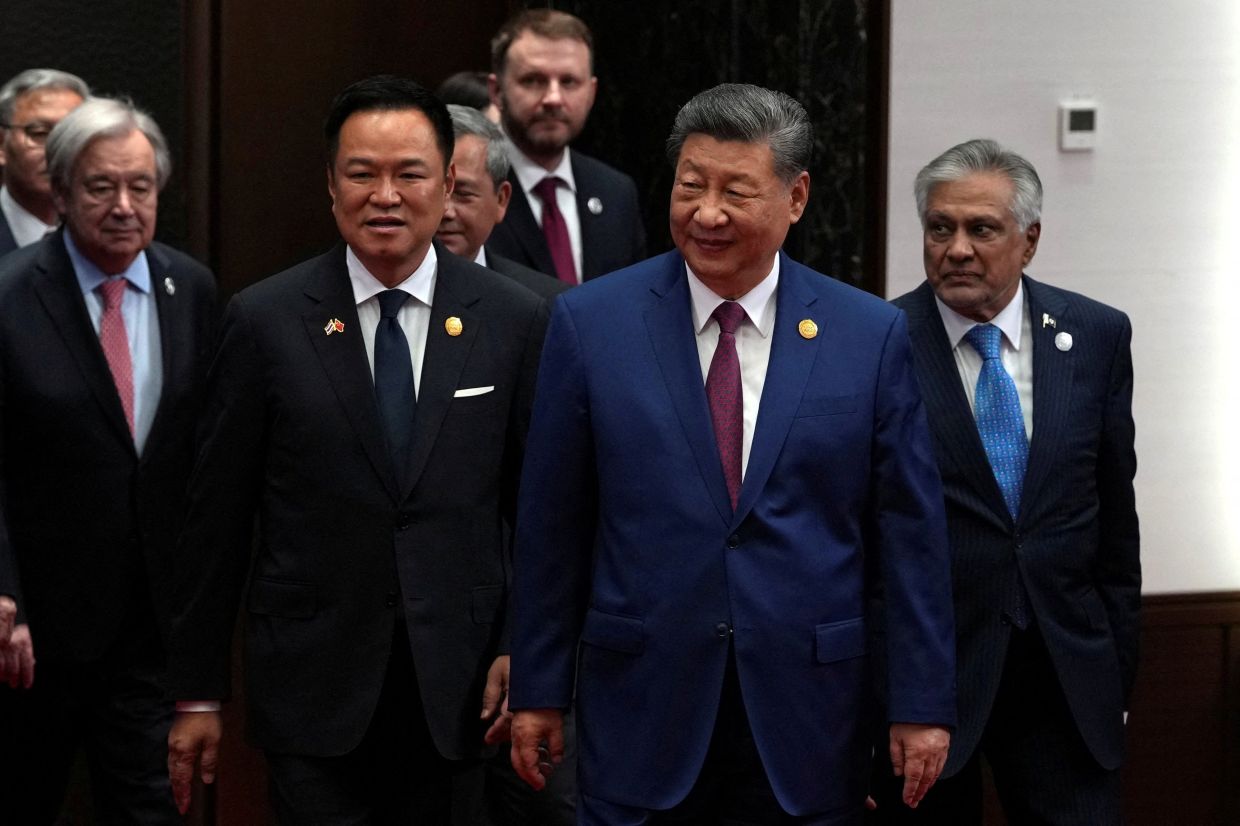
Thai Prime Minister Anutin Charnvirakul has adopted an unorthodox approach to statecraft, leveraging his musical talents to build diplomatic bridges across the region. During a formal state lunch in Beijing on Monday, the Thai leader entertained Chinese Premier Li Qiang by performing a beloved classic from Taiwanese singer Teresa Teng, marking another chapter in what observers increasingly describe as his signature brand of musical diplomacy. The performance, documented and released by Anutin's office, showed the two premiers seated alongside one another at a long table adorned with Thai and Chinese flags, with piano accompaniment providing a ceremonial backdrop as gathered officials applauded the impromptu concert.
This latest performance fits a broader pattern of musical engagement that has become characteristic of Anutin's tenure as prime minister. Just weeks earlier, he took to the stage with Malaysian Prime Minister Anwar Ibrahim, where the two leaders performed "My Way", the iconic Frank Sinatra standard. In that collaboration, Anutin demonstrated his versatility by handling the saxophone while Ibrahim lent his voice to the lyrics. The performance highlighted the growing cultural connection between Bangkok and Kuala Lumpur, using a universally recognised song to communicate goodwill and strengthen bilateral ties in an era when traditional diplomacy can sometimes feel stiff and formal.
The prime minister's musical outreach extends throughout Southeast Asia. During a recent visit to Hanoi, Anutin participated in a cultural performance with local musicians, choosing to play a traditional Vietnamese instrument to honour his hosts. This gesture toward Vietnamese culture demonstrated cultural sensitivity and a willingness to engage with local artistic traditions, a significant diplomatic signal in a region where respect for national heritage carries considerable weight. His performance alongside Prime Minister Le Minh Hung underscored Thailand's commitment to strengthening its relationship with Vietnam, one of the crucial pillars of ASEAN stability.
Anutin's multifaceted musical abilities have become central to his public persona and political brand. Beyond the saxophone and traditional Thai flute, he is an accomplished pianist and has even pursued aeronautical interests as a hobbyist jet pilot. These pursuits paint him as a man of diverse talents and interests, a calculated image that appeals to voters across different demographic segments. His willingness to showcase these skills in formal diplomatic settings breaks from the traditional reserved demeanour typically associated with high-level political office, positioning him as more relatable and contemporary than his predecessors.
Understanding Anutin's rise to prominence requires considering his background and political positioning. He ascended to the premiership in September 2024, subsequently consolidating his position through victory in February 2025 elections. As a scion of a prominent construction dynasty, Anutin possesses considerable wealth and business acumen, yet he deliberately cultivates an image as a leader connected to ordinary people. This apparent paradox reflects a sophisticated political strategy in Thailand, where voters often respond favourably to leaders who can bridge elite and populist circles while maintaining social stability.
An important dimension of Anutin's political appeal lies in his perceived loyalty to Thailand's traditional institutional structures and social hierarchy. In a nation where respect for longstanding conventions and the monarchy remains deeply embedded in the national psyche, his conservative stance on social order resonates powerfully with significant portions of the electorate. This positioning allows him to pursue modernising diplomatic initiatives, such as musical performances with international leaders, without alienating traditional constituencies who value continuity and institutional respect.
The regional context for Anutin's musical diplomacy deserves careful consideration. Southeast Asia has witnessed significant geopolitical competition between major powers, with nations seeking to maintain balanced relationships with China, the United States, and other global actors. Thailand, occupying a strategically important position in mainland Southeast Asia, must navigate these complexities with considerable finesse. Anutin's cultural diplomacy serves a practical purpose by humanising political relationships and creating personal connections between leaders, potentially smoothing negotiations on more contentious issues ranging from trade to security cooperation.
Recently, Anutin expanded his musical repertoire by performing alongside a Thai teenager who gained international recognition through a viral performance on the television programme America's Got Talent. This collaboration with a younger generation showcases his efforts to bridge age groups and position himself as a leader who appreciates talent and entertainment, regardless of source. Such performances generate significant social media engagement and create positive narratives about Thai leadership on international platforms, contributing to Thailand's soft power projection.
Critics might view Anutin's musical diplomacy as superficial or insufficiently substantive for addressing serious bilateral and multilateral issues facing the region. Yet this perspective overlooks the genuine diplomatic value of creating positive interpersonal relationships between national leaders. In an era of heightened tensions and political polarisation, moments of shared cultural appreciation can reduce misunderstandings and build foundations of mutual respect that facilitate productive negotiations on policy matters. The photographs and videos of Anutin performing with regional counterparts circulate widely through media and social networks, shaping international perceptions of Thailand as a cultured, forward-thinking nation led by leaders who value human connection.
Looking ahead, Anutin's musical diplomacy will likely remain a distinctive feature of his approach to regional engagement and international relations. Whether through saxophone solos with Malaysian leaders, traditional instrument performances in Vietnam, or vocal renditions for Chinese officials, these cultural exchanges contribute to the broader tapestry of ASEAN solidarity and intra-regional cooperation. As Southeast Asia continues navigating complex geopolitical waters, leaders like Anutin who invest in building personal and cultural connections may find such relationships invaluable when addressing contentious regional matters requiring consensus and mutual understanding.

