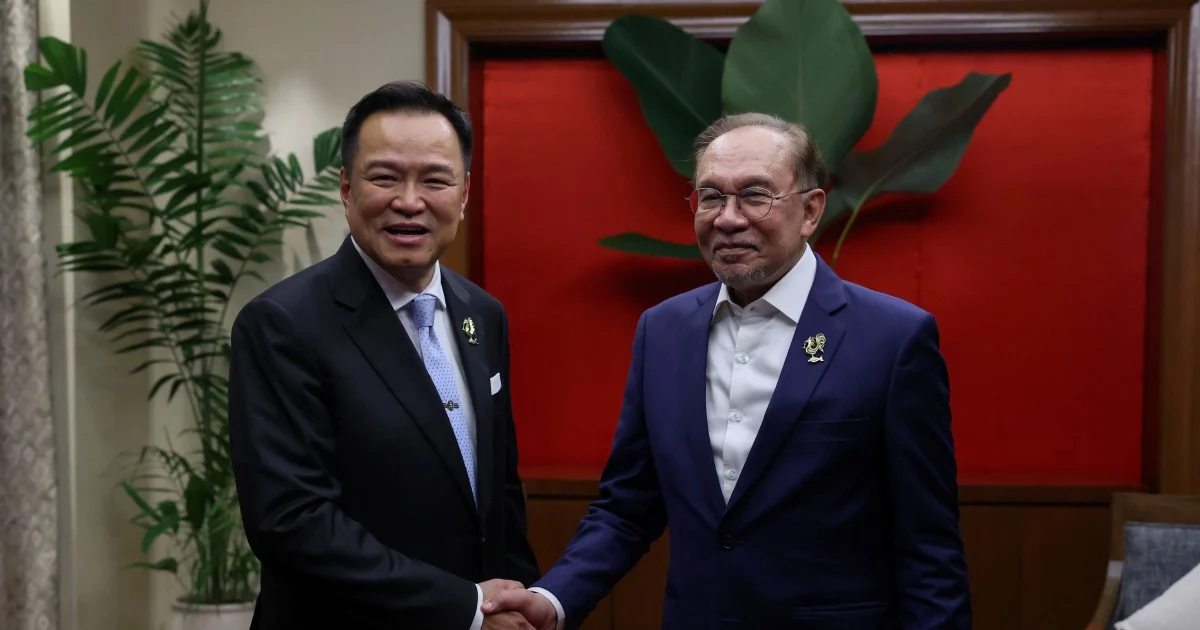
Thai Prime Minister Anutin Charnvirakul will arrive in Malaysia on July 9, marking a significant diplomatic engagement between two of Southeast Asia's major economies. The two-day visit comes at a time when both nations face mounting pressures on their shared border and seek to deepen their economic partnership in an increasingly competitive regional landscape.
The visit represents a continuation of the robust bilateral relationship that has developed between Bangkok and Kuala Lumpur over recent years. Prime Minister Datuk Seri Anwar Ibrahim is expected to host his Thai counterpart for a comprehensive discussion of mutual concerns, reflecting the importance both governments place on maintaining strong ties in the region.
Border security will figure prominently in the agenda, a recurring concern for both nations given the geographical realities of their shared frontier. The Malaysia-Thailand border, stretching across three Malaysian states, has historically presented security challenges ranging from smuggling activities to cross-border movement of suspected militants. Both countries have worked to strengthen intelligence sharing and operational coordination, and this visit provides an opportunity to assess progress and identify areas for enhanced collaboration.
The transnational nature of security threats in the region has become increasingly apparent, with criminal networks and extremist elements exploiting porous borders to move personnel, weapons, and illicit goods. Malaysia and Thailand have mutual interests in tackling these challenges, and high-level political engagement helps establish the frameworks and commitments necessary for ground-level enforcement agencies to operate effectively across jurisdictional lines.
Economic cooperation will constitute the second major pillar of discussions. The bilateral trade relationship between Malaysia and Thailand is substantial, with two-way commerce reflecting the deep integration of their manufacturing and agricultural sectors. However, both nations recognize significant untapped potential, particularly in emerging areas such as digital commerce, renewable energy, and supply chain resilience following global disruptions to trade flows.
Thai investors have long maintained a substantial presence in Malaysia, particularly in the automotive, electronics, and agribusiness sectors. Conversely, Malaysian companies have found opportunities across Thailand's economy. This visit offers a chance for both leaders to signal commitment to reducing barriers to trade and investment, potentially opening new sectors or facilitating increased capital flows between the countries.
Regional dynamics add another dimension to the bilateral relationship. Both Malaysia and Thailand occupy important positions within ASEAN and the broader Southeast Asian geopolitical landscape. Thailand's role as a potential bridge between mainland and maritime Southeast Asia, combined with Malaysia's strategic location and diverse international relationships, means their cooperation has implications extending well beyond their immediate bilateral interests.
The visit also reflects the personal diplomatic approach that both leaders have championed since taking office. Anwar Ibrahim has prioritized direct engagement with regional counterparts to advance Malaysian interests, while Anutin has similarly emphasized personal relationships in conducting Thai foreign policy. These face-to-face meetings, while increasingly common in modern diplomacy, remain invaluable for building trust and understanding between leaders and for addressing sensitive matters that resist resolution through lower-level channels.
Sectors such as tourism and cultural exchange are likely to feature in broader discussions about strengthening people-to-people connections. Thailand remains one of Malaysia's top tourist destinations, while Malaysian visitors form a significant portion of international arrivals in Thailand. Facilitating easier travel through visa arrangements or transport connectivity could yield economic benefits for both nations' tourism industries.
The timing of the visit suggests both nations may be preparing for collaborative positions on regional issues that are expected to arise at upcoming ASEAN forums and other multilateral gatherings. Whether addressing challenges in the South China Sea, discussing Myanmar's ongoing political crisis, or coordinating on economic recovery strategies, countries that align their positions beforehand tend to exercise greater influence in regional decision-making.
Infrastructure development linking the two countries represents another area where cooperation could expand. Projects connecting Malaysian and Thai regions through improved road, rail, or port facilities could stimulate cross-border commerce and integrate their economies more deeply. Such infrastructure investments also carry strategic significance, enhancing connectivity across the region and reducing economic disparities in border areas.
For Malaysia, the visit underscores its commitment to managing important regional relationships while pursuing its own development agenda. Thailand, as a neighbouring nation with considerable influence across Southeast Asia, merits the high-level attention being shown through this visit. The discussions are expected to yield concrete agreements or at least renewed commitments on key issues, demonstrating that both governments remain serious about advancing their partnership.
The outcome of the July visit will likely set the tone for bilateral relations over the coming months, with any agreements or understandings reached expected to filter down to implementing agencies and inform the countries' broader regional strategies. For Malaysian business and government stakeholders monitoring Thai relations, this visit represents a critical moment in the diplomatic calendar.

