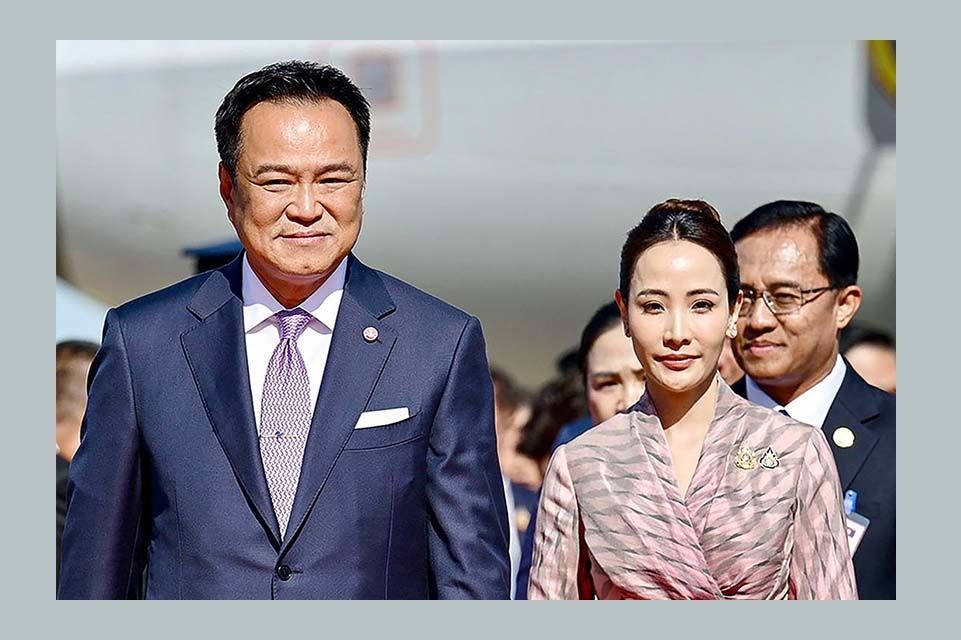
Thai Prime Minister Anutin Charnvirakul is set to undertake a two-day official visit to Malaysia beginning Thursday, July 9, marking a significant moment in bilateral relations as both nations prepare to inaugurate an upgraded border crossing that promises to reshape cross-border commerce and travel in the region. The timing of his visit, announced by government spokesperson Ratchada Thanadirek, is strategically aligned with the July 11 opening of the new permanent Sadao border checkpoint, underscoring Thailand's commitment to strengthening ties with its southern neighbour during a critical period for regional connectivity.
The visit comes at the formal invitation of Malaysian Prime Minister Datuk Seri Anwar Ibrahim and serves as an opportunity for both leaders to reaffirm their nations' dedication to deepening cooperation across multiple sectors. Beyond ceremonial significance, the visit represents a chance for the two governments to discuss practical measures for implementing the new checkpoint's operations and ensuring its success in facilitating seamless movement of goods and people. With diplomatic relations between Thailand and Malaysia approaching their 70th anniversary in 2027, this meeting carries symbolic weight as leaders prepare to build momentum toward that milestone.
Thailand's Cabinet formally approved the new Sadao checkpoint's opening during a Tuesday session, replacing the existing crossing at the same location. The Cabinet determination reflects comprehensive planning by Thai authorities, who have outlined detailed operational parameters to ensure the facility functions efficiently from day one. The new complex, officially designated as the Sadao Customs, Immigration and Quarantine facility located in Songkhla province, will operate on a daily basis from 5 am to 11 pm Thailand time, a schedule designed to accommodate significant volumes of cross-border traffic while remaining manageable for both countries' respective authorities.
Connecting Malaysia's Bukit Kayu Hitam checkpoint in Kedah with the new Thai facility, this infrastructure upgrade addresses long-standing bottlenecks that have constrained bilateral trade and tourism. The Malaysia-Thailand border has historically served as a critical commercial corridor for Southeast Asia, and the new checkpoint represents substantial investment in modernising facilities that had become inadequate for contemporary traffic volumes. Officials anticipate that the improved infrastructure will facilitate significantly faster clearance times for goods destined for Thai and Malaysian markets, while reducing costs associated with border delays that previously added considerable expense to cross-border transactions.
Thailand's Cabinet has directed relevant agencies to undertake complementary infrastructure development to maximise the checkpoint's effectiveness. Construction of connecting roads on the Thai side aims to improve traffic circulation and prevent queuing that might compromise the facility's operational efficiency. These supporting measures, approved during the same Cabinet session that greenlit the checkpoint opening, demonstrate governmental recognition that border infrastructure functions optimally only when integrated with broader transportation networks. Authorities have also been tasked with implementing congestion-mitigation strategies and establishing shuttle bus services connecting the checkpoint with inland Thai communities, ensuring that populations throughout border regions benefit from improved connectivity.
Public awareness campaigns will be crucial to the transition's success, particularly given the procedural changes that businesses and regular cross-border commuters must navigate. Ratchada confirmed that Thai authorities have been instructed to intensify education efforts targeting the Dan Nok border community and surrounding areas, with information disseminated regarding new traffic routes, updated customs procedures, and immigration protocols. These awareness initiatives reflect understanding that smooth border operations depend on stakeholder comprehension of new systems—a lesson learned through previous border facility upgrades across the region.
The checkpoint upgrade carries particular significance for the cross-border community in Dan Nok and similar settlements, where residents depend on efficient border procedures for employment, commerce, and family connections. Enhanced facilities and expedited procedures will directly benefit thousands of daily commuters and traders whose livelihoods depend on regular cross-border movement. Authorities have recognised this by targeting public awareness efforts specifically toward business operators and residents in border communities, ensuring that those most affected by the transition receive practical guidance for adapting to new processes.
This represents Anutin's third official visit to Malaysia since assuming the prime ministerial position, reflecting the frequency of high-level engagement between the two nations. His previous visits—attending the ASEAN Summit in Kuala Lumpur in October of the preceding year and conducting an official visit on November 26—demonstrate consistent prioritisation of Malaysia within Thailand's regional diplomacy. The pattern of visits indicates institutional commitment to maintaining momentum in bilateral relations and suggests that multiple substantive initiatives beyond the border checkpoint are likely under development within governmental channels.
Regional observers view the checkpoint upgrade as part of broader efforts to enhance ASEAN connectivity and reduce physical barriers to intra-regional commerce. Southeast Asia's economic integration depends partly on seamless cross-border movement, making infrastructure like the Sadao checkpoint crucial to regional competitiveness. Malaysia and Thailand, as significant ASEAN economies, have particular interest in demonstrating that neighbouring nations can coordinate border management effectively, potentially serving as a model for other cross-border partnerships within the association.
For Malaysian stakeholders, the new checkpoint promises tangible benefits across multiple sectors. Tourism operators serving travellers between the two nations anticipate faster processing times will encourage short-stay cross-border trips, boosting related economic activity in northern Malaysian states. Manufacturers utilising cross-border supply chains—particularly in sectors like automotive components, electronics, and agricultural products—expect reduced logistics costs and improved inventory management as checkpoint delays diminish. The investment in this infrastructure represents both governments' recognition that competitive regional positioning requires modern, efficient border facilities capable of handling contemporary trade volumes.
Both nations have also signalled willingness to address quarantine and customs procedures through the new integrated CIQ complex, suggesting that functionality extends beyond simple border crossing into comprehensive trade facilitation. This comprehensive approach to border modernisation reflects evolving best practices in cross-border management, where single facilities handle multiple governmental functions simultaneously rather than requiring travellers and goods to navigate separate processing at different locations.
The political timing of Anutin's visit immediately preceding the checkpoint opening demonstrates deliberate coordination aimed at maximising diplomatic benefit from infrastructure investment. By visiting Malaysia during this transition period, the Thai Prime Minister underscores his government's commitment to the project and provides an opportunity for bilateral discussion regarding implementation challenges that might arise during initial operations. This proactive engagement style strengthens relationships between governments and signals to businesses and citizens that both nations view the checkpoint as a priority requiring high-level attention.

