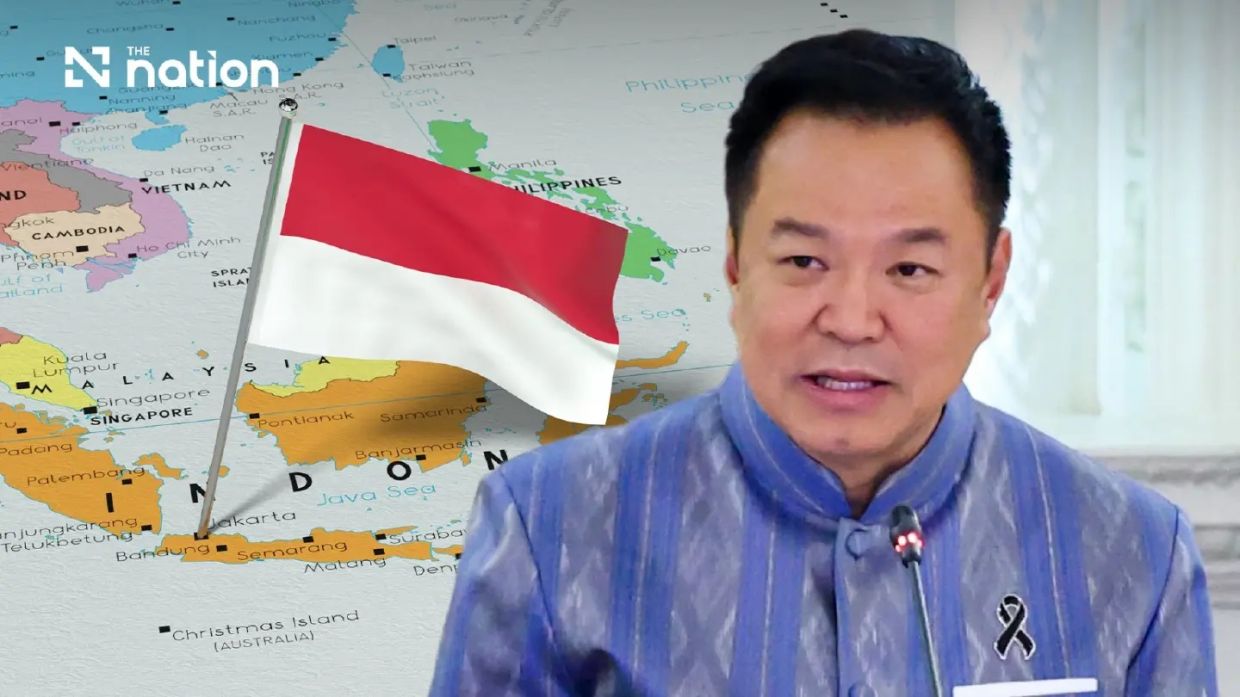
Prime Minister Anutin Charnvirakul will undertake an official visit to Indonesia on August 3-4, representing the first such high-level Thai diplomatic mission to the Southeast Asian neighbour in a decade and a half. The journey underscores Thailand's strategic pivot towards strengthening relationships within Asean at a moment when regional cohesion faces mounting pressures from global economic volatility and geopolitical uncertainties. By engaging directly with Indonesian President Prabowo Subianto, Anutin signals Bangkok's commitment to repositioning itself as an active player in Southeast Asian affairs, particularly as it prepares to assume the rotating Asean chairmanship in 2028.
The bilateral agenda encompasses a broad spectrum of collaborative domains designed to translate political goodwill into concrete economic outcomes. Discussions between the two leaders will cover trade expansion, cross-border investment frameworks, tourism development, shared security concerns, agricultural and food sector cooperation, energy partnerships, educational exchanges and business facilitation mechanisms. This multifaceted approach reflects a recognition that modern statecraft demands interconnectedness across multiple dimensions rather than isolated diplomatic gestures. For Thai businesses eyeing regional expansion, Indonesia's status as Asean's largest economy with approximately 280 million people represents both a vast consumer market and a strategic entry point to the broader regional supply chain architecture.
Government Spokesperson Rachada Dhnadirek has characterised the visit as instrumental in advancing joint strategic projects between Thailand and Indonesia while simultaneously positioning foreign policy as a vehicle for economic advancement. She emphasised that Jakarta's demographic and economic weight makes it an indispensable partner for Thai commercial interests seeking to diversify beyond traditional markets. The visit is structured to create spillover benefits that extend well beyond protocol-level exchanges, potentially opening new avenues for Thai agricultural exports, value-added food products and tourism inflows. Small and medium-sized enterprises, which form the backbone of Thailand's economy, stand to gain particular advantage through enhanced market access and reduced trade barriers resulting from strengthened governmental coordination.
The economic dimension assumes heightened importance given Thailand's ongoing struggle with growth constraints and the urgent need for job creation across multiple sectors. Rachada articulated the government's philosophy that foreign policy should translate into tangible improvements in living standards and income generation for ordinary Thais. Knowledge transfers and technological exchanges in sectors where the two nations possess complementary capabilities could unlock innovation benefits across agriculture, manufacturing, and services. Enhanced people-to-people connectivity through increased tourism flows and workforce development programmes would further deepen the economic interdependence that typically anchors durable diplomatic relationships.
Beyond immediate bilateral concerns, the visit carries significant implications for Asean's institutional trajectory and cohesion. Both Thailand and Indonesia stand as founding members of the regional grouping, and their collaborative stance on regional architecture directly influences how Asean responds to external pressures and internal challenges. The discussions will provide a forum for Anutin and Prabowo to align perspectives on transnational threats including organised crime and trafficking, as well as broader geopolitical developments that threaten regional stability. Asean's centrality in managing great power competition makes such high-level coordination essential, particularly as smaller members look to anchor states like Thailand and Indonesia for leadership and strategic direction.
Thailand's forthcoming Asean chairmanship in 2028 adds temporal urgency to the current engagement. Anutin's scheduled address at the Asean Secretariat will articulate Thailand's vision for a cohesive, economically resilient and people-centred regional organisation capable of pursuing balanced and sustainable development. This positioning document will establish expectations among regional partners regarding Bangkok's intended leadership style and policy priorities. Given the complex geopolitical environment—marked by US-China strategic competition, maritime disputes, and economic fragmentation—Thailand's chairmanship will demand sophisticated diplomatic navigation. Pre-positioning itself through strengthened Indonesia ties provides Bangkok with an influential ally when it assumes the mantle of regional leadership.
The operational scheduling of the visit demonstrates careful attention to maximising stakeholder engagement across multiple levels. The August 3 itinerary encompasses formal state ceremony protocols, intimate bilateral discussions between principals, full delegation-level meetings allowing substantive discussion among technical experts, and joint media appearances for public consumption. This layered approach ensures that various constituencies—political elites, bureaucratic machinery, business communities and public opinion—receive appropriate messaging tailored to their interests and concerns. The inclusion of a joint business forum organised by Indonesia's Chamber of Commerce (KADIN) and the Thai Chamber of Commerce in Indonesia on August 4 directly facilitates private sector networking and deal-making opportunities.
Anutin's subsequent engagement with Indonesia's Asean secretary-general and private sector representatives reflects deliberate broadening of the diplomatic footprint beyond governmental channels. This inclusive approach recognises that modern regional integration transcends formal bilateral frameworks and requires embedding connections throughout institutional ecosystems. Business forums serve as crucibles where specific commercial opportunities crystallise into binding agreements, employment relationships, and investment flows. For Malaysian observers, the Thai-Indonesian coordination model offers instructive lessons regarding how mid-sized regional powers can leverage diplomatic engagement to amplify economic returns and establish themselves as indispensable regional stakeholders.
The 15-year gap since the last Thai prime ministerial visit to Indonesia itself warrants analytical consideration. This extended hiatus may reflect either competing priorities or periodic strains in bilateral relations that both sides now wish to transcend. The deliberate framing of this visit as a reset moment indicates mutual recognition that Thailand-Indonesia cooperation has been insufficiently cultivated relative to the countries' strategic significance. The timing aligns with Indonesia's shift towards new leadership under Prabowo, potentially offering both capitals an opportunity to recalibrate relationships without the baggage of prior administrations. Anutin's visit thus functions as a confidence-building measure signalling to regional partners that Thailand remains actively engaged in Asean affairs despite occasional periods of domestic political turbulence.
Rachada's characterisation of the visit as embodying Bangkok's broader foreign policy philosophy—building strategic partnerships, maintaining balance in international relations, and strengthening economic negotiating capacity—reveals how Thailand conceptualises its regional role amid intensifying global competition. This framing suggests Thailand views bilateral engagement not as an end in itself but as instrumental to positioning the nation advantageously within regional and global hierarchies. The emphasis on balanced relationships distinguishes Thailand's approach from potential alignment with external great powers, instead prioritising intra-regional cooperation as the foundation for collective Southeast Asian prosperity and resilience. For the Thai business community and workforce, such strategic positioning translates into expanded opportunities in Indonesia's dynamic economy while simultaneously anchoring Asean's own capacity for autonomous policymaking.

