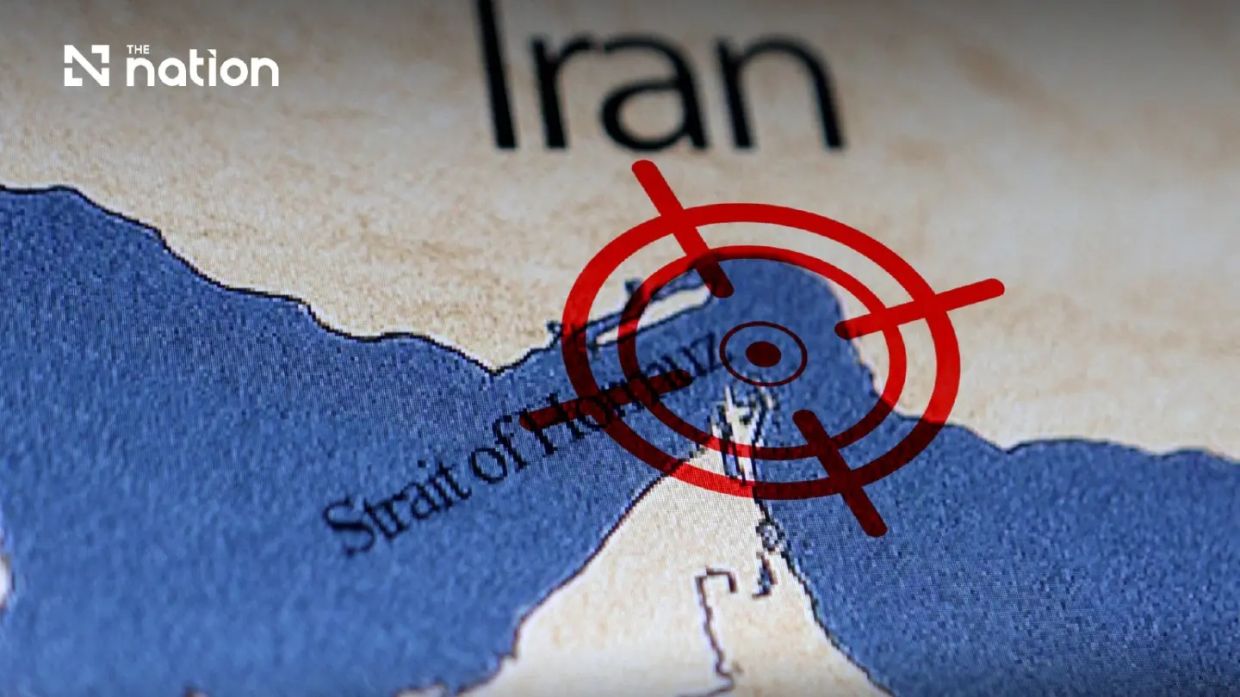
A commercial vessel operating under the Thai flag has been reportedly targeted by Iranian military forces while transiting the Strait of Hormuz, according to Iran's semi-official Tasnim news agency. The reported attack marks an alarming escalation in maritime tensions affecting one of the world's most vital shipping lanes, where roughly a third of seaborne oil trade passes through daily. The incident comes amid a broader pattern of military confrontation between the United States and Iran, with both powers conducting intensive operations that have placed civilian commercial shipping at unprecedented risk.
Details surrounding the reported attack remain sparse and unconfirmed by multiple independent sources. Thai authorities have not released any official statement regarding the incident, nor have maritime organizations or the vessel's operator confirmed the attack or identified the ship by name. The Iranian report provided no information about the vessel's ownership structure, cargo contents, intended destination, or the nationality of crew members aboard. Critically, it also remains unverified whether the ship sustained any physical damage or whether personnel suffered injury, leaving significant gaps in understanding the actual impact of the alleged assault.
The reported targeting of the Thai-flagged ship occurs within a context of dramatically heightened military activity throughout the Strait of Hormuz region. Iran has issued formal notices to maritime operators warning them to comply with directives from its armed forces while transiting the waterway. According to Iranian state media, the Islamic Revolutionary Guard Corps Navy characterized the strait as "extremely unsafe" and claimed it had been completely closed due to what it described as American military aggression. These assertions reflect Iran's attempt to assert control over maritime navigation in the region and deter vessels from accepting US military protection.
Beyond the Thai vessel incident, Iranian media reported that two oil tankers experienced fires following explosions when they attempted to navigate through an area described as a minefield in the southern section of the strait. Separately, the Islamic Revolutionary Guard Corps claimed it had intercepted four additional oil tankers attempting passage through the waterway with alleged US military support. The IRGC Navy stated that these four vessels were ordered to remain stationary during what it characterized as a joint missile-and-drone operation. Iranian authorities demanded that shipowners heed Iranian military notices rather than relying on protection from US naval forces. However, like the initial attack report, the identities of these four tankers and their operational status were not disclosed, preventing independent verification of these claims.
These maritime incidents carry significant implications for global commerce and energy security. The Strait of Hormuz represents a strategically irreplaceable chokepoint in the international energy supply chain, with disruptions potentially affecting freight costs, maritime insurance premiums, global energy availability, and commodity pricing worldwide. For Southeast Asian nations including Malaysia, which depend heavily on stable energy supplies and predictable shipping costs, any prolonged interference with Hormuz transit routes could translate into higher import expenses and inflation pressures. Regional shipping industries and petrochemical sectors face mounting uncertainty as insurers reassess risk premiums for vessels transiting the contested waters.
The maritime threats must be understood against the backdrop of intensifying military operations initiated by the United States. The US military conducted its seventh consecutive night of strikes against Iranian targets, with operations commencing at 7pm GMT on Friday. American Central Command announced through its social media that the strikes aimed to "continue degrading Iran's military capabilities," though detailed information about specific targets and the extent of damage was not immediately provided. The repeated nature of these strikes indicates a sustained US military campaign rather than isolated incidents, fundamentally altering the security environment throughout the region.
Iranian officials disputed American claims about military effectiveness, asserting instead that preceding US strikes had damaged civilian infrastructure in Iran's southern regions, including bridges, airports, power generation facilities, and railway infrastructure. Foreign Minister Abbas Araghchi indicated that three people were killed during an attack on a bridge in Bandar Khamir, bringing the overnight death toll from American strikes to eight. Iranian provincial officials also reported that a US attack targeted an Iranian oil tanker moored at Kharg Island, a major petroleum export terminal. These claims, however, remain based on Iranian government accounts and have not been independently corroborated through international media organizations or humanitarian observers.
Iran responded to American military action by conducting its own strikes against what it characterized as US assets and military installations distributed across the broader Gulf region. Iranian military officials claimed responsibility for attacks on US-linked military sites in Bahrain, Jordan, Kuwait, and Qatar. Qatari authorities confirmed that their armed forces intercepted an incoming Iranian attack, though a child was injured by debris resulting from the defensive interception. The Iranian military also claimed to have destroyed a US MQ-9 Reaper drone over Bushehr using a newly developed air-defense system integrated into Iran's broader air-defense network. The United States has not yet confirmed the loss of the unmanned aircraft, leaving this claim similarly unverified.
The escalating military exchanges and maritime incidents demonstrate how the US-Iran confrontation is rapidly expanding beyond direct military engagements to affect critical civilian infrastructure and commercial operations. The combination of reported vessel attacks, claimed tanker interceptions, competing air-defense claims, and reports of damaged civilian facilities indicates a conflict dynamic that continues intensifying rather than stabilizing. For Malaysian policymakers and business leaders, this deterioration presents a dual challenge: the immediate risk of disrupted energy supplies and higher logistics costs, alongside longer-term uncertainty about the regional security environment and potential expansion of the conflict to other Gulf states hosting American military personnel and facilities.
The unverified nature of many claims from both the United States and Iran complicates efforts to assess the true scale of damage and risk. However, the recurring pattern of incident reports—regardless of verification status—suggests a fundamental destabilization of maritime security in the Strait of Hormuz. Insurance companies are already adjusting premiums for vessels transiting the area, and shipping companies are reassessing routing options and operational procedures. For Southeast Asia, particularly maritime-dependent economies like Malaysia, Singapore, and Thailand, the implications extend beyond immediate cost increases to encompass strategic questions about energy security diversification and alternatives to traditional Middle Eastern supply chains.

