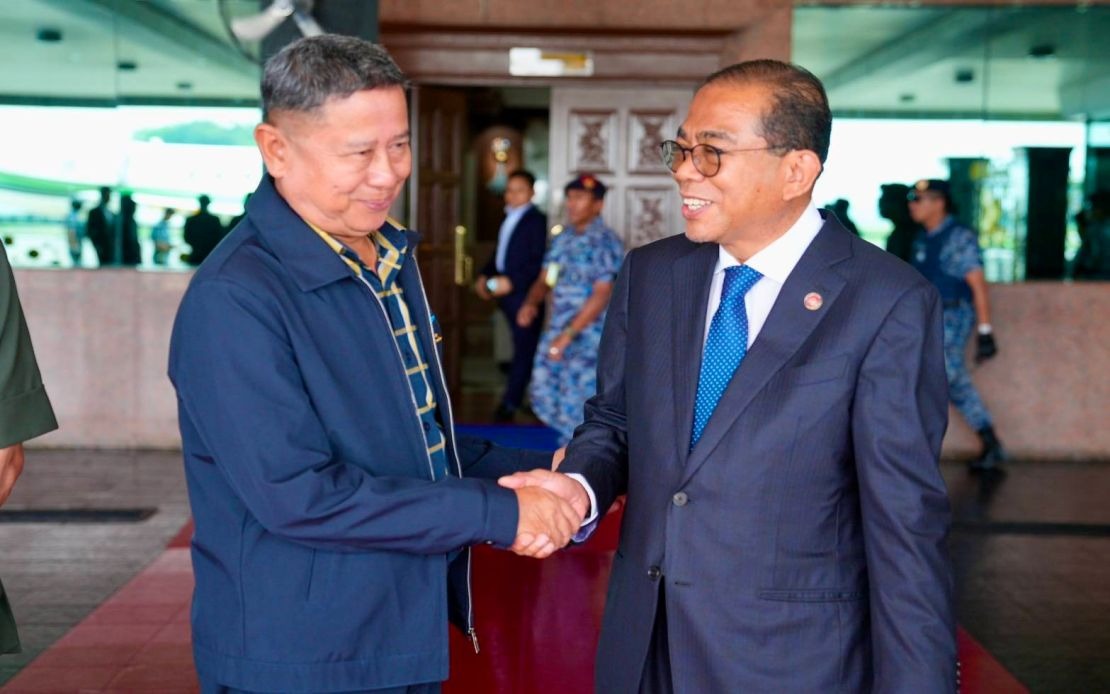
Thailand's military leadership moved swiftly to engage its closest neighbour on the evolving security crisis unfolding in its southern provinces, with Defence Minister Lt Gen Adul Boonthamcharoen conducting high-level talks with Malaysian Defence Minister Datuk Seri Mohamed Khaled Nordin in Kuala Lumpur on Wednesday. The meeting underscored the urgency Bangkok attaches to regional coordination as it navigates a significant security setback in one of Southeast Asia's most sensitive flashpoints.
The timing of the consultation proved particularly significant, arriving just 24 hours after Thailand announced the suspension of peace dialogue with southern insurgent groups. Those negotiations, scheduled to convene in Malaysia the following month, represented Bangkok's most sustained diplomatic engagement with the armed movements operating across Narathiwat, Pattani, and Yala provinces. The decision to pause talks signalled an apparent hardening of Thailand's approach following a devastating attack in Narathiwat that prompted authorities to declare martial law across 13 districts of the province.
During their discussion, the Thai delegation provided a comprehensive briefing on the latest developments within Thailand's conflict-affected southern border region. This exchange of information reflected the operational reality that Malaysia, sharing an extensive land boundary with these volatile provinces, maintains a vital stake in whatever unfolds across the frontier. Bangkok's willingness to keep Kuala Lumpur fully apprised of security developments demonstrated recognition that instability could easily spill across borders, potentially affecting Malaysian communities and infrastructure in states like Kelantan, Terengganu, and Perlis.
Thailand's Defence Ministry characterised the discussion as reaffirming Bangkok's dedication to advancing peace-building initiatives while simultaneously maintaining rigorous security operations. The carefully worded statement stressed that any political settlement must ultimately serve the fundamental objective of protecting civilian populations and enhancing their living standards. This dual emphasis reflected the genuine dilemma facing Thai policymakers, who must balance military operations against the essential need for eventual negotiated resolution with armed groups claiming to represent the region's Malay-Muslim majority.
Both ministers used the occasion to reaffirm their countries' commitment to deepening security cooperation across multiple dimensions. Intelligence sharing emerged as a particularly critical area of focus, given that militant activities in southern Thailand frequently involved individuals and resources with cross-border connections. Enhanced border security coordination would require greater synchronisation between Thai and Malaysian frontier forces, adapting operational procedures to address the rapidly evolving tactics employed by armed movements that show increasing sophistication in evading detection.
Lt Gen Adul's public remarks emphasised Thailand's appreciation for Malaysia's status as both a geographical neighbour and a strategic security partner. This characterisation held substantial meaning within regional diplomatic circles, as Malaysia's cooperation remained essential to any long-term Thai strategy for managing the southern conflict. Malaysian support proved indispensable across multiple fronts, from hosting previous rounds of peace talks to providing intelligence regarding movement of personnel and materiel across the frontier.
The Defence Minister stressed that Bangkok would pursue its southern border peace agenda through sustained bilateral cooperation with Malaysia, grounding the relationship in principles of mutual trust and respect. This language carried particular weight given that previous rounds of negotiations had occurred on Malaysian soil, making Kuala Lumpur's sustained willingness to facilitate dialogue essential to any future diplomatic breakthrough. The temporary suspension of talks, while necessary following the violent attack, did not signal an abandonment of the broader peace-building agenda that both countries recognised as essential to regional stability.
Underlying these diplomatic exchanges lay the sobering security reality that prompted the suspension decision. National Intelligence Agency Director Thanat Suwannanont, simultaneously heading Thailand's Southern Border Provinces Peace Dialogue Panel, announced the pause in negotiations after an assault in Narathiwat inflicted significant casualties and prompted the government to implement martial law across a substantial portion of the province. This security escalation reflected the enduring capacity of insurgent groups to mount operations that could influence Bangkok's strategic calculations and diplomatic timelines.
The suspension of September talks represented not a complete breakdown in the peace-building architecture, but rather a tactical pause intended to permit the imposition of enhanced security measures and military operations against those responsible for the recent violence. Thai officials indicated willingness to resume negotiations once the government felt sufficiently confident in its ability to protect dialogue participants and ensure the integrity of the process. This approach acknowledged that meaningful negotiations required basic conditions of physical security that recent events had temporarily undermined.
For Malaysia, hosting future rounds of talks remained a significant responsibility that carried both diplomatic opportunity and potential security complications. Kuala Lumpur's willingness to continue serving as a venue for peace initiatives reflected its interest in resolving the southern conflict, which had generated refugee populations within Malaysian territory and occasionally spilled violence across the border. Malaysian officials understood that a stable, functioning southern Thailand served Malaysia's own security interests far better than prolonged conflict that could destabilise the broader region.
The immediate challenge facing both countries involved maintaining the diplomatic infrastructure necessary for resuming peace discussions while simultaneously conducting the intensive security operations that the recent attack had made politically essential. This balancing act required that Thailand's military operations, while necessary to demonstrate state capacity and deter further violence, avoid alienating potential negotiating partners or creating grievances that would harden insurgent positions and complicate future diplomatic efforts.
Looking ahead, the intensity of bilateral engagement demonstrated through Lt Gen Adul's visit suggested that despite the current pause in formal negotiations, both Bangkok and Kuala Lumpur remained committed to exploring pathways toward eventual political settlement. The meeting provided an opportunity to reset expectations and reaffirm shared commitment to principles that had guided previous dialogue efforts, even as military operations proceeded parallel to diplomatic preparation.

