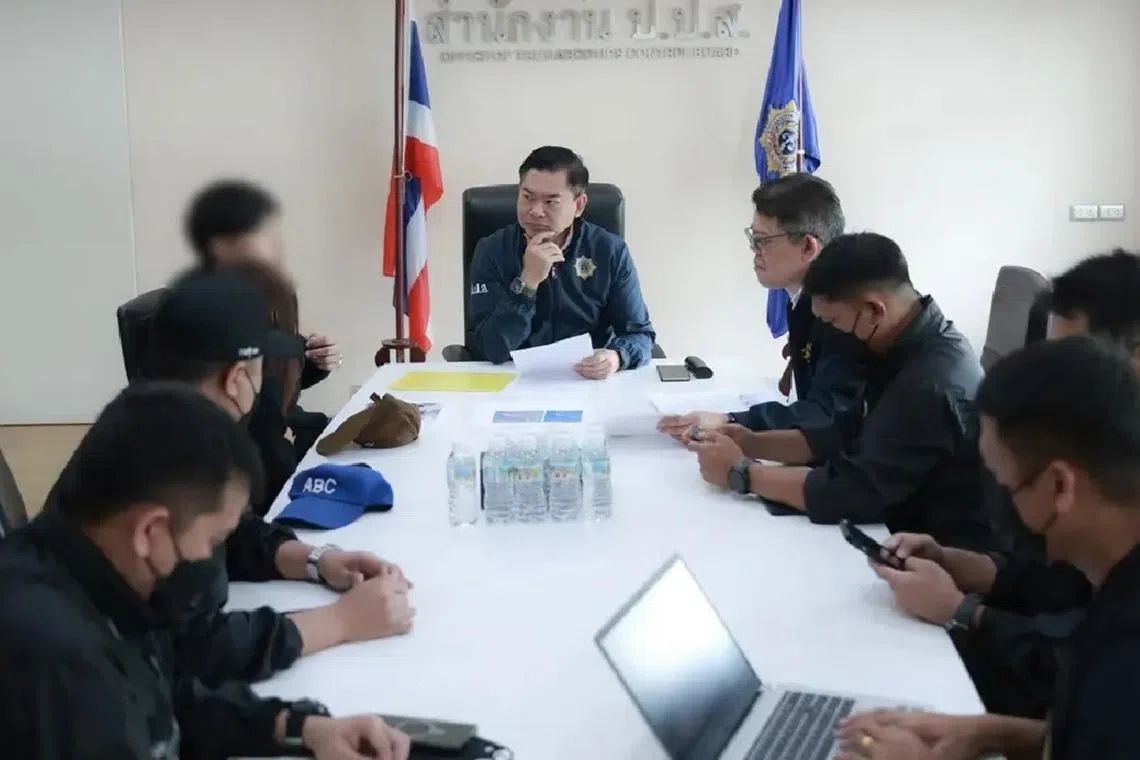
Thai narcotics officials have disclosed that heroin recovered from a parcel linked to an arrested Thai female airline crew member was concealed within just two of twelve bags in what appears to be a sophisticated trafficking operation. The Office of the Narcotics Control Board revealed that Australian authorities extracted approximately 900 grammes of suspected heroin from one of the doctored bags during preliminary examination, with officials estimating the combined contents of both drug-laden bags at no more than two kilogrammes pending confirmation from formal laboratory analysis in Australia.
The revelation underscores the evolving methods employed by transnational drug networks operating across Southeast Asia and beyond. Rather than distributing contraband evenly across multiple containers—a tactic that might dilute risk exposure—the network opted for concentrated placement within strategically selected bags. This approach suggests a level of operational discipline and calculation, whereby couriers and handlers may have been structured to remain unaware of which specific items in their charge contained the illicit substance. Police Major Suriya Singhakamol, secretary-general of the Office of the Narcotics Control Board, indicated on Wednesday that the discovery represents an increasingly common pattern in regional trafficking intelligence.
The investigation has evolved significantly following the initial arrest in Australia, with Thai authorities now engaged in collaborative efforts to map the entire supply chain. Coordination between the Office of the Narcotics Control Board and the Australian Federal Police has expanded beyond the immediate seizure to encompass broader network dismantlement operations. This bilateral engagement reflects growing recognition among law enforcement agencies across the region that addressing transnational drug movements requires sustained intelligence sharing and joint operational frameworks. The two countries have mobilised substantial investigative resources, acknowledging that individual arrests, while important, accomplish little without dismantling the underlying infrastructure supporting such operations.
A significant development in the case came when a delivery rider voluntarily presented himself to authorities, providing crucial assistance in narrowing the investigation's focus. After careful examination of closed-circuit television footage and comparison of physical evidence, investigators determined that this individual was not the courier responsible for delivering the drug-laden parcel. The distinction proved critical: the rider who came forward had delivered a different package on June 23 at approximately 5 pm, whereas the suspicious shipment had arrived on June 22 around midday. Additionally, the packages themselves bore little resemblance—the drug parcel comprised a large brown cardboard box, while the rider's delivery was contained in a black plastic container. Photographic evidence from surveillance systems also revealed differences in appearance and equipment, with the actual courier wearing a black helmet, contrasting sharply with the white helmet and yellow shirt worn by the cooperative rider.
The identification of an actual courier represents only one dimension of the investigation's scope. Authorities are simultaneously pursuing identification of the person responsible for arranging the delivery through a Facebook profile operating under the username "Rose." Officials have acknowledged that social media accounts deployed for such purposes frequently serve as intermediaries between actual organisers and operational personnel, with the account holder potentially unaware of the ultimate recipient or purpose of the arrangement. Rather than assuming the Facebook profile directly reflects the real identity of network principals, Thai investigators are conducting parallel traces to establish the genuine person behind the account. This methodological approach demonstrates increasing sophistication in law enforcement responses to criminal use of digital platforms.
The broader investigation has been integrated into Task Force Storm, a multi-agency operation encompassing the Customs Department, the Department of Special Investigation, and the Australian Federal Police. On July 1, officials from the Office of the Narcotics Control Board engaged in detailed discussions with Australian Federal Police representatives, exchanging substantive intelligence on trafficking patterns, concealment methodologies, and suspected network participants. This formal coordination mechanism signals commitment from both nations to pursue not merely peripheral actors within the trafficking chain, but the senior figures orchestrating supply movements and financial flows.
Regional context surrounding the case warrants particular consideration for Southeast Asian observers. Officials have noted that drugs including crystal methamphetamine, heroin, and methamphetamine pills are not manufactured domestically in Thailand but rather sourced from the Golden Triangle region spanning the borders of Thailand, Laos, and Myanmar. However, the sophisticated concealment techniques employed—specifically the embedding of heroin within fabric structures of bags—could have been executed either in source countries or within Thai territory. This ambiguity reflects the complexity of modern trafficking operations, where different stages of the pipeline may be geographically dispersed across multiple jurisdictions. Establishing precisely where packaging and concealment occurred remains an active investigative priority.
The parcel's route and the mechanisms through which it was dispatched represent critical focus areas for ongoing investigation. Authorities are meticulously reconstructing the shipment's journey, attempting to establish where the parcel originated, through which intermediaries it passed, and the intended destination. Understanding these logistics is essential not only for prosecutorial purposes but for identifying other components of the network. Each point of contact along the supply chain potentially represents another individual subject to recruitment, compromise, or investigation. The recovery of the parcel itself provides a tangible starting point for analysis, but the investigation's ultimate value depends upon authorities' ability to trace connections upstream to source suppliers and downstream to intended recipients.
Pending official laboratory confirmation from Australian authorities, Thai officials have appropriately refrained from finalising precise drug quantities or purity assessments. The approximately 900-gramme figure represents preliminary measurement conducted during initial examination by Australian Federal Police personnel, and formal chemical analysis may yield different conclusions regarding drug composition, adulterants, and actual narcotic content. This cautious approach reflects professional standards in international drug investigations, where initial field assessments frequently differ from comprehensive laboratory determinations. The delay in obtaining official results also underscores practical limitations in cross-border investigations, wherein chain-of-custody requirements and international legal protocols necessarily complicate rapid information exchange.
The case presents implications extending beyond the immediate circumstances of the arrest. For Malaysia and other Southeast Asian nations, the incident illustrates the continued sophistication of transnational trafficking networks operating across the region and their willingness to recruit operatives from legitimate sectors such as aviation and courier services. The use of airline crew members as potential couriers reflects trafficking networks' understanding of security vulnerabilities at airports and border crossings, where airline personnel frequently enjoy expedited processing and reduced scrutiny. This vulnerability merits particular attention from Malaysian authorities as they assess security protocols within their own aviation sector and courier industries.
The investigation also demonstrates evolving police cooperation mechanisms within Southeast Asia and between the region and external partners. The establishment of Task Force Storm and the detailed coordination between Thai and Australian authorities model operational frameworks that other regional nations have sought to replicate. Malaysia's own narcotics agencies maintain comparable bilateral arrangements with multiple countries, and the Thai-Australian model provides instructive lessons regarding information-sharing protocols, investigative resource allocation, and network-level analysis approaches. The explicit commitment to pursuing senior network figures rather than merely charging peripheral actors represents a strategic shift in regional drug enforcement philosophy.
Further developments in the case will likely emerge as laboratory analysis is completed and investigators progress in identifying the courier and the individual behind the "Rose" Facebook account. The parcel's ultimate destination remains undisclosed, and establishing whether it was intended for Malaysia, Singapore, or another Southeast Asian nation would substantially broaden the investigation's regional relevance. Officials have signalled that the initial arrest represents merely an entry point into a larger network dismantlement operation. The upcoming weeks will prove critical in determining whether the investigation succeeds in identifying senior network participants or remains constrained to peripheral actors already known to law enforcement.

