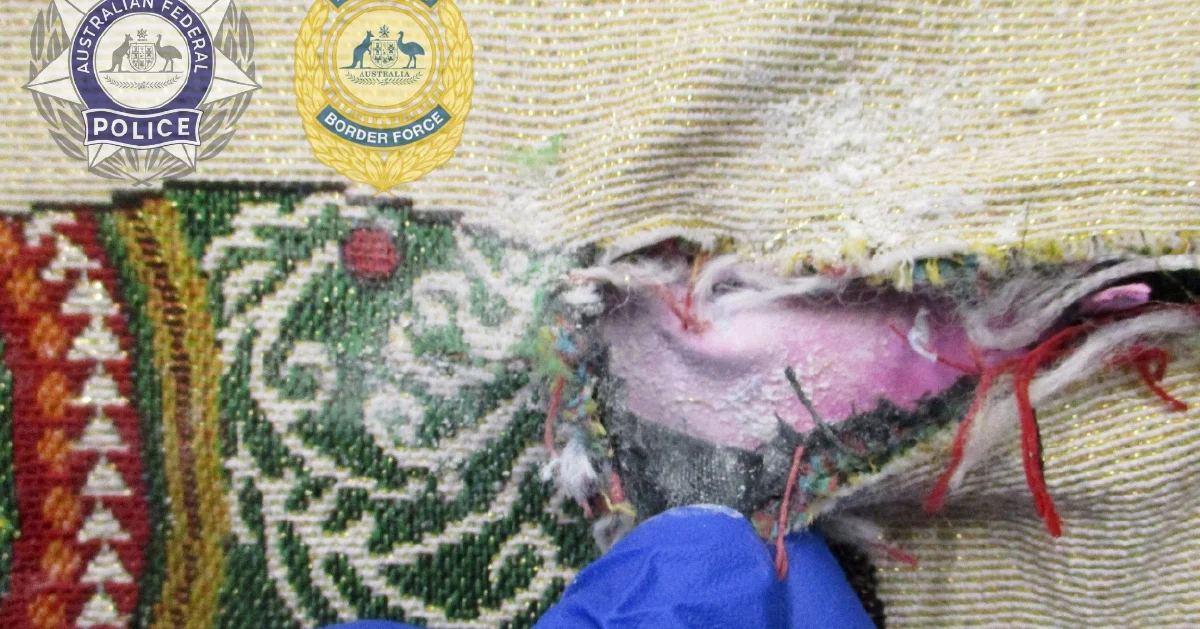
A member of Thai Airways' ground crew has been formally charged by Australian Federal Police following the discovery of more than one kilogramme of heroin concealed within tote bags during routine customs screening. The seizure represents one of several significant drug interdictions at Australian borders in recent months and highlights the persistent challenge of narcotics trafficking through major international transport hubs.
The apprehension occurred when customs officials conducted standard inspections on baggage connected to Thai Airways operations. Officers found the heroin carefully concealed within ordinary-looking tote bags, a common smuggling technique that attempts to evade detection by blending contraband with everyday travel items. The specific location and circumstances of the discovery have not been publicly detailed, though the seizure was substantial enough to warrant immediate federal police involvement and formal prosecution proceedings.
This case underscores vulnerabilities within the airline industry that traffickers continue to exploit. Ground crew members and airline staff occupy a particularly sensitive position within airport security infrastructure, as they typically have legitimate access to aircraft, cargo handling areas, and baggage systems that members of the general public cannot reach. Their proximity to international transport pathways makes them attractive targets for criminal syndicates seeking to move drugs across borders with reduced scrutiny.
For Malaysian readers and regional observers, the incident carries significant implications. Southeast Asia remains a major source region for heroin destined for Australian and other distant markets, with trafficking networks typically routing shipments through multiple countries and transport modes. The involvement of commercial airline staff demonstrates how organised crime groups have diversified their smuggling methods beyond traditional maritime routes, increasingly targeting air cargo and crew members who travel internationally on regular schedules.
Thailand itself has battled substantial domestic drug trafficking challenges while simultaneously serving as a transit point for narcotics originating from the Golden Triangle region and other production areas. The arrest of a Thai Airways employee suggests that criminal networks are actively recruiting airline personnel across the region, likely offering substantial financial incentives to individuals with access to international transport systems. This recruitment pattern poses particular concern for other Southeast Asian carriers and airports processing significant international traffic.
The Australian Federal Police have made combating drug importation a priority, with the country's Border Force and customs authorities investing heavily in detection technology and intelligence operations. Despite these efforts, smugglers continue to adapt their tactics, employing increasingly sophisticated concealment methods and recruiting insiders within transportation networks. The successful detection of this heroin shipment reflects the effectiveness of current border protocols, yet simultaneously demonstrates that significant quantities still penetrate security measures.
The charges against the Thai Airways employee will likely involve serious importation offences under Australian federal law, which carry substantial prison sentences given the quantity involved. Prosecutions of airline staff have become more common as authorities recognise the critical role such personnel play in trafficking operations. Successful convictions serve as deterrents but also highlight how lucrative drug smuggling remains despite the severe legal consequences.
Regionally, this incident reinforces the importance of intelligence sharing and cooperative enforcement between Southeast Asian countries and distant markets like Australia. Many trafficking networks operate across multiple jurisdictions, requiring coordinated law enforcement responses that transcend bilateral arrangements. Malaysian authorities, as operators of one of Southeast Asia's busiest aviation hubs, maintain particular interest in identifying and disrupting such networks before shipments reach international carriers.
The broader context involves the evolution of heroin trafficking patterns in Asia. While traditional Burmese production areas remain significant, traffickers increasingly blend product from multiple sources and employ more distributed supply chains that complicate interdiction efforts. The involvement of airline employees represents a dangerous acceleration in this trend, suggesting that criminal syndicates have sufficient resources to cultivate relationships with insiders across multiple transport systems.
Investigators will likely examine whether the charged employee was part of a larger smuggling network or acted independently under duress or financial incentive. The source of the heroin, its intended destination, and connections to other trafficking operations remain subjects of ongoing investigation. Information gathered through this case may provide law enforcement with insights into recruitment methods and operational patterns utilised by trafficking organisations targeting transport sector workers.
For airlines and airport operators throughout Southeast Asia, the incident underscores the necessity of enhanced personnel vetting, internal security protocols, and collaboration with customs authorities. Many carriers have implemented additional background checks and monitoring systems, though balancing security concerns with operational efficiency remains challenging. The case also raises questions about whether existing staff screening procedures adequately identify individuals vulnerable to recruitment by criminal syndicates.
The seizure contributes to broader statistics demonstrating Australia's significant drug interdiction operations, which regularly uncover multi-kilogramme quantities of heroin at borders. These successes, however, represent only a portion of total trafficking attempts, and law enforcement agencies acknowledge that substantial quantities successfully evade detection. The persistent challenge of combating heroin importation requires sustained investment in detection capabilities, intelligence operations, and international cooperation to address trafficking at source countries and transit points.

