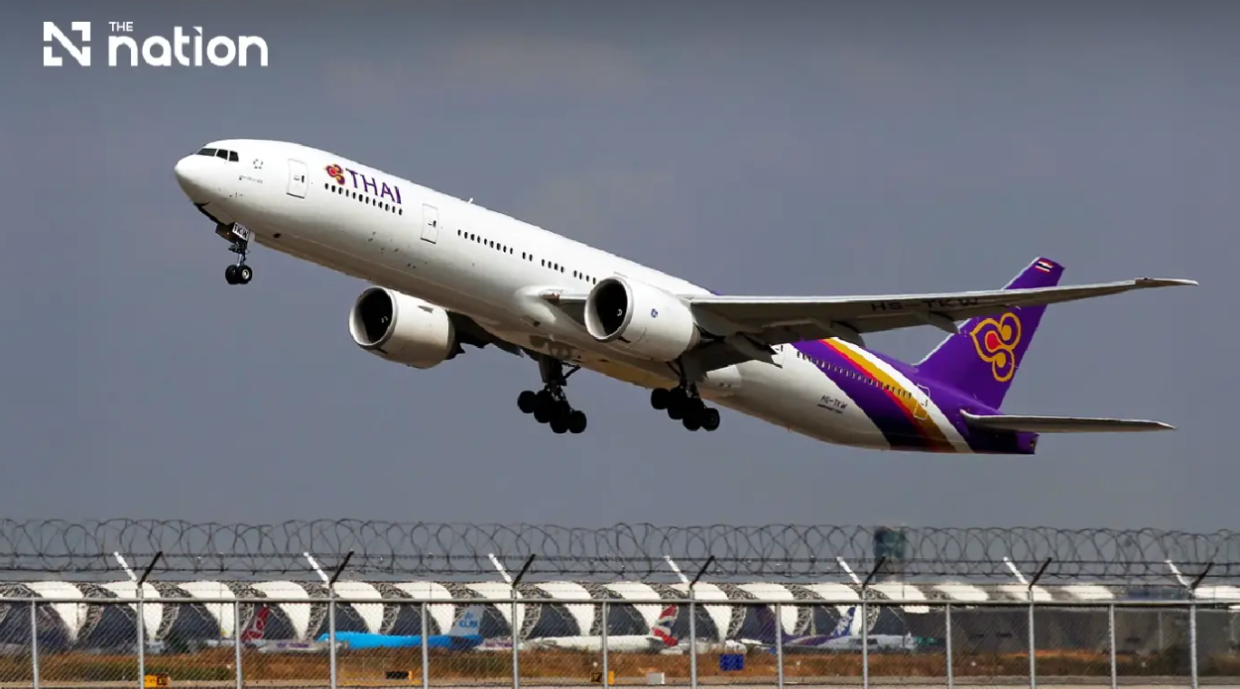
Thai Airways International chief executive Chai Eamsiri has publicly committed to complete cooperation with Australian law enforcement in the case of a cabin crew member arrested at Melbourne Airport, signalling that the airline will not impede the legal process or attempt to shield the employee from justice. Speaking on behalf of the carrier, Chai made clear that the investigation remains within the purview of Australian authorities, with the airline assuming a supporting rather than protective role in the proceedings.
The arrest occurred following the arrival of flight TG465 from Bangkok on June 25, when a 26-year-old Thai Airways employee was apprehended after customs officials discovered more than one kilogramme of heroin concealed in baggage. Australian law enforcement agencies have valued the drug consignment at approximately A$500,000, equivalent to roughly 11.5 million baht, underscoring the serious nature of the alleged trafficking operation.
In response to the incident, Thai Airways has moved swiftly to distance itself from any association with wrongdoing. The airline immediately suspended the crew member from operational duties and established a fact-finding and disciplinary panel tasked with conducting an internal investigation under standard company procedures. The airline has stipulated that this internal inquiry should reach completion within seven days, though expedited resolution remains possible. Should the panel's findings substantiate the allegations, the employee faces Thai Airways' most severe disciplinary sanction—termination of employment—leaving her to face Australian criminal proceedings without the protection of continued employment.
Chief executive Chai acknowledged the profound reputational damage the incident has inflicted on Thai Airways, a flagship carrier that relies heavily on its international reputation and crew professionalism to maintain customer confidence and market share. He expressed concern that the episode could create obstacles for other Thai cabin crew members and Thai nationals seeking entry to Australia, potentially subjecting them to heightened scrutiny at immigration checkpoints. However, Chai expressed confidence that Australian authorities would assess such cases on individual merits rather than applying blanket suspicion to all Thai travellers based on a single incident.
The Australian Federal Police and Australian Border Force have formally charged the suspect with importing a marketable quantity of a border-controlled drug and possessing a marketable quantity of a border-controlled drug. These charges are extraordinarily serious within Australia's drug enforcement framework, with each count carrying a maximum custodial sentence of 25 years imprisonment. The suspect was remanded in custody on June 26 and is scheduled for a further appearance before Melbourne Magistrates' Court on September 14, giving authorities time to consolidate their case.
In attempting to contextualize the breach, Chai pointed to the airline's established protocols and training regimens. Thai Airways, which maintains a workforce of more than 4,000 cabin crew members and over 1,000 pilots, requires all personnel to undergo mandatory briefings prior to flight operations covering regulatory requirements, prohibited items, and the distinction between lawful and unlawful goods. Nevertheless, Chai conceded that individual employee behaviour can prove difficult to regulate entirely through institutional procedures, a candid acknowledgement that resonates across the aviation industry where employee screening, despite rigorous protocols, occasionally fails to prevent misconduct. Following the Melbourne incident, Chai stated that he has directed relevant departments to strengthen supervision mechanisms and tighten oversight of personnel.
Thailand's Civil Aviation Authority has inserted itself into the investigation process, contacting the airport operator and airline to pursue factual details and reassess existing security procedures. The regulator has emphasized that passenger and baggage screening protocols at Thai checkpoints adhere strictly to Civil Aviation Authority requirements and conform to International Civil Aviation Organization standards. However, the authority has drawn a careful distinction between aviation security measures, which focus on threats to aircraft and passengers, and narcotics interdiction, which falls under the jurisdiction of dedicated law-enforcement agencies requiring international cooperation.
The Civil Aviation Authority's involvement carries significant implications for crew licensing and certifications. Should evidence confirm that the crew member engaged in smuggling, the regulator has signalled its readiness to take action regarding the individual's flight crew certificate, invoking aviation safety and public confidence in Thailand's civil aviation system as the underlying rationale. This regulatory response addresses a different dimension of the problem: not criminal liability, which Australian courts will address, but professional and technical qualifications necessary for employment in commercial aviation.
For Malaysian and Southeast Asian aviation stakeholders, this incident underscores the vulnerability of commercial air routes to employee-initiated smuggling schemes. The case illustrates how crew members with legitimate access to aircraft and crossing international borders can become conduits for narcotics trafficking, creating vulnerability windows at both originating and destination airports. The fact that more than one kilogramme passed through screening raises uncomfortable questions about the adequacy of pre-flight baggage procedures, regardless of which airport jurisdiction bore responsibility for the security lapse.
The incident also highlights the intricate jurisdictional complexities that arise when aviation employees from one nation commit alleged offences within another nation's territory. Thai Airways' commitment to cooperation reflects recognition that reputational damage control and legal exposure mitigation both demand transparent engagement with foreign authorities rather than defensive posturing. For other Southeast Asian carriers operating on international routes to Australia and beyond, the episode serves as a cautionary reminder that crew integrity failures, despite elaborate hiring protocols and training programs, can precipitate cascading consequences affecting regulatory standings, customer confidence, and the professional reputation of entire national aviation sectors.

