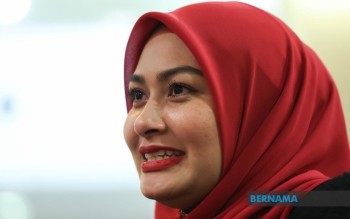
Parliament has heard calls for Tabung Haji (TH) to reduce its financial dependence on income generated through Urusharta Jamaah Sdn Bhd's (UJSB) sukuk investments, with the Bentong Member of Parliament flagging the concentration as a material risk requiring urgent government intervention. Young Syefura Othman raised the concern during a special parliamentary sitting devoted to discussion of the Royal Commission of Inquiry (RCI) Report into TH's financial difficulties, noting that the current structure leaves Malaysia's largest pilgrimage savings institution exposed to market volatility and asset-specific vulnerabilities.
The UJSB sukuk arrangement, which funnels nearly 26 per cent of TH's annual income according to the RCI findings, represents a dependency pattern that undermines the institution's financial resilience and long-term sustainability. Rather than drawing strength from a diversified revenue base reflecting sound portfolio management and prudent governance, TH has become tethered to a single income stream whose performance directly impacts the viability of the entire organisation. This concentration risk is particularly acute given TH's primary mandate to safeguard the life savings of millions of Malaysian Muslims preparing for the hajj pilgrimage, making financial stability not merely a corporate concern but a matter of public trust and religious obligation.
Young Syefura specifically requested that the government provide comprehensive details about early redemption strategies for the sukuk holdings, signalling Parliament's expectation that policymakers have developed concrete plans rather than temporary palliatives. The call reflects broader parliamentary frustration that the scale of TH's historical mismanagement—exposed through the RCI investigation—demands structural reforms rather than incremental adjustments. The Bentong MP articulated a vision of TH recovering through intrinsic operational strength and sound asset accumulation rather than perpetual reliance on a single revenue prop that may itself face headwinds.
Minister in the Prime Minister's Department (Religious Affairs) Dr Zulkifli Hasan delivered the government briefing on TH's rehabilitation efforts to Parliament, framing the discussion within the broader context of restoring public confidence in an institution that had accumulated significant losses across multiple investment vehicles. The RCI process, which involved forensic examination of TH's decision-making apparatus, identified 14 prior investment decisions meriting detailed scrutiny, each representing either substantial asset depreciation or outright financial losses that eroded the savings pool entrusted to the organisation by millions of Malaysians.
These problematic investments span a diverse portfolio including TH Plantations Bhd, TH Properties, and FGV Holdings, among several others, illustrating how institutional mismanagement had metastasized across multiple business sectors and asset classes. Young Syefura pressed the government for specificity about the quantum of losses attributable to these 14 investment decisions and what portion of the depleted assets could realistically be recovered through ongoing remediation efforts. She also demanded clarity regarding the timeline and current status of the forensic audit work, suggesting that Parliament requires measurable benchmarks against which to assess the credibility of TH's recovery narrative.
The MP further raised the spectre of potential criminal or administrative culpability among those who made these investment decisions, asking whether investigations had identified individuals responsible for negligence, abuse of authority, or breach of fiduciary duty. This line of questioning reflects mounting parliamentary pressure to ensure that accountability mechanisms extend beyond institutional restructuring to encompass personal responsibility for those whose decisions precipitated TH's financial crisis. Without clear attribution of blame and appropriate consequences, the risk persists that similar lapses in judgment could recur under a nominally reformed governance structure.
To strengthen TH's trajectory going forward, Young Syefura proposed that financial and investment oversight be substantially reinforced through expanded participation by Malaysia's apex financial regulators, specifically Bank Negara Malaysia and the Securities Commission Malaysia. This recommendation reflects recognition that TH's internal governance mechanisms had proven inadequate, and that external regulatory eyes with statutory authority could impose discipline on institutional decision-making that internal boards had failed to enforce. The proposal carries particular weight given that both institutions possess sophisticated capacity to assess financial risk and have successfully regulated commercial banks and securities markets across Malaysia.
The Bentong MP also advocated for mandatory independent risk assessment and rigorous due diligence requirements to precede all major TH investment commitments, creating procedural safeguards against the pattern of inadequately vetted ventures that had characterised the institution's recent past. By institutionalising independent professional review before capital deployment, TH could leverage external expertise and counterbalance any institutional biases or political pressures that might otherwise distort investment decisions. Such procedural fortification would signal to contributors that their savings face scrutiny by parties with no vested interest in particular outcomes.
Crucially, Young Syefura emphasised that appointments to TH's board of directors and senior management positions must henceforth satisfy rigorous "fit and proper" criteria, a standard long-established in Malaysian banking regulation but apparently overlooked in TH governance selection processes. This recommendation suggests that prior appointments may have prioritised political connections or personal relationships over demonstrable competence, financial acumen, and ethical standing. Implementation of genuine merit-based selection could fundamentally alter TH's institutional culture and decision-making quality.
The parliamentary discussion of TH's rehabilitation underscores how institutional failures of this magnitude ripple across Malaysia's financial and religious ecosystems, affecting millions of ordinary Muslims whose hajj aspirations depend on TH's trustworthiness. For Southeast Asian readers, the case illustrates challenges that religious or cultural savings institutions face when governance frameworks lack adequate regulatory oversight or professional management discipline. TH's predicament exemplifies how institutional dysfunction can persist until external investigative processes force transparency and remedial action, highlighting the premium value of robust oversight mechanisms and regular independent audit across all custodians of public savings.

