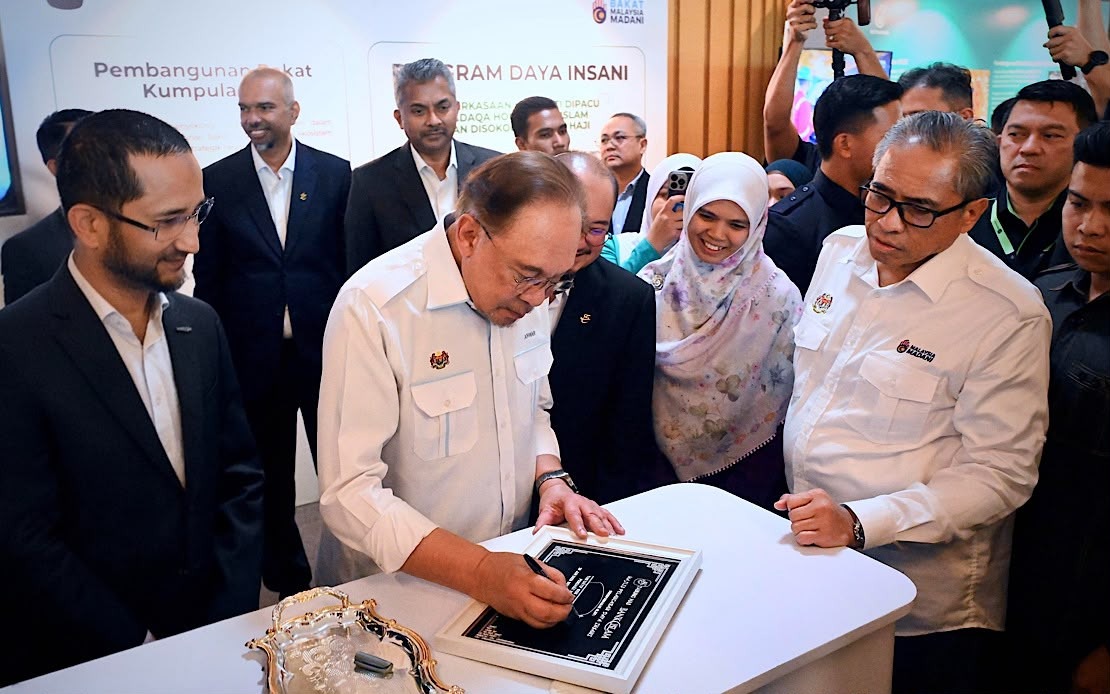
Lembaga Tabung Haji (TH) and Bank Islam Malaysia Berhad have jointly introduced DAYA INSANI, a comprehensive youth empowerment scheme with an initial capital allocation of RM1 million. Unveiled in conjunction with Prime Minister Datuk Seri Anwar Ibrahim's MADANI Talent initiative in Sendayan, Negeri Sembilan, this social finance venture positions skills development and sustainable employment as pathways toward economic inclusion for vulnerable segments of Malaysian society.
The programme's architecture reflects a deliberate shift toward integrated human capital development. Rather than offering standalone training courses, DAYA INSANI weaves together three complementary pillars: specialised skills instruction tailored to current market demand, structured exposure to working environments within target industries, and direct job placement support with vetted partner organisations. This holistic approach addresses a persistent gap in Malaysia's talent pipeline, where many disadvantaged youth lack not merely technical competency but also the professional networks and workplace familiarity necessary for sustainable career progression.
Projections indicate the initiative will benefit more than 100 asnaf youth and orphans in its initial phase, though organisers have signalled ambitious scaling ambitions. The scheme targets beneficiaries from the asnaf category—individuals and families eligible for Islamic almsgiving support—a demographic that frequently encounters barriers to tertiary education and skilled employment. By channelling resources through Islamic financial institutions and corporate sponsors, the programme attempts to mobilise Malaysia's broader religious and business communities toward tangible social outcomes.
The operational framework relies upon a carefully constructed ecosystem of educational and industry partners. Kulim Hi-Tech Park Skills Centre will develop advanced technical workers capable of serving the manufacturing and electronics sectors. Kolej Universiti Bestari and Kumpulan Medic Iman Sdn Bhd specialise in nursing education, addressing persistent healthcare staffing shortages across Malaysian hospitals and clinics. The Malaysian Professional Accountancy Centre commits expertise in chartered accounting credentials, whilst Showme Education bridges demand for qualified therapeutic professionals. This multi-institutional approach distributes responsibility and leverages sector-specific credibility rather than consolidating all training under a single provider.
Existing cohorts already demonstrate forward momentum. A nursing diploma programme initiated in 2024 currently enrolls 19 participants, with one graduate having successfully transitioned into clinical practice—a measurable validation of the employability model. Simultaneously, a technical training cohort at Kulim launched in June with thirteen participants, with organisers targeting expansion to 100 trainees in the near term. These figures suggest growing institutional confidence in the programme's viability and employer receptivity to its graduates.
The financial architecture opens avenues for sustained funding beyond the initial RM1 million endowment. TH and Bank Islam have actively solicited contributions from corporations, institutions and individuals, framing donations as investments in Malaysia's human development rather than charitable handouts. This fundraising strategy acknowledges that sustainable youth empowerment requires commitment beyond government budgets alone, engaging the private sector and philanthropic community as stakeholders in inclusive growth.
TH Group Managing Director Mustakim Mohamad articulated the investment philosophy underlying DAYA INSANI, emphasising that human capital development constitutes the most durable legacy for Malaysia's Muslim majority. His framing positions youth training not as welfare provision but as strategic national asset-building, a rhetorical reframing that potentially attracts broader political and business support. The statement reflects alignment with Malaysia's broader talent shortage narrative, where multiple sectors report persistent difficulty recruiting skilled workers despite high unemployment rates among certain demographics.
Bank Islam Chief Executive Officer Raja Datin Paduka Teh Maimunah Raja Abdul Aziz anchored the bank's commitment to social finance mechanisms, describing DAYA INSANI as consistent with Islamic finance's foundational emphasis on community welfare and inclusive prosperity. This positioning situates the initiative within Islamic financial ethics discourse, appealing to institutional values and religious principles rather than relying solely on commercial or philanthropic motivation. Such framing strengthens the programme's legitimacy within Malaysia's Islamic institutional landscape whilst differentiating Bank Islam's social mission from conventional banking competitors.
The programme's alignment with the MADANI framework carries significant political dimension. By coupling skills training with the government's broader human capital agenda, both TH and Bank Islam signal institutional collaboration with current policy priorities. This synchronisation potentially facilitates regulatory support and additional public resources, whilst anchoring the initiative within larger narratives about inclusive development and social mobility that resonate with contemporary Malaysian political discourse.
For Southeast Asian observers, DAYA INSANI illustrates emerging models for youth employment programming within Islamic-majority economies. Malaysia's integration of Islamic finance institutions, vocational education providers and multinational employers into coordinated talent pipelines offers a template increasingly relevant across the region. As countries throughout Southeast Asia grapple with youth underemployment, skills mismatches and widening inequality, DAYA INSANI's emphasis on employer-driven skills specifications and multi-sector collaboration addresses persistent structural challenges that plague conventional training programmes.
The initiative also demonstrates renewed institutional appetite for targeting asnaf communities through structured economic programmes rather than purely consumption-oriented welfare support. This represents a philosophical shift toward productive inclusion, where social support mechanisms emphasise labour market integration and earnings generation. For beneficiaries, this orientation theoretically translates into dignified employment pathways rather than permanent dependency upon transfer payments, though programme success ultimately depends upon labour market absorption capacity and graduate retention rates throughout their careers.
Sustainability concerns remain implicit rather than explicitly addressed within current announcements. Programmes matching disadvantaged youth to skilled employment encounter persistent challenges around graduate job retention, wage progression and ongoing employer demand fluctuations. DAYA INSANI's partnership model distributes these risks across multiple institutions whilst potentially obscuring accountability mechanisms should graduates face underemployment or wage stagnation. Future evaluation frameworks will necessarily examine not merely initial placement rates but long-term earnings trajectories and occupational stability for programme participants.

