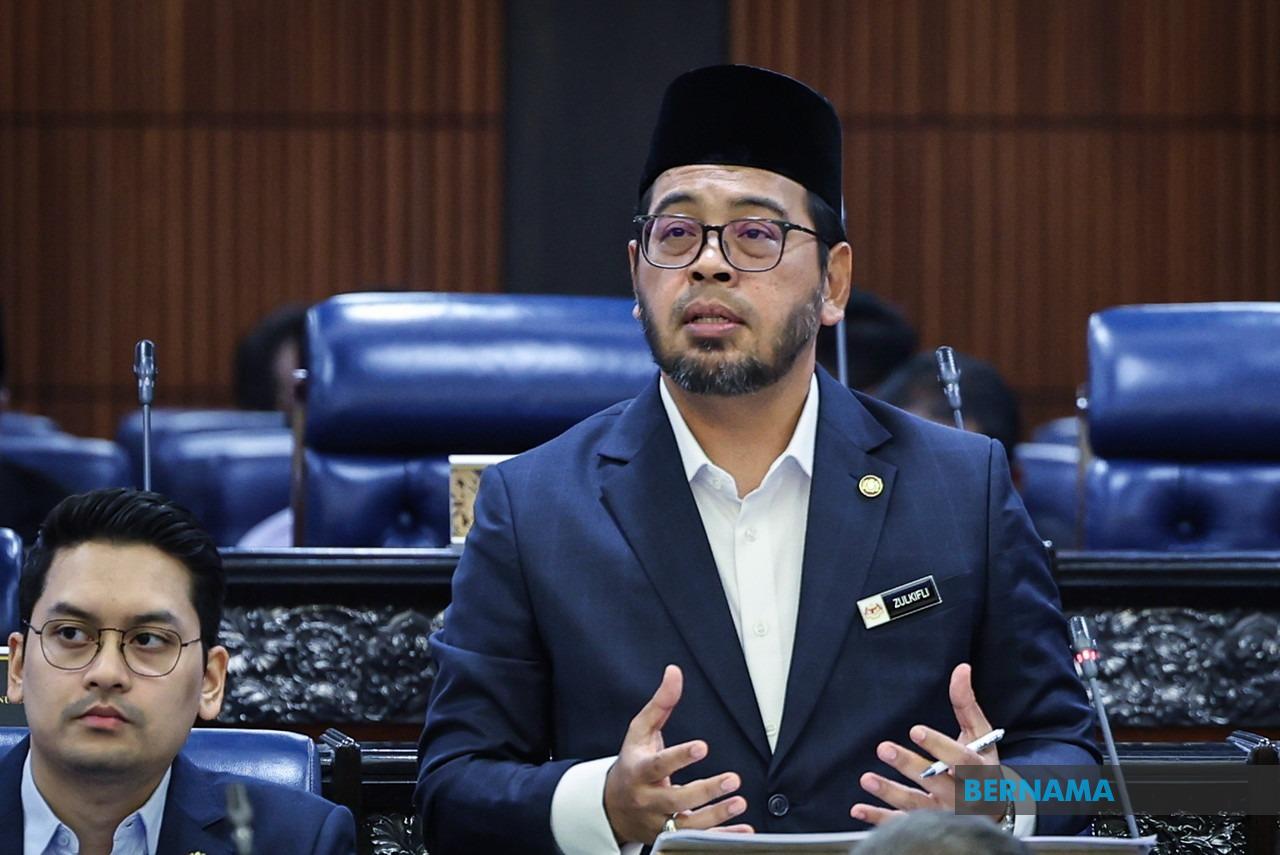
The Malaysian government has committed to comprehensive reforms of the Tabung Haji Act 1995 designed to address systemic weaknesses in the Islamic pilgrimage fund's financial governance and reporting practices. Announcing the legislative overhaul in parliament, Dr Zulkifli Hasan, the Minister in the Prime Minister's Department (Religious Affairs), detailed a multi-layered reform agenda rooted in recommendations from the Royal Commission of Inquiry that examined Tabung Haji's management and operations across the period 2014 to 2020. The proposed amendments represent a direct response to governance failures identified during that six-year span, signalling the government's determination to prevent future financial irregularities affecting the institution that manages funds for millions of Malaysian Muslim pilgrims.
At the core of the legislative changes will be explicit legal provisions mandating prescribed accounting standards for financial reporting, alongside concrete penalties for institutions and individuals responsible for misrepresenting financial statements. These provisions inject concrete enforcement mechanisms into what were previously softer regulatory expectations, establishing clearer consequences for non-compliance. The inclusion of such penalties reflects growing recognition that institutional oversight requires teeth—without defined sanctions, compliance becomes discretionary rather than mandatory. For Malaysian policymakers, this approach mirrors global regulatory trends emphasising accountability in financial sector governance, where ambiguous standards have repeatedly enabled corporate misconduct.
Central to the restructuring is a proposed realignment of regulatory authority over Tabung Haji's investment and fund management activities. A task force chaired by Tabung Haji's chairman and comprising the Bank Negara Malaysia governor and Securities Commission chairman has already reached consensus that the Securities Commission should assume primary regulatory oversight of the fund's investment operations, while haj pilgrimage management remains under the Religious Affairs Ministry. This division of labour reflects recognition that financial investment regulation requires specialist expertise distinct from religious administration. Tabung Haji will maintain its status as a single, integrated entity rather than being fragmenting into separate operating structures, preserving institutional coherence while clarifying accountability lines. For investors and depositors, this arrangement offers greater confidence that investment decisions will be scrutinised by regulators with deep financial markets expertise.
The reform package directly addresses one of the Royal Commission's most contentious findings regarding excessive executive compensation. Tabung Haji has already transitioned away from awarding substantially inflated bonuses to senior management, adopting instead a performance-based compensation model tethered to institutional financial outcomes and employee achievement of designated key performance indicators. All bonus payments now require sign-off from both the Religious Affairs Minister and the Finance Minister, introducing dual ministerial oversight that effectively prevents unilateral executive largesse. This structural constraint reshapes incentive structures within the organisation, encouraging alignment between executive remuneration and organisation-wide performance metrics rather than individual advancement.
Financial transparency has been strengthened through implementation of the Commission's recommendation that Tabung Haji announce profit distribution rates exclusively on the basis of fully audited annual financial statements. Since 2022, the fund has operated under this requirement, creating accountability through audited figures rather than preliminary or unverified calculations. The requirement establishes a clear chronological separation between the completion of comprehensive audits and public announcement of returns, preventing pressure to announce returns prematurely or based on incomplete information. Tabung Haji's financial statements have fully adhered to relevant accounting standards since 2018, a milestone that establishes consistent application of internationally-recognised reporting frameworks across a seven-year-plus timeframe.
Governance at board level is being fundamentally reimagined through implementation of the RCI's recommendation for comprehensive overhaul of board composition and selection procedures. Future board member appointments will be grounded in objective criteria emphasising integrity, capability, and relevant expertise, applying frameworks aligned with Bank Negara Malaysia's established "fit and proper" assessment standards. The reforms specifically prohibit active politicians from serving as chairman or board members, eliminating potential conflicts between parliamentary office and fiduciary duties to depositors. This depoliticisation of Tabung Haji's top leadership addresses a critical vulnerability identified in the Commission's report—political placement of board members whose primary loyalty might be to their party rather than to fund beneficiaries. Malaysia's pool of experienced technocrats, finance professionals, and institutional leaders provides adequate talent for staffing a reformed board.
The legislative process has been informed by substantial public scrutiny following the government's July decision to release the 211-page RCI report in full. This transparency stands in contrast to earlier patterns where sensitive institutional inquiries remained confidential, and has enabled parliamentarians and civil society to engage substantively with specific findings. The special parliamentary sitting provided MPs with opportunity to scrutinise and debate the Commission's conclusions, with both Dr Zulkifli and Finance Minister II Datuk Seri Amir Hamzah Azizan scheduled to address parliament during the legislative debate. This parliamentary engagement creates institutional accountability, as ministers must publicly defend and justify their implementation approach while fielding potential criticism from the legislature.
The reforms carry broader implications for Southeast Asian regulatory practice and institutional governance more generally. Tabung Haji's experience illustrates how large institutional funds managing citizen savings require governance frameworks that insulate decision-making from political interference, separate operational accountability from ministerial oversight, and establish clear regulatory authorities. Other regional governments operating pension funds, pilgrimage authorities, or national savings institutions may examine the Malaysian model as a benchmark, particularly regarding the integration of specialist financial regulators into governance structures for investment activities. The approach of combining institutional-specific reforms with alignment to international accounting standards and regulator frameworks like Bank Negara's fit-and-proper criteria suggests recognition that institutional excellence requires both internally-appropriate governance and external compliance with global standards.
Implementation of these reforms will proceed through parliamentary passage of the amended TH Act, likely requiring coordination between the Religious Affairs Ministry and the Finance Ministry to align legislative text across these portfolios. The institutional changes already underway—revised bonus policies, audited profit distribution announcements, fit-and-proper board appointments—indicate that implementation has begun before legislative passage, with the amendments serving to crystallise and legally entrench practices already being adopted administratively. This sequencing reduces risk of implementation delays following passage, as the institution is already operationally aligned with most recommended practices. Depositors and prospective pilgrims should expect enhanced financial transparency, clearer investment oversight, and governance structures less vulnerable to political manipulation once the amended Act enters force.
For Malaysia's broader reputation as a regional financial centre and Islamic finance hub, these reforms strengthen institutional credibility. Tabung Haji's previous governance failings were widely discussed internationally, affecting perceptions of Malaysian institutional standards. The comprehensive reform programme demonstrates commitment to remedying identified weaknesses through concrete governance changes rather than through minimising the Commission's findings. International investors and partner institutions evaluating Malaysian regulatory frameworks will likely view the systematic RCI-based reforms as evidence of serious commitment to institutional accountability. The integration of Securities Commission oversight particularly signals alignment with internationally-recognised regulatory practices for investment fund management, reducing perception of parallel regulatory standards or politically-influenced institutional governance.

