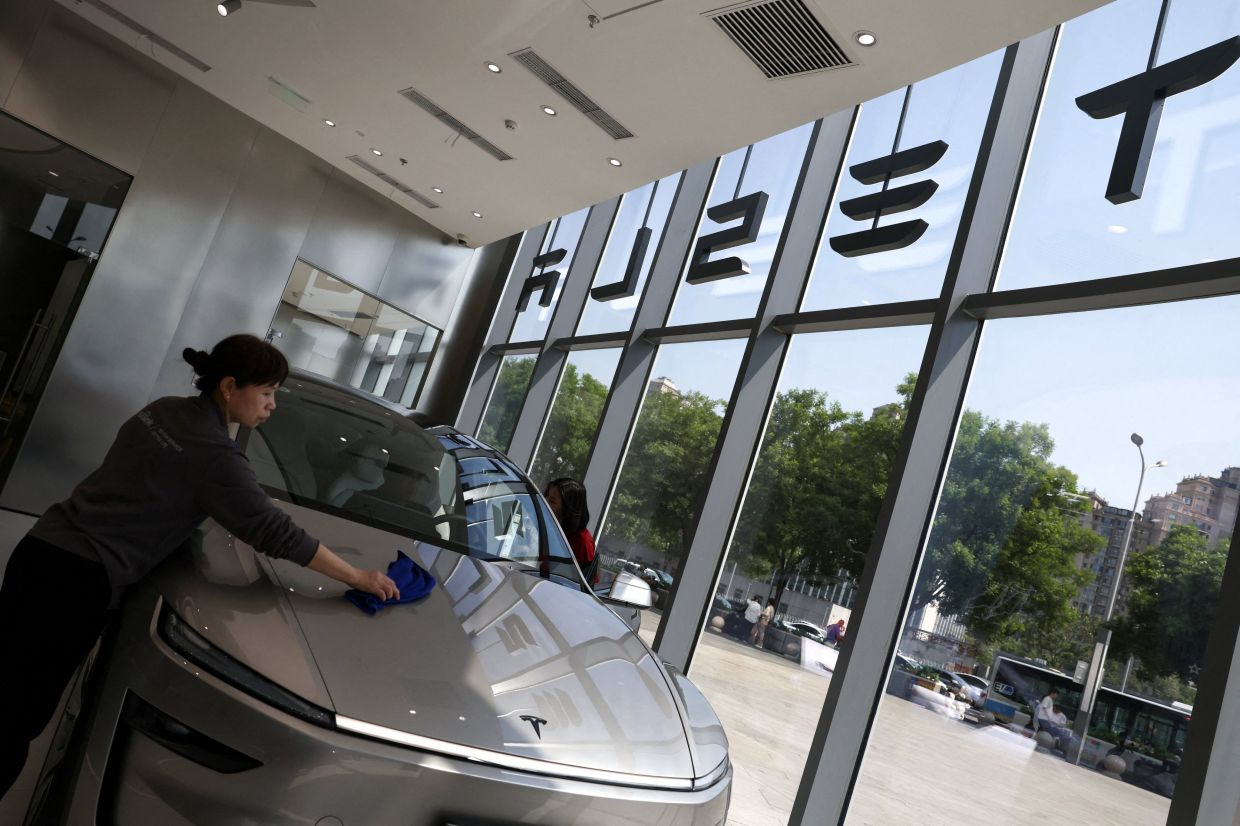
Tesla has initiated the most significant product recall ever recorded in mainland China's electric vehicle sector, with parent company Elon Musk pledging to address a widespread door-handle malfunction impacting approximately 2.98 million vehicles. The unprecedented scale of the recall underscores mounting pressure from Chinese authorities and consumers on automotive manufacturers to prioritise safety in an increasingly competitive market dominated by both foreign and domestic EV producers.
China's regulators have signalled their intention to prohibit retractable car door handles following a tragic incident that claimed the lives of occupants unable to escape a burning vehicle because bystanders could not access the car. This regulatory pivot, though not targeting Tesla exclusively, has prompted the American automaker to announce by far the largest recall response so far. The incident exposed a critical vulnerability in modern vehicle design philosophy, where aesthetics and weight reduction have sometimes superseded emergency accessibility.
Beginning September 25, Tesla will implement warning labels on interior door handles across all recalled vehicles as part of its comprehensive remediation programme. Complementing this mechanical safeguard, the company intends to deploy an over-the-air software update that automatically lowers vehicle windows following a collision, thereby providing an alternative escape route for occupants trapped by malfunctioning door mechanisms. This dual-pronged approach demonstrates Tesla's attempt to address both immediate passenger safety and longer-term design vulnerabilities.
Zhang Wenjie, a Shanghai-based automotive maintenance workshop operator, characterised the door-handle crisis as symptomatic of broader quality concerns that have intensified throughout the past eighteen months. He suggested that widespread recalls by Tesla and domestic manufacturers would ultimately compel the entire automotive industry to reconsider product design methodologies and manufacturing standards. This perspective reflects growing recognition among industry practitioners that safety incidents, while catastrophic for individual victims, can catalyse systemic improvements across the sector.
Public anxiety regarding vehicle door safety intensified in October following a fatal collision involving a Xiaomi SU7 Ultra electric car in Sichuan Province's southwestern region. Local reporting indicated that bystanders attempting to rescue a 31-year-old driver from the burning wreckage were unable to open the vehicle's doors, leaving the occupant fatally trapped. The incident crystallised public consciousness around retractable door-handle design and prompted accelerated regulatory scrutiny of this increasingly common feature across premium EV models.
China's Ministry of Industry and Information Technology formally announced in February its regulatory framework banning retractable door handles entirely. Under the new mandates taking effect next year, all vehicles must incorporate both internal and external door handles equipped with mechanical opening capabilities that remain functional under all circumstances, including accidents and complete electrical system failures. This represents a fundamental reset in automotive safety standards that could reshape design practices not only within China but potentially across regional and global supply chains.
Beyond the door-handle recall, Tesla announced a separate remediation affecting 2.74 million Model 3 and Model Y vehicles manufactured at its Shanghai facility. This additional recall addresses assisted steering and driver-assistance function protocols through over-the-air software enhancement, ensuring these safety systems remain engaged when drivers fail to respond appropriately during collision scenarios. The dual recall structure reveals how Tesla's vehicles, despite their technological sophistication, still contain multiple areas requiring intervention to meet evolving safety standards.
Tesla's Shanghai manufacturing complex represents a cornerstone of the company's global production architecture. During 2025, the facility produced approximately 851,000 vehicles destined for both Chinese domestic consumption and international export markets. This output constituted more than half of Tesla's worldwide production during a year characterised by overall contraction, as global Tesla manufacturing declined 8.6 percent to 1.63 million units, reflecting intensifying competition and market saturation in key regions.
China's strategic importance to Tesla's business cannot be overstated. As Tesla's second-largest market globally, surpassed only by the United States, China represents approximately 20-25 percent of the company's annual revenue and serves as the primary manufacturing hub for serving both regional demand and export markets. Any disruption to Tesla's reputation or regulatory standing in China carries immediate implications for shareholder value and production capacity utilisation. The company's willingness to undertake such extensive recalls demonstrates management's recognition that maintaining regulatory compliance and consumer trust in China is essential for preserving market access and production privileges.
The regulatory response to door-handle safety reflects China's broader shift toward more rigorous automotive safety enforcement following years of rapid EV market expansion with minimal safety oversight. Chinese regulators appear determined to establish themselves as safety-conscious stewards comparable to stringent Western standards, potentially reshaping competitive dynamics between established foreign manufacturers and emerging domestic EV companies. For multinational automakers like Tesla, this represents both risk and opportunity—immediate compliance costs are substantial, but early adherence to Chinese safety expectations could strengthen long-term market positioning relative to competitors slower to adapt.
The implications for Southeast Asian automotive markets warrant consideration, as regional countries increasingly adopt Chinese-manufactured vehicles and may eventually reference Chinese safety standards in their own regulatory frameworks. Malaysia, Indonesia, Thailand, and Vietnam have demonstrated interest in establishing domestic EV industries and may look to China's regulatory models as templates for their own safety protocols. Tesla's extensive China recalls and associated compliance investments signal that the global EV industry is entering a phase where regional safety variations and regulatory divergence will impose significant compliance costs on manufacturers operating across multiple jurisdictions.
Industry observers suggest that Tesla's unprecedented China recall may catalyse competitive pressure on other EV manufacturers, both foreign and domestic Chinese producers, to preemptively address similar vulnerabilities. Xiaomi's electric vehicle venture and other emerging competitors may face comparable regulatory demands, creating opportunities for Tesla to strengthen its market position through superior compliance execution. Conversely, the incidents and recalls could accelerate the rise of domestic Chinese manufacturers who better anticipate and integrate Chinese regulatory preferences into their product development processes from inception rather than retrofitting existing designs.

