The Terengganu state government has defended its newly unveiled Visit Truly Terengganu 2027 tourism logo, asserting that the design underwent meticulous development to ensure full compliance with Islamic principles and Shariah standards. The clarification comes as the state positions itself for sustained growth in visitor arrivals, with tourism officials expressing confidence about achieving ambitious targets for the coming year.
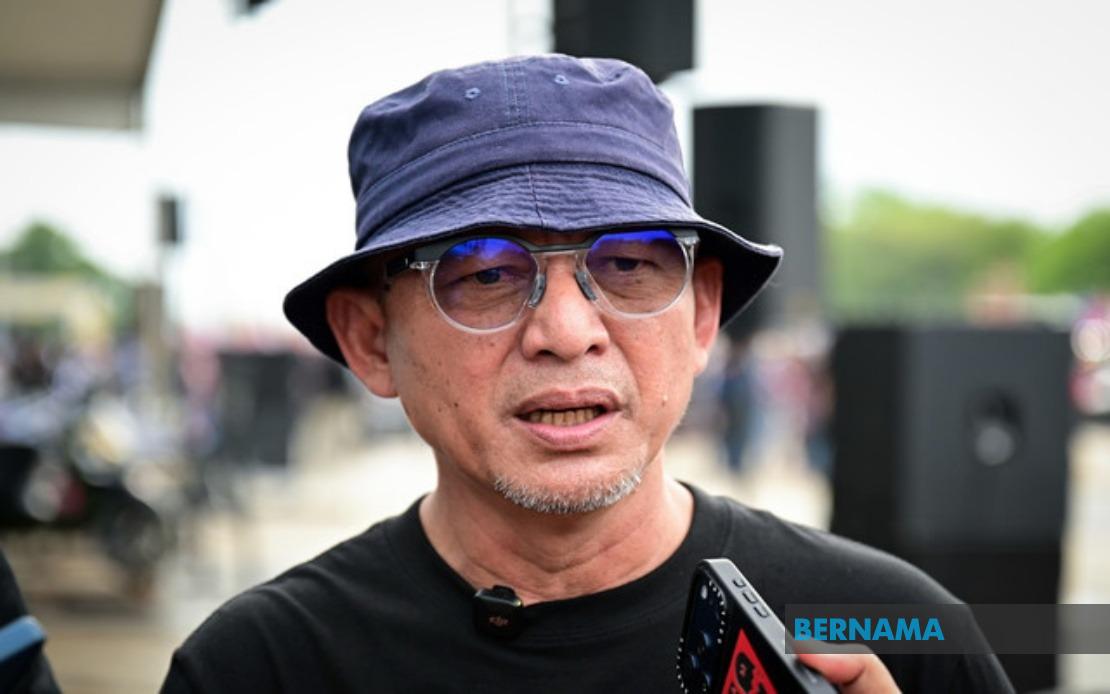
Datek Razali Idris, who chairs the state's Tourism Committee, explained the rationale behind the logo's creative evolution during remarks made following the Terengganu Classic Festival 2026 closing ceremony at Dataran Shahbandar. He acknowledged that while Terengganu has developed numerous new attractions in recent years, the decision was made to preserve the turtle as the logo's focal point, recognising its long-established status as the state's emblematic creature. The creature has been reimagined through a contemporary design approach that respects religious considerations.
The most significant departure from the previous iteration concerns stylisation and presentation. Razali contrasted the new design with the 2007 version, characterising the older logo as appearing rigid and statuelike. The updated graphic employs vibrant colour palettes and dynamic geometric shapes intended to convey movement and vitality, modernising Terengganu's visual identity for domestic and international audiences. This represents a deliberate aesthetic upgrade that reflects current design trends whilst maintaining historical continuity through the turtle motif.
A critical dimension of the redesign involves adapting the turtle's depiction to satisfy religious requirements. Rather than rendering anatomically complete animal representations, the logo employs abstracted forms that reduce explicit biological detail. Razali elaborated that this approach directly addresses Islamic guidelines concerning animal imagery, a consideration that extends beyond decorative applications. The logo will appear across diverse merchandise and promotional materials, from apparel to souvenirs, necessitating careful attention to religious standards, particularly given that garments bearing detailed animal figures carry restrictions for use during prayer observances in Islamic practice.
The tourism sector represents a significant economic driver for Terengganu, and the rebranding effort reflects the state government's strategic investment in positioning the destination competitively. The Terengganu Classic Festival 2026, where these announcements were made, demonstrated considerable appeal, attracting approximately ten thousand visitors who viewed over five hundred vintage vehicles spanning multiple decades, predominantly from the 1960s era. The festival's success underscores the state's capacity to draw diverse visitor demographics through curated cultural and recreational experiences.
Tourist arrival figures provide encouraging momentum for Terengganu's hospitality sector. Within the first quarter of 2027, the state registered 2.45 million tourists, encompassing visitors to its notable resort islands and coastal attractions. This performance provides a substantive foundation for the state government's projection of reaching nine million total tourists by year's end, representing an ambitious but ostensibly achievable expansion based on current trajectory.
Additional traffic metrics offer supplementary indicators of Terengganu's attractiveness as a destination. Vehicle entry counts recorded at state toll plazas reveal consistent patterns of road-based tourism. March and April together registered over six hundred thousand vehicle entries, a figure that climbed to eight hundred twenty-nine thousand in May before moderating to six hundred eight thousand in June. These fluctuations may reflect seasonal variation in leisure travel patterns, with the dramatic May spike potentially attributable to mid-year school holidays and favourable weather conditions during that period.
Razali indicated that comprehensive tourist arrival data for the six-month period would be formally compiled and presented to the state legislative assembly during its next sitting, enabling informed policy discussions regarding tourism development strategies and resource allocation. The state government maintains independent counting mechanisms to derive accurate visitor statistics, with reconciliation processes ensuring data consistency across multiple collection points. This methodological rigor suggests a commitment to evidence-based tourism planning rather than reliance on estimates or approximations.
The integration of Islamic design principles into a major state branding initiative reflects broader Malaysian considerations regarding cultural authenticity and religious sensitivity in commercial contexts. For Terengganu, a state with significant Islamic institutional presence, demonstrating alignment between tourism promotion and religious values addresses potential concerns from conservative constituencies whilst potentially enhancing the destination's appeal among Muslim travellers from Malaysia and international markets. The approach suggests that religious compliance and contemporary design sensibilities need not exist in contradiction.
Terengganu's rebranding effort occurs within a competitive Southeast Asian tourism landscape, where destinations continuously refine their visual identities and marketing narratives to differentiate themselves. The turtle logo, whilst simplified and abstracted, maintains meaningful symbolic value tied to the state's marine ecosystem and environmental heritage. For Malaysian readers and travellers, the redesigned branding represents an effort to present Terengganu as a modern, culturally conscientious destination that respects both contemporary aesthetics and established religious frameworks.
Looking forward, the success of Visit Truly Terengganu 2027 will depend partly on whether the redesigned identity effectively communicates the state's tourism offerings to target audiences. The investment in religious and design compliance suggests a comprehensive approach to brand development that considers multiple stakeholder perspectives. As the state pursues its nine million tourist target, the new logo will serve as a visible anchor for promotional campaigns across Southeast Asian markets and beyond.

