The Terengganu state government has committed RM3.78 million between 2024 and this year towards comprehensive development of Kenyir Geopark, signalling a strategic push to elevate the natural heritage site into the international spotlight. Channelled through the Hulu Terengganu District Office, this financial injection targets multiple facets of the geopark's evolution, from preserving its geological treasures to building local economic capacity around geotourism ventures. The move reflects growing recognition across Malaysia that heritage-based tourism, when managed properly, can deliver both conservation outcomes and sustainable economic benefits to rural communities.
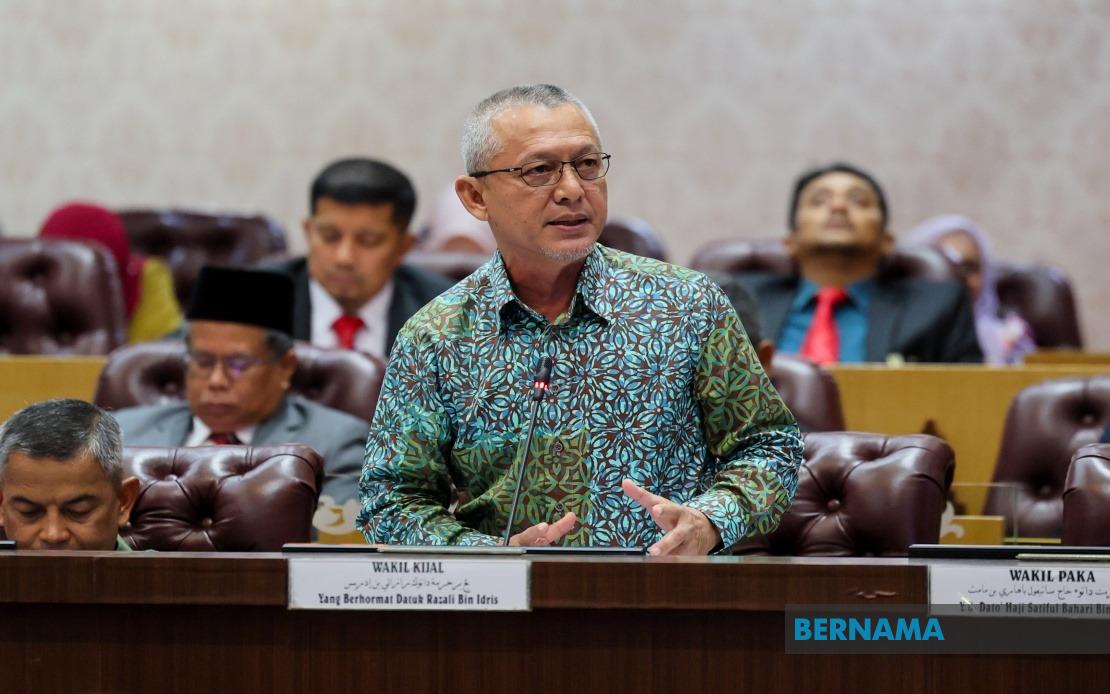
According to Datuk Razali Idris, chairman of the Terengganu State Tourism, Culture, Environment and Climate Change Committee, the investment programme rests on a dual foundation: maintaining the site's current National Geopark designation while laying groundwork for the more prestigious UNESCO Global Geopark accreditation. This distinction matters considerably in the tourism ecosystem. A UNESCO designation opens doors to international funding, research partnerships, and visitor markets that remain largely inaccessible to nationally recognised sites. For Terengganu, acquiring such status would position Kenyir alongside globally celebrated examples of geological significance, potentially reshaping the state's tourism narrative and attracting specialist travellers seeking authentic, education-enriched experiences.
The funding envelope encompasses several interconnected initiatives. Resources are directed towards geoheritage conservation, ensuring that critical geological formations and archaeological features are protected against degradation and inappropriate development. Simultaneously, officials are investing in geotourism product development—essentially creating structured experiences that allow visitors to engage meaningfully with the landscape's scientific and cultural dimensions. Infrastructure improvements, including visitor facilities and interpretive signage, are also prioritised, recognising that international tourists increasingly expect certain standards of accessibility and information provision. Equally important are public awareness and community education programmes, intended to embed appreciation for the geopark's value among local populations, and capacity-building efforts that equip residents with skills needed to participate actively in the tourism economy.
Kenyir Geopark sprawls across approximately 244,900 hectares in Hulu Terengganu, making it a vast repository of geological, biodiversity, cultural and geo-archaeological treasures. Currently, the site encompasses 15 designated geosites—locations of particular scientific interest—alongside 10 biosites representing important ecological concentrations. Eleven cultural sites document human settlement patterns and heritage, while one geo-archaeological site bridges the disciplines of geology and archaeology. This diversity transforms Kenyir into a living classroom where visitors might encounter evidence of tectonic processes, endemic species, indigenous settlement histories and ancient artefacts within a single landscape.
Conservation priorities within the geopark reflect the irreplaceable nature of these assets. Specific sites such as Gua Bewah, Gua Taat and Batu Bersurat have been singled out for targeted preservation efforts. These locations embody high scientific value—their cave systems, rock formations and inscribed surfaces tell stories of environmental history and human occupation that cannot be replicated. Once damaged or destroyed, such heritage is lost permanently to science and culture. The state government's emphasis on protecting these geosites indicates understanding that conservation underpins the geopark's long-term viability as a tourism and educational destination.
The financial investment comes against a backdrop of surging visitor interest. Kenyir Geopark attracted 454,765 visitors during 2024, nearly doubling the 218,157 recorded in 2023—a remarkable 108.5 percent year-on-year increase. This trajectory suggests that demand for geotourism experiences in Malaysia remains robust and potentially underexploited. For comparison, similar geopark designations in other Southeast Asian countries have demonstrated that international tourism flows, once established, tend to grow steadily as word spreads through specialist travel networks and educational institutions. The growth rate at Kenyir indicates the site possesses genuine drawing power, though realising its full potential requires the infrastructure, professional management and international recognition that the current funding round seeks to establish.
From a Malaysian perspective, Kenyir's development carries implications beyond Terengganu itself. The nation currently lacks UNESCO Global Geopark recognition—a gap that represents a missed opportunity in competing for high-value tourism segments and international scientific collaboration. Successful elevation of Kenyir would position Malaysia alongside countries like Japan, South Korea and Indonesia that have secured multiple UNESCO geopark designations. Such recognition carries prestige in academic and scientific circles, potentially attracting researchers and educational institutions. It also signals to international development partners and impact investors that Malaysia takes heritage conservation seriously, potentially opening funding pathways for other conservation-oriented projects nationwide.
The pathway to UNESCO accreditation typically requires demonstrating effective governance structures, community engagement mechanisms and sustainable management practices. Terengganu's current allocation suggests officials understand these requirements and are building institutional capacity accordingly. The emphasis on community capacity-building is particularly noteworthy—UNESCO assessments increasingly prioritise whether local populations benefit materially from heritage conservation and whether they meaningfully shape management decisions. By investing in local education and skills development, the state government is not merely preparing individuals for tourism employment; it is establishing the foundation for the kind of inclusive governance model that international assessment teams now expect.
However, doubling visitor numbers, while superficially positive, introduces management complexities. Without corresponding investment in carrying capacity assessments, waste management systems, trail maintenance and visitor regulation, rapid growth can damage the very assets it aims to showcase. Overcrowding in caves can accelerate stalactite erosion; unmanaged foot traffic degrades biosites; inadequate facilities create sanitation pressures. The RM3.78 million allocation must therefore address not only development but also the less glamorous infrastructure of sustainable visitor management. Whether current funding proves sufficient for this dual challenge—growth management coupled with conservation—will become apparent in coming years.
Looking forward, Kenyir Geopark represents a test case for heritage-led development in Malaysia's interior regions. Success would demonstrate that rural areas need not rely solely on extractive industries or conventional agriculture; properly managed cultural and natural assets can generate comparable economic value whilst preserving environmental integrity. Failure—whether through inadequate conservation, poor visitor management, or inability to secure international recognition—would reinforce perceptions that such ventures require more resources than state governments can muster. The Terengganu government's current commitment signals confidence in the former scenario, but sustained investment and adaptive management will determine whether that confidence proves justified.

