As Johor heads toward its state election on July 11, questions have emerged about the appropriate boundaries between government programming and political campaigning, with the opposition challenging the ruling coalition's activities during the campaign period. Johor DAP chairman Teo Nie Ching has publicly called on Menteri Besar Datuk Onn Hafiz Ghazi to account for his participation in a Johor MARA TVET Roadshow held on July 4 at the Inland Revenue Board Hall in Kluang, alleging that what began as an official government event was repurposed for electioneering.
At the heart of the controversy lies a question of compulsion and intent. According to Teo, who also serves as Deputy Communications Minister, parents and students have lodged complaints indicating that attendance at the roadshow was mandatory, with warnings that non-attendance would be recorded as absenteeism. The gravity of this claim rests on the distinction between requiring students to participate in legitimate technical and vocational education initiatives and conscripting them into what allegedly became a political rally. Such accusations touch on sensitive issues of student welfare, parental rights, and the proper use of educational channels during election campaigns.
Teo articulated the core objection with clarity: the problem is not merely that Onn Hafiz attended a government programme, but rather what allegedly occurred there. She contended that the Menteri Besar used the platform to explicitly campaign for the Barisan Nasional candidate by publicly naming the candidate's election number. This specificity transforms the allegation from vague impropriety into concrete electoral conduct that may violate established guidelines governing campaign activity, particularly when conducted in spaces ostensibly devoted to education and professional development.
The evidentiary basis of the complaint extends beyond anecdotal accounts. Teo indicated that Pakatan Harapan possesses documentary evidence including the official programme itinerary, a written directive mandating attendance, and video footage capturing the allegedly campaign-related remarks. This documentation represents a substantive foundation for discussion, distinguishing the complaint from purely hearsay accusations and providing specific material that could support any formal investigation or proceeding with relevant authorities such as the Election Commission.
Crucially, Teo reframed the dispute in terms that resonate beyond partisan politics. She invoked her perspective as a mother confronting a situation where young people were allegedly compelled to attend an event and subsequently pressured to endorse a political party. This rhetorical move shifts focus from technical electoral violations to the broader ethical dimensions of state power and the vulnerability of students who cannot easily refuse official directives. The framing suggests that this is not merely about campaign rules, but about protecting young citizens from administrative coercion.
Another layer of contention centres on institutional propriety. Teo raised a procedural objection about whether a government-owned hall, such as one belonging to the Inland Revenue Board, may legitimately be utilised for partisan political activity. Even if the event were classified as a political gathering rather than a government programme, the use of state infrastructure for campaign purposes remains questionable under Malaysia's governance standards. This ambiguity itself reflects a potential regulatory gap that warrants clarification during an election cycle.
The opposition has indicated that responses may escalate through formal channels. Teo noted that the decision to lodge a complaint with the Election Commission rests with individual Pakatan Harapan candidates, signalling that the matter could move beyond public criticism into an official investigation framework. Such escalation would require the Election Commission to assess whether state officials have crossed permissible boundaries during the campaign period, a determination that could establish precedent for future state elections.
Parallel to these allegations, Teo criticised Onn Hafiz's recent attacks on federal government policies, characterising them as politically opportunistic. She observed that the Menteri Besar selectively credits state government success for popular policies while blaming federal authorities and opposition parties for unpopular measures. Teo countered that major policies require Cabinet approval, meaning that responsibility cannot be unilaterally attributed to the state government. This exchange highlights the larger pattern of political discourse during the election campaign, where both sides deploy policy critiques strategically.
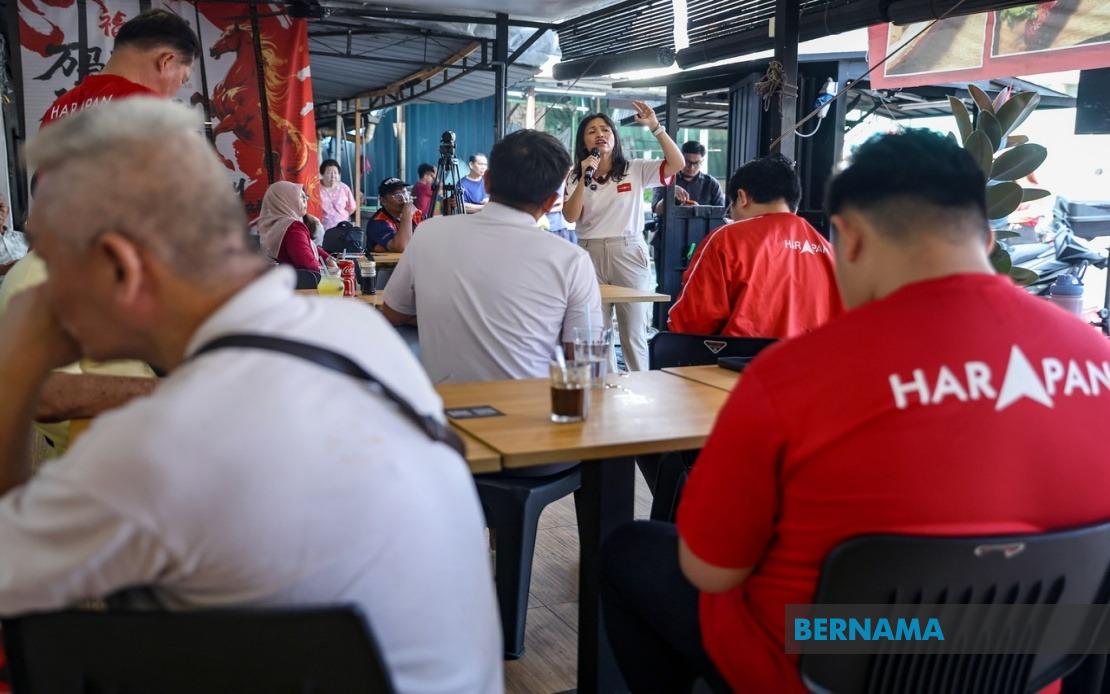
Tan Sri Lim Kit Siang, the veteran DAP leader present at the Kedai Kopi forum where these remarks were made, articulated a broader vision that transcends the immediate election context. He urged Johor voters to reject what he termed racial politics and instead consolidate support around a vision of unified Malaysia founded on equality, freedom, prosperity, and respect for human rights. His intervention suggests that the opposition wishes to position itself as defending institutional integrity and inclusive governance principles, not merely challenging the ruling coalition's electoral tactics.
The 172 candidates competing for 56 state seats in the July 11 election operate within an environment where such allegations about campaign conduct carry weight. Early voting occurred on July 7, the same day these allegations were publicly articulated, meaning that some voters had already cast ballots before the controversy gained prominence. The timing underscores how election campaigns generate rapid shifts in the information environment available to voters.
For Malaysian readers and regional observers, this episode illustrates persistent tensions in how elections are conducted in the country. The incident raises questions about regulatory oversight of campaign activities, the vulnerability of public institutions to political exploitation, and mechanisms for ensuring that students and other vulnerable groups are not conscripted into partisan activity. Whether through the Election Commission or public discourse, these issues require resolution to strengthen confidence in electoral integrity.
The allegation also demonstrates how state elections can become focal points for broader arguments about governance standards and state-federal relations. As Johor voters prepare to decide on July 11, controversies like this one contribute to the overall assessment of how different political coalitions conduct themselves in power and how they respect institutional boundaries during competitive elections.

