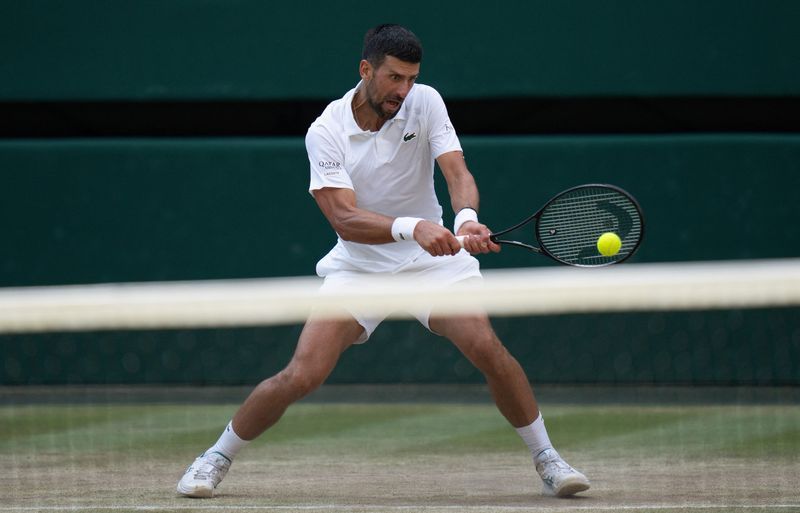
Professional tennis faces a mounting health crisis, according to the Players' Association, which has blamed a relentless fixture schedule and expanded tournament formats for a sharp rise in serious injuries among the sport's top competitors. The warning emerged following a wave of high-profile withdrawals from the Canadian Open, where several marquee names—including world number one Jannik Sinner and 24-times Grand Slam champion Novak Djokovic—cited physical ailments preventing their participation. The collective absences have crystallised long-standing tensions between commercial expansion and athlete welfare in a sport that generates enormous revenue but increasingly struggles to balance player health with broadcasting and sponsorship demands.
The Canadian Open's men's draw suffered particularly acute disruption, with Sinner pulling out entirely and Djokovic's absence compounding problems already created by wrist injuries sidelining Carlos Alcaraz and a back complaint forcing Canadian Felix Auger-Aliassime to withdraw before his opening match. The women's tournament was equally affected, losing defending champion Victoria Mboko, Wimbledon finalist Karolina Muchova, Emma Raducanu and Jasmine Paolini to injury-related absences. These withdrawals are not isolated incidents but rather symptomatic of systemic pressures now embedded into professional tennis's structure, according to the Players' Association's analysis of eight years of medical data spanning more than 30,000 professional matches.
Data compiled by the association in collaboration with its medical director Dr. Robby Sikka reveals a troubling trajectory. Upper-body injuries surged 42 percent during the first quarter of 2024 compared with the same period in 2023, while arm injuries specifically jumped 112 percent year-over-year. These statistics point to cumulative physical stress rather than acute accidents—the toll of insufficient recovery intervals between tournaments played across accelerated schedules. For Malaysian and Southeast Asian fans, these injury patterns carry particular significance; they directly influence the quality of matches available at major tournaments and the availability of established stars during tour stops across the Asia-Pacific region, where tennis has grown steadily in popularity.
The immediate trigger for the Players' Association's forceful intervention centres on the ATP's OneVision strategic plan, which expanded seven of its nine Masters 1000 tournaments to 12-day events beginning in 2025. This structural change represents a commercial decision prioritising extended competition windows and spectator availability over player recovery protocols. By compressing the tournament calendar into longer individual events, the tour has mathematically reduced the time available for training, physiotherapy, travel and meaningful rest between competitions. Players have warned about schedule intensity for years, but these concerns were largely dismissed or minimised in the name of commercial growth.
The Association's position directly challenges ATP leadership's framing of player autonomy and choice. While ATP officials have previously contended that players retain discretionary control over their participation, the practical reality differs substantially. Players competing at the highest levels face intense pressure to maintain ranking points, secure sponsorship commitments and prove fitness to tournament selection committees. Opting out of events creates financial and reputational consequences, effectively rendering theoretical choice illusory. The ATP's counter-argument—that it works to create incentives for appropriate competitive loads—has manifestly failed to prevent this injury cascade.
The Players' Association has responded with specific structural recommendations grounded in medical evidence rather than anecdotal complaint. The group demands that mandatory tournament commitments be substantially reduced, enabling players genuine recovery windows. It insists that players themselves must have meaningful input into calendar design, rather than passively accepting imposed schedules. Most provocatively, the association has called for the ATP to reverse the 12-day Masters 1000 format entirely, returning to traditional scheduling that historically allowed superior recuperation between competitions. These proposals represent a frontal challenge to the tour's commercial expansion trajectory.
For Southeast Asian tennis, these systemic pressures carry downstream implications. When elite players are injured or fatigued, Asia-based tournaments—including stops in China, Japan, and Australia—lose drawing power and competitive quality. Regional players seeking to build careers through exposure to world-class competition face diminished opportunities when top-seeded players withdraw due to injury fatigue. Additionally, the injury crisis creates a philosophical problem: professional tennis risks sacrificing long-term athlete health and career longevity on the altar of short-term commercial maximisation, a trade-off that ultimately undermines the sport's sustainable development.
The data-driven approach championed by the Players' Association stands in marked contrast to traditional resistance within professional sports to labour-related demands. By quantifying injury increases and correlating them to calendar changes, the association has moved debate beyond subjective complaints to objective evidence. Tournament organisers have privately acknowledged that late withdrawals from Masters events have become endemic, suggesting even organisational leadership recognises the dysfunction inherent in current scheduling. Yet acknowledgement has not translated into substantive reform.
The fundamental tension reflects a broader global pattern: sporting bodies prioritising revenue generation and stakeholder satisfaction over athlete welfare, at least until injury crises become sufficiently visible to generate public concern. Professional tennis occupies a unique position where individual player health directly translates to spectacle quality and commercial value. Injured stars generate reduced television viewership, diminished sponsorship returns and weakened tournament appeal. In theory, this should create natural incentives for reform. That it has not suggests commercial decision-makers are discounting future consequences in favour of immediate financial maximisation.
Moving forward, the Players' Association must sustain political and media pressure on ATP leadership while building coalition support from women's tour authorities and tournament organisers. The WTA has not yet responded comprehensively to these injury concerns, though its athletes face identical calendar pressures. Coordinated action across both tours would substantially amplify reform prospects. Without structural intervention, professional tennis risks normalising injury as an inevitable cost of elite competition—a normalisation that would represent a fundamental failure to protect the athletes generating sport's value and excitement.
The Canadian Open withdrawals have merely illuminated a crisis that extended data analysis already identified. Player health cannot be sacrificed indefinitely to commercial expansion without eventual catastrophic consequences for the sport itself. Whether tennis leadership recognises this fundamental reality—and acts accordingly—will determine whether 2024 marks the beginning of necessary reform or merely another in a series of acknowledged problems deferred for future resolution.

