The funeral of Tengku Puteri Seri Kemala Tengku Datuk Seri Aishah, the elder sister of Pahang's ruling monarch, concluded with her burial at the Royal Mausoleum in Pekan on Wednesday. The 69-year-old princess passed away at a Kuala Lumpur hospital late Tuesday evening, prompting a swift return of her remains to the state for final rites conducted in accordance with Islamic custom and royal protocol.
The interment ceremony drew senior members of the royal household, including Sultan Al-Sultan Abdullah Ri'ayatuddin Al-Mustafa Billah Shah himself, along with Tunku Ampuan of Pahang Tunku Azizah Aminah Maimunah Iskandariah and the Tengku Mahkota of Pahang Tengku Hassanal Ibrahim Alam Shah. Their attendance underscored the significance of the occasion within Pahang's royal circles, reflecting both familial bonds and constitutional duties that bind the state's leadership during moments of collective grief.
Processes began in the capital, where funeral prayers were conducted at the Khalid bin Al-Walid Mosque along Jalan Padang Tembak before her remains were transported from Subang Air Base back to Pahang. This arrangement, combining metropolitan ceremonies with provincial observances, demonstrates how contemporary Malaysia balances the practical logistics of modern life with long-standing traditions of royal burial rites. The transfer itself represents a journey bridging the urban seat of federal administration with the heartland of a sultanate whose lineage extends centuries into the peninsula's history.
Upon arrival in Pekan at 1:25 pm, the princess's remains were received at the Sultan Ahmad 1 Mosque, adjacent to the mausoleum complex. Here, additional prayers were recited following the zuhur congregation, allowing mourners and well-wishers from the state administration to pay their final respects. The Pahang Mufti Datuk Dr Asmadi Mohamed Naim presided over recitations of Yasin and tahlil, spiritual practices deeply embedded within Malaysian Islamic funeral traditions that provide comfort and closure to grieving families.
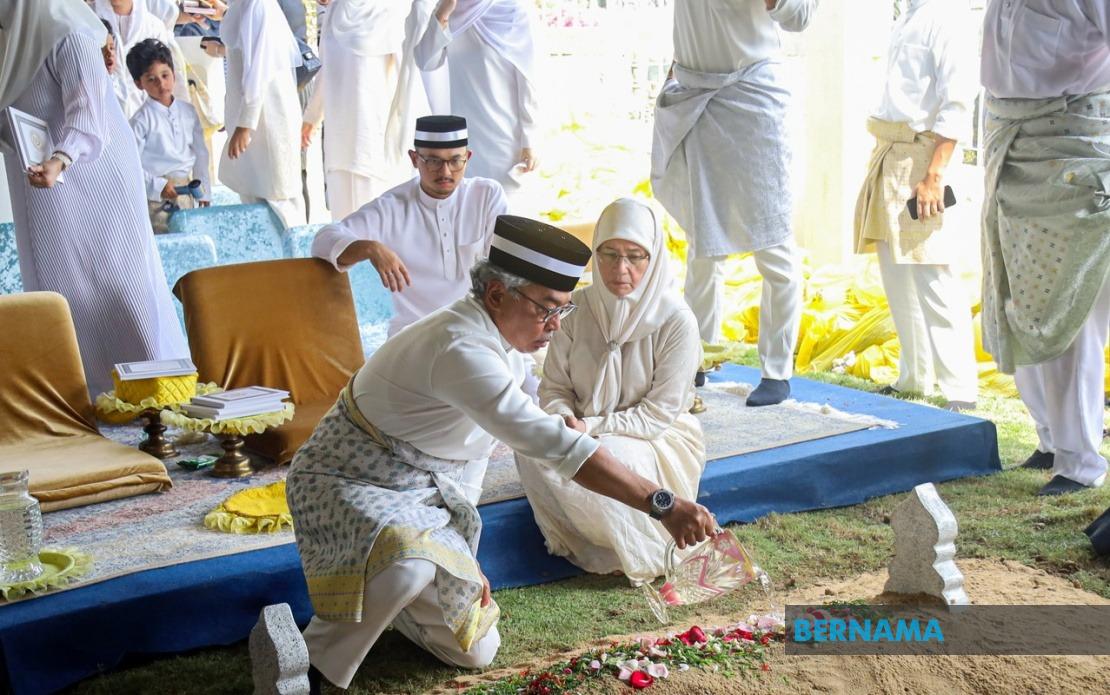
The burial itself proceeded with full ceremonial honours befitting royal status, reflecting protocols established within the Pahang monarchy's institutional framework. Following the completion of the main interment proceedings, Sultan Abdullah and Tunku Azizah performed the symbolic act of sprinkling rose water and scattering flowers upon the grave—a poignant moment that humanises formal state ceremony and acknowledges the personal dimensions of loss felt within the palace. This gesture, recorded as part of the official proceedings, bridges the gap between public duty and private mourning that characterises royal family experiences.
The attendance of government dignitaries, including Melaka's Yang Dipertua Negeri Tun Mohd Ali Rustam and Pahang Menteri Besar Datuk Seri Wan Rosdy Wan Ismail, reflects the interconnected nature of Malaysia's constitutional monarchy system. While Pahang maintains its own distinct administrative identity within the federal framework, the presence of representatives from other states and the broader government apparatus demonstrates how the palace functions as an integral institution within the national fabric. Such ceremonial participation reinforces bonds between state and federal institutions beyond mere protocol.
Tengku Puteri Seri Kemala's position as the sultan's elder sister placed her within a generation of the Pahang royal family that witnessed significant transformations across Malaysia's post-independence era. As a senior female member of the dynasty, she would have held particular importance within family structures and royal social hierarchies, though contemporary Malaysian sultanates typically accord greater constitutional prominence to male heirs and reigning sovereigns. Her life thus represented a parallel narrative within Pahang's institutional history, one less publicly documented yet substantive in its own dimensions.
The Royal Mausoleum complex beside the Sultan Ahmad 1 Mosque serves as the final resting place for generations of Pahang's rulers and senior royalty, making it a repository of the state's dynastic memory. Interment there signifies recognition of Tengku Puteri Seri Kemala's standing within the principality's aristocratic order. The location, situated in Pekan—Pahang's royal capital and administrative centre—ensures that her grave remains accessible to family members and palace officials conducting memorial observances in the years ahead.
For Pahang residents and the broader Malaysian public, the funeral proceedings offered a window into how the sultanate manages moments of succession and loss within its own royal circles. While the Sultan's constitutional and ceremonial duties continue uninterrupted, such occasions remind citizens of the personal dimensions underlying formal governance structures. The visible presence of Sultan Abdullah, his consort, and their heir apparent conveyed messages about dynastic continuity and institutional stability during a period of personal bereavement affecting the palace household.
The swift completion of funeral arrangements reflects both Islamic requirements for timely burial and modern administrative capabilities that enable rapid coordination between federal and state authorities. Planning the journey from Kuala Lumpur to Pekan, arranging religious personnel and ceremonial protocols, and managing attendance by government officials required seamless coordination between multiple institutions. This operational dimension, though less visible than the solemn rituals themselves, underscores how contemporary Malaysia integrates religious observance with institutional efficiency.
Tengku Puteri Seri Kemala's passing represents the natural progression of generational change within Malaysia's royal institutions, a process that occurs regularly yet receives limited public attention unless it involves heirs to thrones or reigning sovereigns. Her death and funeral, however, provide occasions for reflection on the broader role played by palace family members in supporting state governance and maintaining institutional traditions. As Sultan Abdullah continues his reign, family bonds and the support structures surrounding the sultanate become particularly relevant to understanding how Pahang's governance functions beyond the formal constitutional frameworks that dominate public discussion.

