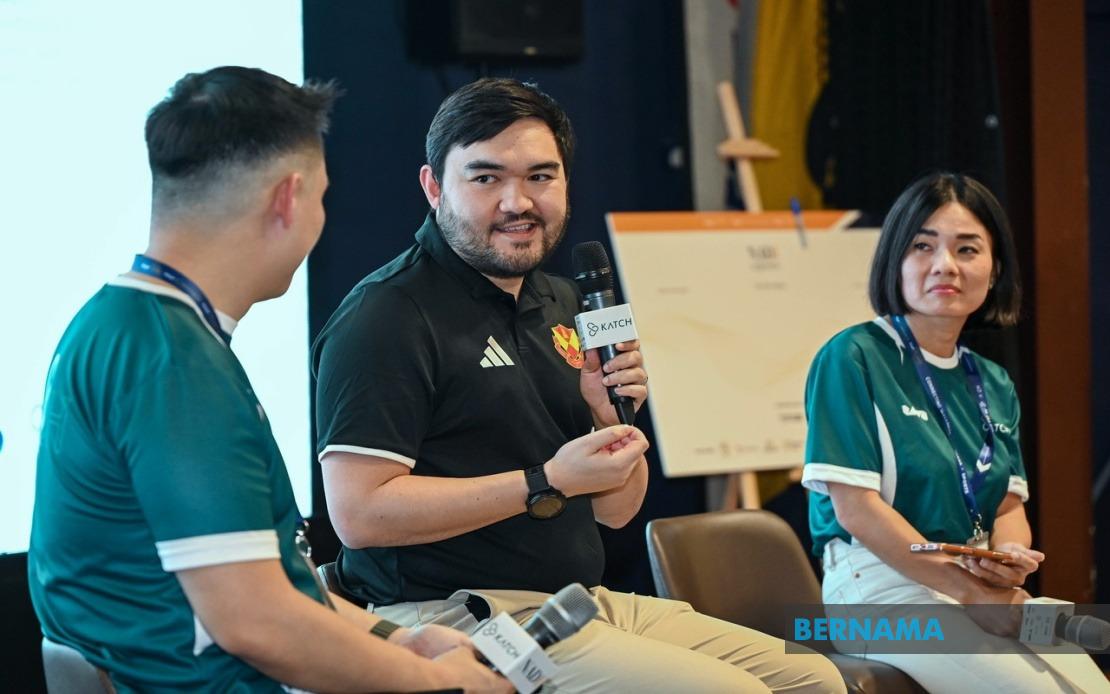
The Raja Muda of Selangor, Tengku Amir Shah Sultan Sharafuddin Idris Shah, has emphasized that Selangor's commanding performance at the Malaysia Games (SUKMA) 2026 should catalyze a broader push to embed regular competitive platforms throughout grassroots sports development across the state. Speaking at the NADI Connecting Wellness, Fitness and Sports With RMS event in Petaling Jaya on August 27, he argued that maintaining momentum in youth athletics requires sustained engagement beyond the Games cycle, with young competitors needing consistent opportunities to test themselves against peers.
The significance of Tengku Amir Shah's intervention lies in recognizing a structural gap in Malaysian sports infrastructure. While SUKMA serves as an important showcase occurring every two years, the intervening months often leave aspiring athletes without defined competitive targets or regular matchups. This inconsistency can dampen motivation and allow emerging talent to drift away from structured training environments. The Raja Muda's perspective reflects understanding that competitive mindset—the psychological driver behind athletic excellence—develops through repeated exposure to structured competition, not isolated tournament appearances.
Tengku Amir Shah articulated a vision where young athletes compete weekly, with training regimens throughout the week building toward these scheduled fixtures. This model mirrors elite sports systems globally, where competitive calendars are densely populated to maintain skill sharpness and psychological readiness. In the Malaysian context, where resources are often stretched thin across multiple sports, such regular competition structures require deliberate policy coordination and financial commitment. His emphasis on creating "a reason to train throughout the week" addresses the psychological contract between athlete and sport—without clear competitive targets, training can become abstract and motivation fragile.
Personal experience has shaped Tengku Amir Shah's conviction on this matter. His involvement with the Selangor Youth Community and subsequent work with football demonstrated how accessible, community-level competitions could simultaneously identify emerging talent while elevating competitive standards. The Selangor Champions League, which he helped establish, demonstrated this principle in practice by aggregating social football teams into a structured league format. This model proved that organized competition need not require professional infrastructure; rather, it requires clear rules, regular scheduling, and genuine stakes.
Selangor's SUKMA 2026 performance underscores both the potential and the challenge. The state claimed overall champions honors with 101 gold medals, 73 silver, and 71 bronze across multiple sports disciplines, demonstrating that a concentrated investment in athlete development yields results. Yet this success, while impressive, occurred within a biennial framework. The question facing state sports administrators is whether this championship standard can persist during the intervening two-year periods when SUKMA attention shifts elsewhere and media focus dissipates.
The Raja Muda's suggestion to expand grassroots competition models beyond football to emerging sports including pickleball and chess reveals strategic thinking about sports democratization. These sports have experienced genuine growth in Malaysian participation, particularly among younger demographics and urban populations. By extending structured competition frameworks to sports beyond traditional athletic disciplines, the approach acknowledges that competitive instinct and winning mindset transfer across different physical and mental domains. A chess player competing in structured tournaments develops similar goal-orientation and performance psychology as a footballer.
Implementing such expansion faces practical obstacles. Regular competitions require venue availability, trained officials, scheduling coordination, and some level of financial support. Unlike professional sports leagues with commercial sponsorship, grassroots competition often depends on government support or volunteer labor. Selangor, being relatively prosperous and administratively organized, may have advantages other states lack. However, Tengku Amir Shah's advocacy suggests a model that, if proven successful in Selangor, could inform national sports policy discussions about how Malaysia allocates resources for youth athlete development.
The timing of his remarks carries significance within Malaysian political and administrative contexts. SUKMA 2026 represents completed success; the coming months will determine whether this represents a peak or a foundation. If grassroots competition structures remain underdeveloped, Selangor may struggle to replicate its performance in 2028. Conversely, if state leadership systematizes regular youth competitions across multiple sports, the infrastructure could sustain competitive excellence while providing developmental pathways for athletes unable to reach elite levels.
Tengku Amir Shah's framing also addresses a philosophical question about sports development in Malaysia. Does the nation view youth sports primarily as occasional festival events, or as ongoing developmental systems? The SUKMA Games themselves, held biennially across different host states, necessarily emphasize spectacular moments over consistent development. His advocacy suggests a complementary rather than competing approach—maintaining SUKMA's biennial prestige while building continuous competition infrastructure that feeds talent into such showcases. This two-tier structure, where local and regional competitions populate the calendar while major Games remain periodic highlights, characterizes mature sports systems internationally.
The NADI event that provided the platform for these remarks brought together fifty wellness, fitness, and sports leaders alongside the Raja Muda, suggesting receptive audience for such advocacy. Implementing his vision would require coordination among these stakeholders—government sports agencies, local clubs, corporate sponsors, and community organizations. No single actor possesses sufficient resources to establish comprehensive competition calendars; success demands collaboration across constituencies with different motivations and capacities. Whether this particular gathering catalyzes concrete policy shifts remains to be seen.
For Malaysian sports observers and administrators monitoring Selangor's trajectory, Tengku Amir Shah's intervention marks the beginning of what should become sustained institutional focus on grassroots infrastructure. SUKMA 2026's success provides both opportunity and urgency—opportunity to demonstrate that competitive excellence can be systematized rather than treated as episodic achievement, and urgency to establish structures before momentum dissipates. The coming months will reveal whether such advocacy translates into concrete competition calendars and resource allocation decisions. Should Selangor successfully operationalize expanded grassroots competitions, the model could become a template for other states navigating the challenge of sustaining athlete development outside SUKMA's biennial intensity.

