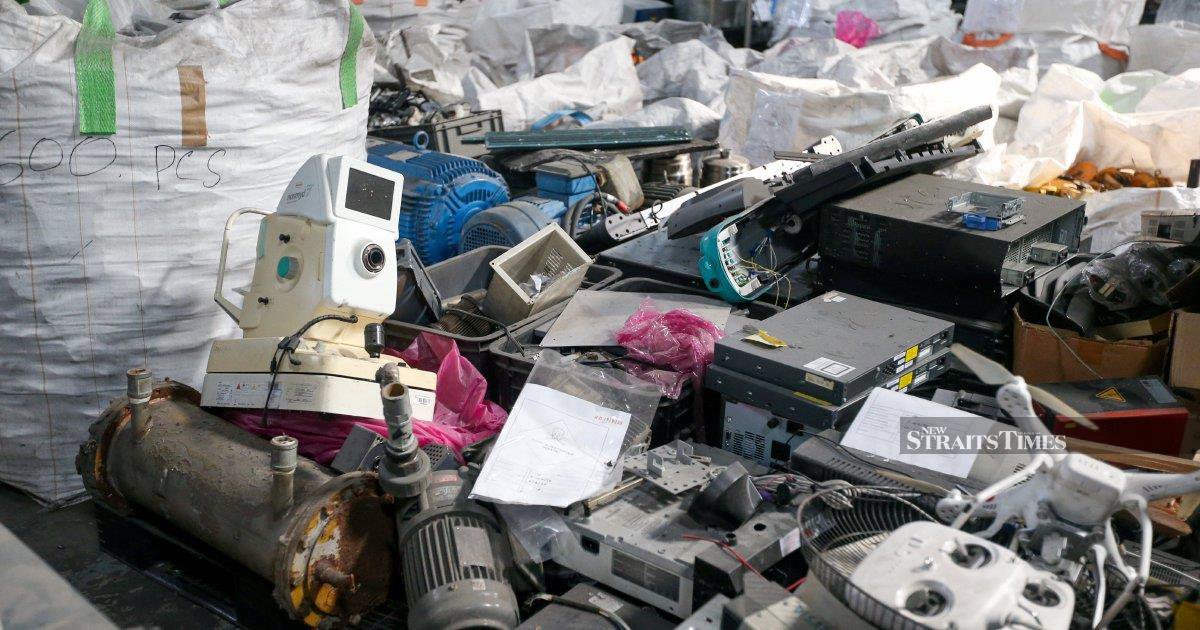
A major misconduct investigation has widened significantly with the arrest of ten General Operations Force (GOF) officers who are assisting police in their inquiry into an alleged extortion scheme centred on an electronic waste processing factory located in Tasek Gelugor, Penang. The detentions represent a serious escalation in scrutiny of the paramilitary unit and underscore growing concerns about integrity within law enforcement agencies operating in Malaysia's northern regions.
The extortion case emerged from the Tasek Gelugor industrial area, a district known for its concentration of manufacturing and processing facilities that handle hazardous materials, including electronic refuse. The involvement of uniformed personnel in what authorities characterise as racketeering activities has triggered alarm among business operators in the sector, who often find themselves navigating complex regulatory frameworks and multiple enforcement touchpoints. E-waste processing represents a particularly sensitive industrial segment given its environmental implications and the strict licensing requirements imposed by the Department of Environment and other federal agencies.
The arrest of ten officers signals that investigators believe the alleged scheme involved multiple individuals working in coordination rather than isolated misconduct by a single actor. This pattern suggests an organised approach to extracting payments or concessions from the facility, which would constitute a more serious category of offence under Malaysian law. The coordination required across multiple personnel raises questions about supervision, internal accountability mechanisms, and whether warning signs were overlooked by senior GOF commanders responsible for the Penang region.
The GOF, a paramilitary force under the Ministry of Home Affairs, operates across Malaysia providing various internal security functions and law enforcement support. The force maintains a significant presence in Penang, a state with substantial manufacturing, port, and logistics operations that require regular patrol and inspection activities. Accusations affecting GOF personnel inevitably generate wider concern about the integrity of checkpoint operations, roadblocks, and facility inspections conducted routinely across the state.
E-waste processing facilities occupy a precarious position within Malaysia's industrial landscape. Operators must satisfy stringent environmental standards, obtain proper authorisation from multiple government agencies, and manage the handling of toxic materials with appropriate safety protocols. The alleged targeting of such a facility suggests that the accused officers may have exploited the complex regulatory environment and the limited recourse options available to businesses in breach of perfect compliance. The factory's operational vulnerabilities—whether genuine regulatory lapses or perceived ones—may have created perceived opportunities for illicit extraction of payments.
The incident reflects broader challenges surrounding police and paramilitary integrity across Southeast Asia. In Malaysia specifically, earlier investigations into errant officers and enforcement agents have exposed systemic weaknesses in accountability structures, particularly at operational levels where field personnel interact directly with the public and businesses. The relative autonomy enjoyed by units deployed to industrial areas or checkpoint locations can enable misconduct when internal oversight is insufficient or when commanders lack the capacity to monitor personnel performance continuously.
For the business community, particularly those operating in sectors requiring intensive regulation and licencing, the arrests may initially provoke concern about the reliability of enforcement personnel but could ultimately signal authorities' commitment to addressing misconduct. Electronic waste processing operators in Penang will be watching closely to assess whether the investigation leads to procedural reforms that strengthen legitimate oversight while reducing opportunities for unofficial extraction of resources or favours.
The investigation will likely examine communications between the arrested officers, financial transactions, and testimony from factory management regarding the nature and timing of alleged demands. Investigators will need to establish whether the extortion was informal and opportunistic or whether it followed a structured pattern suggesting knowledge and acquiescence at supervisory levels. The scope of the inquiry will determine whether additional officers face questioning or whether the matter involves only the ten individuals currently in custody.
This development carries implications for Malaysia's broader anti-corruption efforts. The Internal Security Act and Prevention of Corruption Act provide extensive investigative and prosecutorial tools, but their application to serving law enforcement and paramilitary personnel remains a test of institutional will. High-profile cases involving uniformed personnel tend to receive greater public and media scrutiny than routine misconduct allegations, placing additional pressure on investigators to demonstrate thoroughness and objectivity.
State-level politics may also influence how the case develops. Penang's reputation for relatively stringent governance and transparency in enforcement matters means that elected officials and civil society organisations will likely maintain attention on investigative progress and eventual outcomes. The optics of arresting ten officers simultaneously—a significant show of force in its own right—suggests authorities are responding to pressure from multiple quarters to demonstrate that even well-positioned enforcement personnel face consequences for alleged rule-breaking.
The implications extend to Malaysia's compliance posture regarding international environmental standards. As the nation seeks to position itself as a responsible handler of e-waste and a potential regional processing hub, incidents involving alleged corruption within the enforcement apparatus can undermine investor confidence and complicate discussions with regional partners about liability and oversight. Clean regulatory administration becomes a competitive asset in attracting legitimate business while deterring operations designed to exploit institutional weaknesses.

